





Australia warned marine parks could hurt fishers
The addition of more marine parks in Southeast Australia will reduce the fish supply and impact jobs in rural towns, according to the South East Trawl Fishing Industry Association (SETFIA) and the Southern Shark Industry Alliance (SSIA).
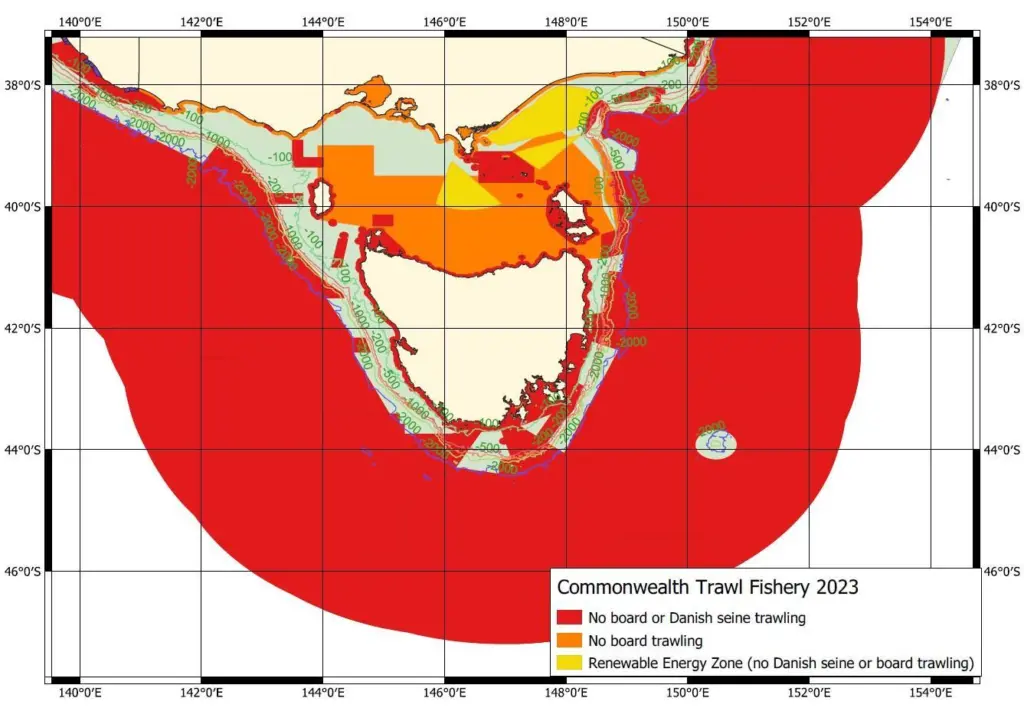
The representative bodies’ warning follows the announcement from Australia’s Department of the Environment that it is to review and look at potentially expanding fishing lock-outs in Southeast Australia’s 17-year-old marine park network. This network already covers more than 388,000 square km.
SETFIA and SSIA say that Australians living in the region only have access to around three local wild-catch seafood meals each per annum and that seafood imports are likely increase through more lock-outs, with the country already bringing in 70% of the fish that it consumes.
They also maintain that the addition of more marine parks will not address the actual risks facing the marine environment, including climate change.
In a press release, they highlighted that marine parks already cover 43% of the Southeast and 48% of Australia’s entire marine estate, which means coverage is already in excess of Australia’s Kunming-Montreal commitment of 30% by 2030.
“The heavily regulated and transparent Australian fishing industry is being squeezed by other industries such as oil and gas, marine seismic surveys, aquaculture, electricity transmission, carbon storage and most recently marine windfarms,” SETFIA and SSIA stated. “The fishing industry has been working in partnership with the windfarm sector to help them understand windfarm overlap with fishing grounds and to try to minimise it where possible. Renewable energy mitigates climate change, but more marine parks do not.”
They advise that the Australian government’s Southeast trawl and flake fisheries provide most of the fresh local wild-caught fish consumed on the eastern seaboard of Australia. But over the last 20 years, they have lost 85% and 90% of the grounds that they had.
“The fishing industry relies on the Environment Minister to consider the fishing industry, rural communities and fish consumers and to not impose more marine park impacts. The minister’s alternative is additional pointless fishing lock-outs, loss of cultural identity in rural communities, reduced productivity, increased imports, and less local seafood meals. There is not enough space in the ocean for fresh local seafood supply, marine windfarms, and more marine park lock-outs,” SETFIA and SSIA said.
SSIA represents quota owners, fishers and processors in the Commonwealth-managed gillnet, hook and trap fishery, where the main catch is gummy shark also known as flake. SETFIA represents quota owners, fishers and fish wholesalers in the Commonwealth-managed southeast trawl fishery.
Combined these fisheries are the largest supplier of fresh local fish into Melbourne and Sydney.
Related Articles
 FISHERIES
 FISHERIES
 FISHERIES