





Alaska’s pollock A season concludes with strong yields
Alaska’s pollock fishermen wrapped the 2025 A season with strong harvests, low by-catch rates, and tangible benefits for coastal communities, thereby underscoring the success of science-based management across both the Bering Sea and Gulf of Alaska fisheries, reported the Alaska Pollock Fishery Alliance.
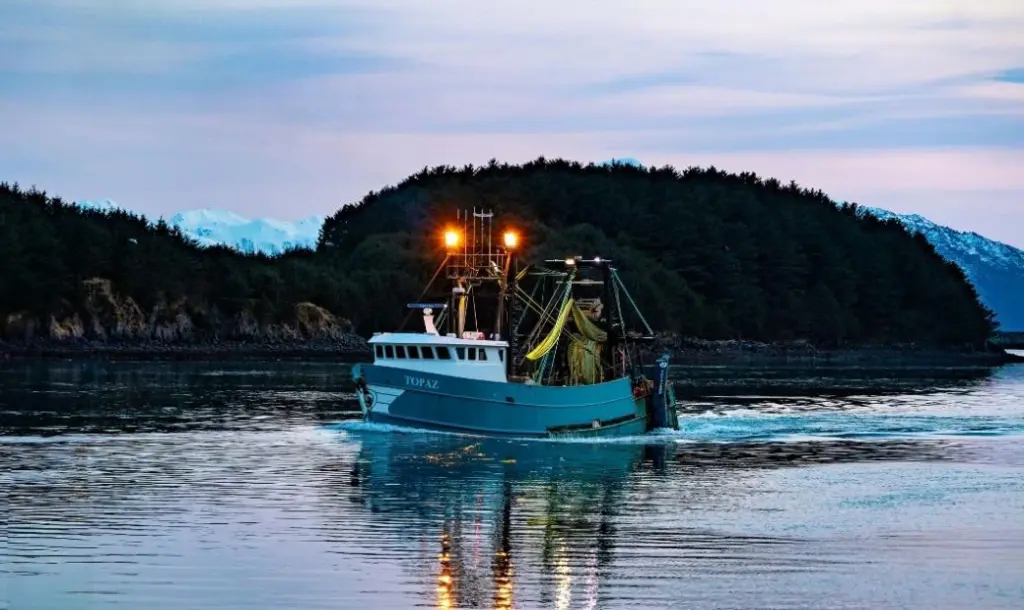
Industry leaders, fishing crews and scientists pointed to the season as a model of responsible resource management, the alliance said.
“The sheer amount of communication that occurred throughout the pollock sector, all in an effort to mitigate salmon encounters, was truly amazing. This, coupled with rigorous science, proactive management and a strong stewardship ethic led to the success of this A season,” said Captain Dan Martin, a veteran pollock captain from Dutch Harbor.
The Bering Sea pollock fishery, which accounts for the majority of Alaska’s pollock harvest, and the Gulf of Alaska pollock fishery, which operates on a smaller but vital scale, both achieved more than 90% of their A season quota while maintaining healthy biomass levels, as confirmed by federal stock assessments. These quotas are set through a science-based, ecosystem-oriented strategy co-managed by the National Oceanic and Atmospheric Administration and the North Pacific Fisheries Management Council, under the authority of the Magnuson-Stevens Fishery and Conservation Act.
Each year, the NPFMC sets an acceptable biological catch (ABC) limit for Alaska pollock based on comprehensive surveys that estimate pollock populations and calculate the reproductive potential of the fishery. The NPFMC then uses the ABC as the basis for the total allowable catch (TAC), which is the annual limit on how much pollock can be harvested.
The TAC is often set below the ABC as an extra buffer against overfishing. For example, in 2025 the TAC in the Bering Sea was set 40% below the Acceptable Biological Catch ABC level.
The Community Development Quota (CDQ) programme was conceived by Alaskans and made permanent by Congress in 1996 to ensure Alaska’s remote, western coastal communities benefit directly from federally managed fisheries, including the wild Alaska pollock fishery.
“The CDQ programme is, by design, accomplishing two goals. First, Alaskans are becoming owners of the Bering Sea – the most productive fisheries on earth. Second, the Bering Sea is creating economic activity throughout western Alaska and across the state,” said Eric Deakin, Coastal Villages Region Fund CEO. “These Alaska jobs and benefits for Alaska residents wouldn’t exist without Bering Sea fishing — and especially pollock fishing.”
In Kodiak, the fleet which consists primarily of family-owned small catcher vessels, harvested the largest volume of Central Gulf A season pollock in recent memory.
Kodiak’s shoreside processor workforce has the highest percentage of local residents of any Alaska commercial fishing community, and the successful pollock A season will enable them to remain open to take smaller volume fisheries from all sectors until the summer salmon season begins.
Alaska’s pollock fishery contributes US$ 1.56 billion to Alaska’s commercial fishing sector and in 2024 represented 30% of the overall wholesale value of Alaska seafood.
According to the alliance, throughout the A season, fleets in both the Bering Sea and Gulf of Alaska took proactive steps to minimise the by-catch of non-target species. In particular, Chinook salmon by-catch rates remained well below regulatory thresholds in both regions, aided by the use of salmon excluder devices, camera technology, closures in areas with high numbers of salmon, and adaptive fishing practices.
In the Bering Sea, vessels operate under Incentive Plan Agreements (IPAs) which are required by federal regulations. The IPAs provide real-time information sharing across the fleet so that vessels know where salmon have been reported and can avoid those areas in order to limit the possibility of inadvertent by-catch.
In the Gulf of Alaska, vessels operate under a different “race for fish” -style management structure and separate regulatory requirements with a shared cap on Chinook by-catch. In the 2025 A season, 43 of 44 pollock vessels voluntarily participated in a comprehensive Chinook Bycatch Avoidance Agreement that facilitated increased communication and information sharing. The agreement resulted in closures in areas with high salmon concentrations and nearly doubled voluntary salmon excluder net use in the fleet.
In the Bering Sea, preliminary estimates indicate Chinook by-catch was approximately one salmon per 40 tonnes of pollock harvested – far below the regulatory cap. In the Gulf of Alaska, where fleet sizes are smaller, efforts to delay fishing during peak salmon periods at the beginning of the year further contributed to low by-catch rates.
Preparations are underway for the summer B season.
Related Articles
 FISHERIES
 PROCESSING & REFRIGERATION
 FISHERIES