




29% fall in Icelandic fish
Reduced catches across all of Iceland’s main fisheries categories led the country’s fishing fleet to land 29% less seafood last month, with the capture of 35,237 tonnes of fish and shellfish, according to preliminary data from the country’s Directorate of Fisheries.
June’s pelagic catch was down 88% year-on-year to 1,282 tonnes, with herring and mackerel accounting for almost the entire volume. No capelin and just 15 tonnes of blue whiting were recorded.
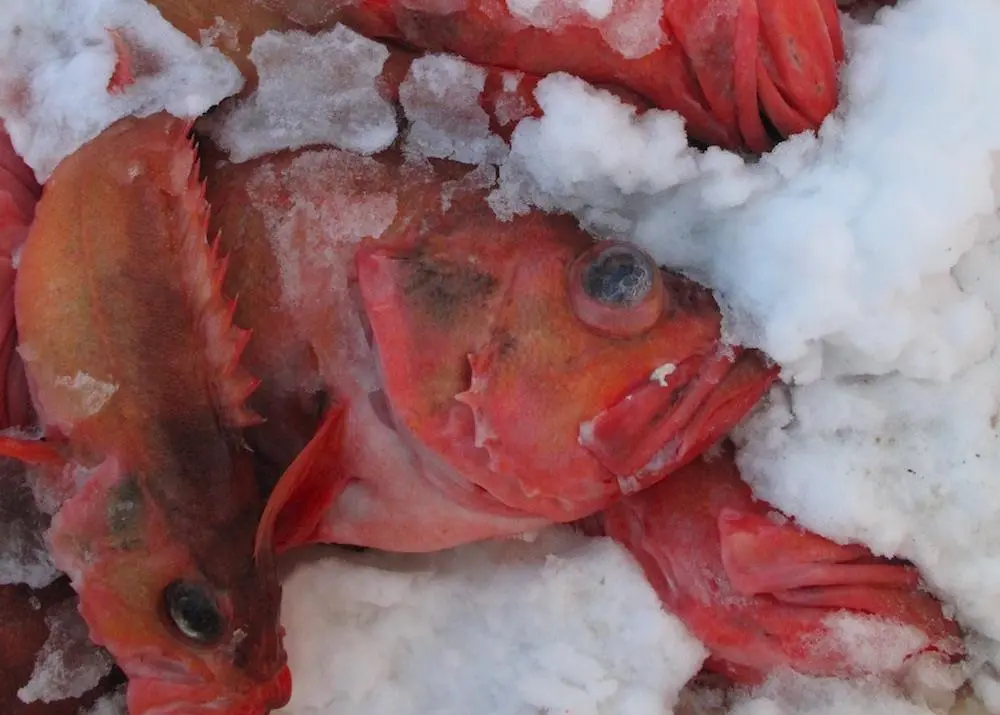
In the demersal sector, landings totalled 31,210 tonnes, which was 10% less than in June 2021. Icelandic cod catches fell 20% to 15,595 tonnes, while the haddock volume dropped 34% to 2,485 tonnes. The saithe volumes slipped 17% to 4,405 tonnes, while redfish increased 26% to 4,418 tonnes.
There was a 26% decrease in Iceland’s flatfish catch to 2,416 tonnes, while shellfish landings were down 49% to 329 tonnes.
The authority also calculated the overall July 2021 through June 2022 catch at more than 1.5 million tonnes, a rise of 40% on the previous 12 months. This increase included an 83% increase in the pelagic category, with the total capelin volume soaring from less than 71,000 tonnes to 521,468 tonnes, and the herring catch up 39% to 184,606 tonnes.
Iceland’s total blue whiting and mackerel volumes fell 7% and 13% respectively to 195,656 tonnes and 128,488 tonnes.
The demersal catch amounted to 444,598 tonnes, down 8%, with 9% less cod (255,495 tonnes), 14% less haddock (50,988 tonnes) and 13% less redfish (45,459 tonnes). Bucking the declining trend, saithe catches increased 7% to 61,994 tonnes.
At 22,047 tonnes, the flatfish catch was 10% lower than in the previous 12 months, while Iceland’s shellfish catch decreased 6% to 5,767 tonnes.
Related Articles
 PROCESSING & REFRIGERATION
 FISHERIES
 FISHERIES