





Fish Fight continues
Hugh Fearnley-Whittingstalls campaign to ban the practice of discarding fish in EU waters will continue, he stated in this latest installment of his television programme, which was recently aired in the UK.
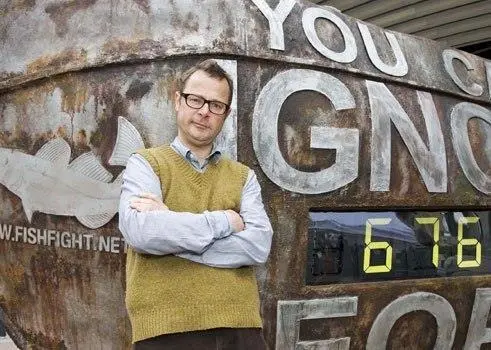
In Hugh’s Fish Fight: The Battle Continues he reviewed the progress that has taken place in the fisheries industry since he began his campaign against the discards scandal.
The main focus of the campaign was to stop the “crazy” practice of discarding, to encourage consumers to try lesser-known species, and to get supermarkets to be more honest in claims they make on their tins of tuna.
The campaign has received an amazing response – over 700,000 people have been outraged enough to sign up to the campaign online.
After the original programmes were aired, the government decided to fund a six month long study, looking at what would happen if the law was changed and a discard ban introduced.
The programme focused on two boats that had been out fishing in the normal way, but instead of being forced to throw fish away, they were asked to keep everything onboard.
From the one trip shown, the fish that would usually have been discarded totaled 60% of the two boat’s catch, equaling 1.7t of fish that would have been thrown away.
Although Mr Fearnley-Whittingstall is behind a discards ban, he acknowledges that banning discards overnight will not solve the problem. He believes that a phased in discards ban will motivate fishermen to avoid catching unwanted species and undersized fish. He says that the technology already exists to do this, in the form of square mesh and by modifying trawl nets. And for the unwanted fish that do still get caught, the fishmeal industry could hold the solution.
Regarding the tuna industry, the pressure the campaign has put on big brands and supermarkets has seen most change their policy on tuna sourcing, including Tesco, Co-Op, Morissons, Asda, Princes and John West.
In the UK, House of Commons MPs held a full debate on discards which, if passed, would mean that the government would reject any reform of the CFP unless it included a ban on discards. It was passed.
The Fish Fight has also been launched in Europe and a fish counter displaying the number of people who have signed up will remain outside the European Commission for the next 18 months.
Commenting on the new CFP proposals that were revealed in July, stating that the system will change so that all catches are landed and counted against quotas, Mr Fearnley-Whittingstall said, “To call it a victory might be a little bit premature because from here there’s 18 months of discussions and behind the scenes conversations between the member states, between the ministers before this is ratified as law. But in terms of a strong statement from the outset I don’t think we could have hoped for much better.
“It’s the day that promises the possibility of real change and now we have to make sure that that happens. I, for one, am going to be on the case of the politicians who can see these reforms through and make sure they actually happen”, he concludes.
Related Articles
 FISHERIES
 FISHERIES
 WORLD FISHING EVENTS