





Fish farming grows in Brazil
Despite challenging economic conditions, fish farming grew 4.90% in 2019 in Brazil, with 758,000 tonnes of fish produced in the country, reports Eduardo Campos Lima.
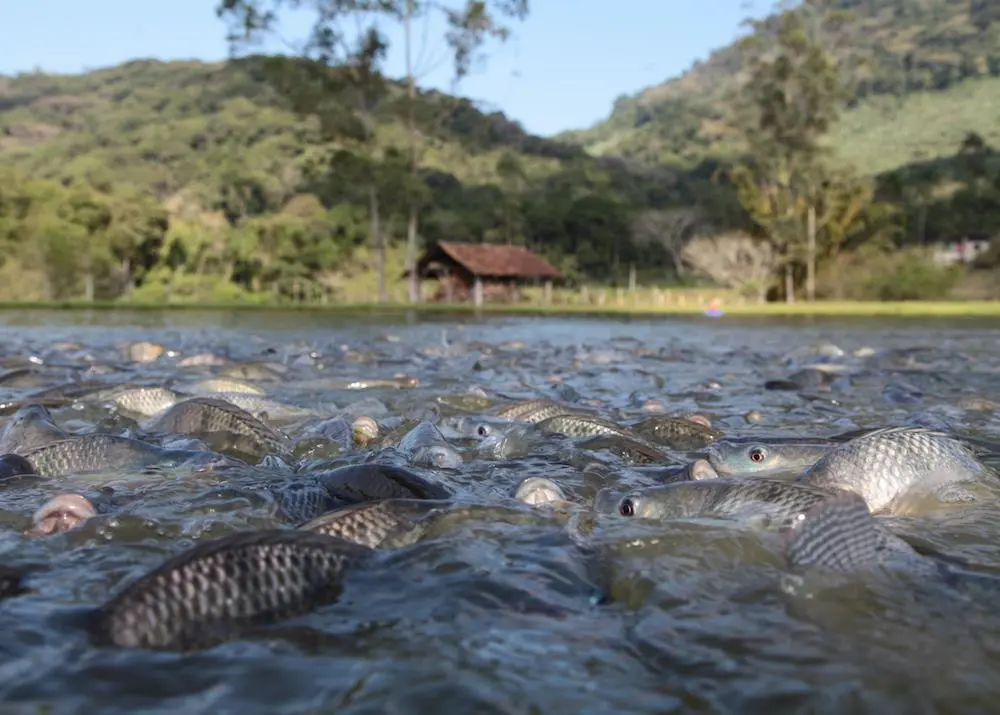
The main Brazilian aquaculture association considers the results could have been better, but poor economic growth of the South American country last year, only 1.10%, restricted further progress.
The Brazilian Association of Pisciculture (known as Peixe BR) was positive when releasing the 2019 industry results, considering that several elements in the came together to generate some challenging prospects.
Most of the Brazilian production is sold domestically, especially tilapia. Given that national consumption didn’t grow in 2019, such a moderate expansion was only natural, said Francisco Medeiros, president of Peixe BR.
In fact, the three major animal proteins consumed in Brazil – beef, pork, and poultry – saw an overall growth of only 1.70% in 2019.
At the same time, the production of tilapia faced a cyclical crisis in Brazil between 2018 and 2019.
“In the second half of 2018 and the initial months of 2019, there was a big rise in the stocks of tilapia, which generated smaller prices to producers,” said Francisco Medeiros, commenting that from the second half of 2019 on, most producers reduced tilapia population.
“The result is that now we’re facing a shortage of tilapia,” he said.
Nevertheless, the species’ volume grew 8% in 2019, now representing 57% of the total fish production in the country. In 2018, its share corresponded to 54.1%. Tilapia production amounted to 432,149 tonnes last year.
This result consolidated Brazil’s position as the fourth biggest tilapia producer in the world, only behind China, Indonesia, and Egypt, and ahead of Thailand and the Philippines. The volume of exports, however, remains low. The country exported only 5300 tonnes in 2019, corresponding to less than US$10 million in value terms.
The continued decrease in the production of native fish, according to Francisco Medeiros, has in the past few years been one of the elements affecting the general results of pisciculture in Brazil.
“The segment of native fish has been falling in the last years. But in 2019 it remained stable. Nevertheless, it certainly has significantly affected the business in Brazil,” he said.
In 2018, the production of native fish had fallen 4.70%, so the small increase of 20 tonnes last year – out of a total of 288,000 tonnes – was the sign of a possible trend reversal. But there are many challenges that companies and the government still have to face in order to resume a sustainable expansion in that sector. Peixe BR pointed out that the main obstacles include infrastructural, sanitary, and environmental issues.
Among the species grouped in such category, mostly round fish, tambaqui has the largest share of Brazilian production. The state of Amazonas, in the northern part of the country, is the main hub of tambaqui producers. Along with matrinxã and pirarucu, the production of tambaqui had a surprising recovery in 2019 in Amazonas. The total volume amounted to 20,600 tonnes, representing an increase of 35%. But the expansion corresponded only to make up for the past years’ losses, occurred because of hygiene problems.
The recent introduction of pangasius in the Brazilian pisciculture led to positive results in different states and provoked an overall growth in the ‘other species’ category in 2019, an umbrella classification that historically includes trout and carp. In some areas, as the State of Rio Grande do Norte, pangasius already accounts for 40% of production. There was a growth of 8.7% of this group’s of species last year, with a total production of 38,000 tonnes.
Prior to the current crisis, for 2020, the fish farming companies associated to Peixe BR expect better figures, mainly betting on a rising domestic consumption and on more robust sales to China.
In relation to the exports, the industry has been holding meetings with the Brazilian ministry of agriculture, which is also in charge of fishing and aquaculture, in order to promote faster processes of accreditation for companies which desire to sell to China.
Given that the Brazilian ministry is preparing such an initiative along with the Chinese government, producers believe that there’s a growing interest from China in the Brazilian fish and expect that particularly tilapia production could benefit from it.
Several companies have declared, according to Peixe BR, that they will increase their investments in infrastructure and technology in 2020.
Related Articles
 SEAFOOD
 AQUACULTURE
 SEAFOOD