


Seaweed worms – alternative farmed fish diet shows great promise
With the help of funding from the European Maritime and Fisheries Fund (EMFF), researchers at Aarhus University, Denmark, have discovered a way to utilise decomposing seaweed to mass produce marine enchytraeids, small worms naturally found in decaying seaweed, as a live aquaculture feed.
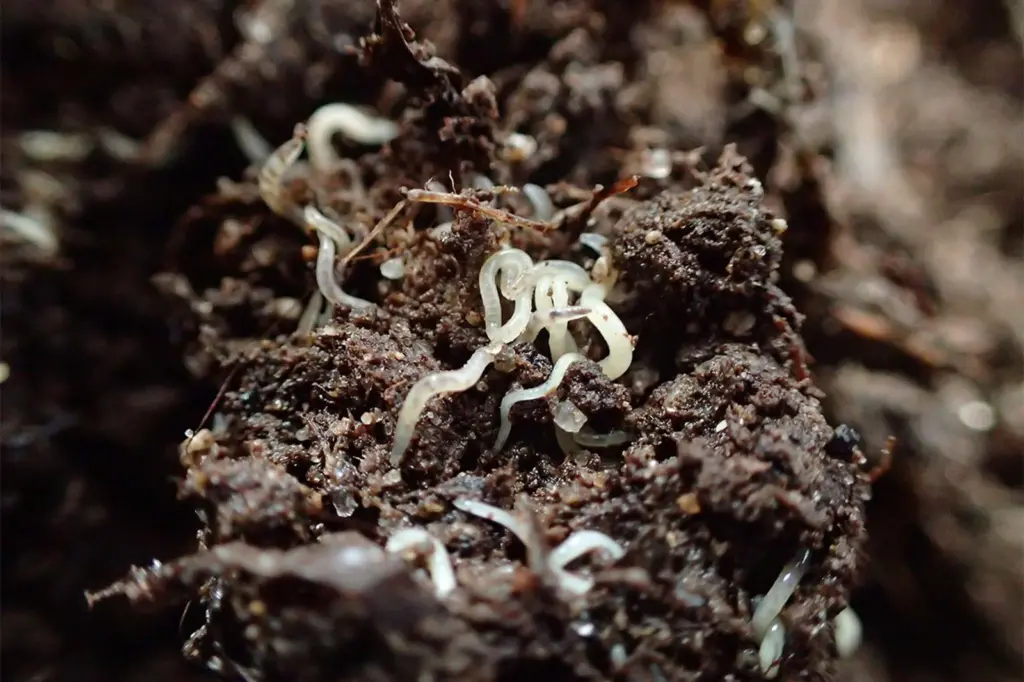
The project has shown that feeding with live enchytraeids can increase growth rates of juvenile fish such as turbot, European flounder and common whitefish by up to 200% and lower overall mortality.
Currently, fish fry production is based almost exclusively on rotifiers (microscopic, aquatic invertebrates) and Artemia (tiny crustaceans), which need to be enriched with fish oils or algae before use. This process is not only costly and time-consuming but the nutritional quality of these types of feed is often not ideal.
The research project has determined three good reasons to instead use enchytraeid worms:
- They have an ideal nutrient composition, containing high protein and lipid content and abundant long chain omega-3 fatty acids
- They can grow sustainably in a terrestrial environment, on industrial organic residues, and replace marine food sources, thus reducing fishing pressure on the marine environment
- By using enchytraeid worms as live feed, fish farmers can postpone weaning onto dry feed until fish are large enough to optimally utilise dry feed
Through the project, the researchers have explored optimal production conditions, developed efficient extraction procedures, and tested the utility of enchytraeids as juvenile feed for six species of cultured fish.
It was found enchytraeus experienced the highest growth rate at temperatures of 15-22°C and a substrate salinity between 8 and 15 parts per trillion. In laboratory trials, using potting soil mixed with dried and re-wetted seaweed as a substrate, approximately 90g of fresh biomass per litre substrate could be produced every three months.
Scaling up to a semi-industrial level, the team achieved around 200g of fresh biomass per 6 litres of substrate every two months with minimal manpower and low running costs.
The researchers also developed a highly efficient (>90% efficiency) extraction procedure based on heat extraction. Laboratory experiments indicated that enchytraeus can synthesise essential omega-3 fatty acids independently, making them a valuable protein source for fish feed, with about 50% protein on a dry weight basis.
Additionally, the team tested the utility of live enchytraeus as feed for young juveniles of six species of cultured fish. Turbot, flounder and whitefish grew significantly better on live worms than on a standard dry feed. Halibut and ballan wrasse grew just as well, although it was determined that enchytraeus was not a suitable live feed for kingfish.
Related Articles
 AQUACULTURE
 FISHERIES
 AQUACULTURE