




Dozens of companies register for krill replacement competition
Forty companies from across the world have registered for the F3 – Future of Fish Feed’s latest aquaculture feed contest, the F3 Krill Replacement Challenge.
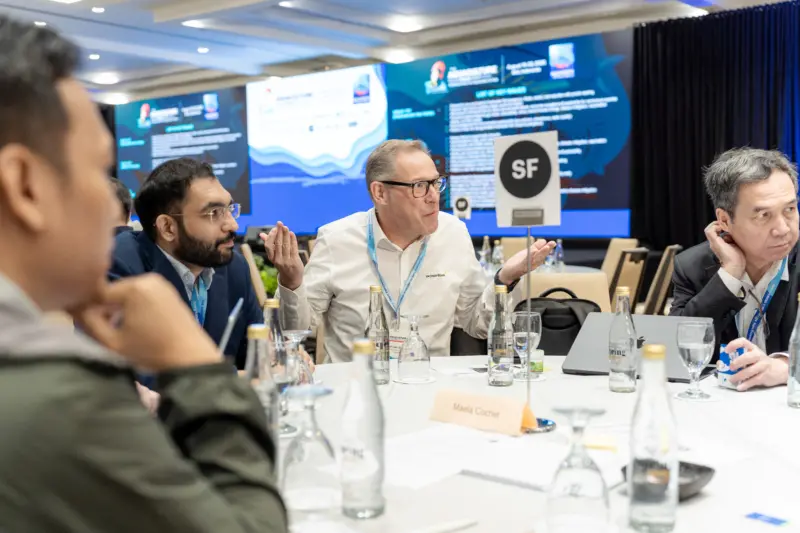
“We are thrilled by the vast amount of interest, both in terms of variety of products and from companies located all over the world,” said F3 judge Kevin Fitzsimmons, a professor of environmental science at the University of Arizona. “It is gearing up to be a great competition and already highlights the fact that there are many viable replacements on the market already that we don’t need to fish krill from the wild for an ingredient in feed.”
Companies that have registered for the F3 Krill Replacement Challenge have a variety of products ranging from black soldier fly and algae to single-cell proteins. These companies include: Agri-King Nutrition Inc, APC LLC, Arbiom, Aqua Management Technologies, BCF Life Sciences, Bioiberica, BRF Ingredients, Calysseo, CCYAA, dsm-firmenich, eniferBio, Entobel, Entosystem, F4F, Guangdong Evergreen Feed Industry Co Ltd, Hamlet Protein, Hermet Nutrix, JF Nutritech Sdn Bhd, Jiangsu Fatide Biotech Ltd, KnipBio, Lutia, Maltento, MFC Group, MicroHarvest, Mutatec, nextProtein, NovoNutrients, Nutrition Technologies, Orffa Additives, Palmatech, Phileo by Lesaffre, PreZero, Protenga, Protix, Revolgene Labs Pvt Ltd, Shaivaa Algaetech, Shrimpkart Ventures, Sotup, Symrise and Stratium.
The next step is for the F3 judges to select the 10 companies that will compete in the 12-week comparative feeding trial in which each competitor’s marine-animal free product will be incorporated into a F3-designed, plant-based feed for Atlantic salmon.
To determine a winner of the US$100,000 grand prize, the F3 judges will compare salmon weight gain, feed-conversion ratio and survival observed for each krill replacement product. A diet containing krill meal is also included in the trial as a control.
The F3 Krill Replacement Challenge – the fourth contest hosted by the Future of Fish Feed – was motivated by scientific research that has shown sharp declines in krill populations by as much as 80%. These declines are attributed to climate-induced changes in ocean temperature, currents, acidification and regional overfishing.
A wide variety of marine life depends upon these tiny shrimp-like crustaceans at the base of the marine food chain including whales, penguins, and commercially important wild fisheries like salmon, rockfish, squid and sardines. Krill also plays an important role by removing carbon dioxide from the atmosphere.
Nutritionally equivalent alternatives to krill are needed to bolster food security and seafood output to feed a growing world population.
A full list of participants and their products are available on the F3 Challenge website. An announcement of the 10 companies selected for the feeding trial is expected in late October 2023.
Related Articles
 AQUACULTURE
 FISHERIES
 AQUACULTURE