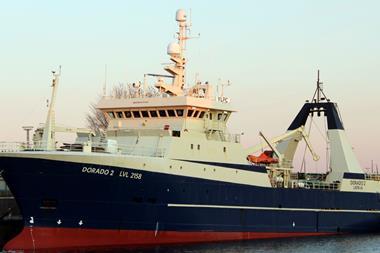




The Faroe Islands had no choice but to set its own quota when faced with its exclusion from this year’s northeast Atlantic mackerel agreement by the EU and Norway, claimed the Faroe Shipowners’ Association.
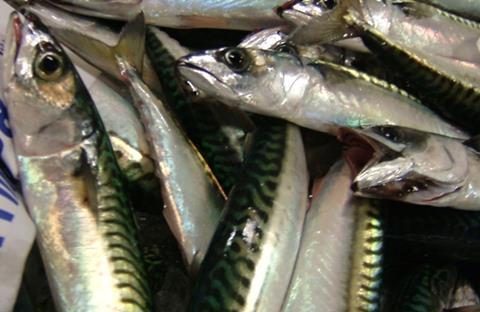
Despite scientific evidence that the northeast Atlantic mackerel stock had gravitated considerably toward the northwest in recent years, fisheries-dependent Faroe Islands failed to win concessions from the EU and Norway on any such considerations during this year’s mackerel negotiations. As the EU and Norway instead agreed on a bilateral arrangement for the 2010 season, the Faroese were left with no other alternative than setting their own quota, said the association.
The association said that much of the debate surrounding the current mackerel issue has been misguided, in particular the anger directed at the Faroe Islands and Iceland over the lack of international agreement on the management of the mackerel stock.
This group, which represents all larger Faroese fishing vessels, supports the position taken by the Faroese government, asserting it has “acted both sensibly and responsibly” by setting the Faroese mackerel quota in accordance with its requested share of the international quota as calculated from the scientifically advised total allowable catch (TAC) of 572,000 tonnes.
“We did not leave the mackerel agreement as some have alleged but were rather excluded from it in the bilateral deal struck between the EU and Norway,” Faroe Shipowners’ Association chairman Viberg Sørensen said.
In response to various “unflattering claims” raised by pelagic industry voices in Scotland and Norway, Sørensen pointed out that the Faroese mackerel fishery is fully legal and thoroughly regulated.
He added that fisheries indeed form the basis of the entire Faroese economy, making the country highly dependent on sound fisheries management.
Northwest movement
Sørensen said that the question of the increasing presence of mackerel in Faroese waters had been raised earlier with Norway and the EU and the Faroese government has made several attempts through negotiations to increase the Faroese share of the quota, however so far without results.
“Between themselves alone, the EU and Norway allotted themselves 10% more than the total catch recommended by ICES for the entire mackerel stock — disregarding any share for the Faroes, Iceland, or Russia. Viewed in this light, the steps taken to blockade our ships from landing, not to mention the proposed boycott of our seafood exports, are manifestly unfair.”
“Our government can hardly be blamed for the collapse of the multilateral negotiations this year,” he said. “They tried as late as in June to reach an agreement for 2010 but to no avail. They have acted both sensibly and responsibly in a difficult situation. Now we hope all of the coastal states will do their part to ensure that an agreement will be reached for the 2011 season.”
Pointing to changed geographic features of the migratory mackerel stock, the Faroese demand a 15% share of an internationally managed quota, rejecting the 5% share offered in earlier arrangements.
“There is a growing body of scientific evidence confirming what we’ve known for years — that this mackerel stock has become more and more present in our waters and now even spawns here. So it would only be reasonable to take such evidence into account in a revision of the quota sharing principles used in the international mackerel arrangement,” said Sørensen.
Necessity not option
Dismissing recent accusations of irresponsibility and unlawfulness against the Faroese, Sørensen said it should be borne in mind that the Faroese mackerel fishery takes place within the Faroese exclusive economic zone, under a rigorously regulated fisheries management regime, with responsibly set quotas and a host of technical restrictions.
“This is a fully legitimate fishery that can in no wise be associated with any illicit activity.”
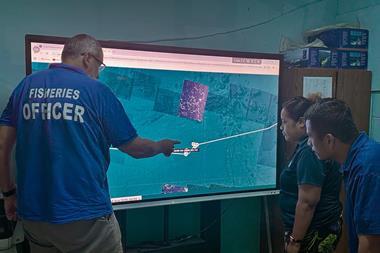
The Faroese EEZ is widely regarded as one of the world’s best managed fishing zones with an overall compliance rate that ranks among the highest. For example, the discarding of mackerel, or any other marketable fish, is strictly prohibited and its occurrence is virtually non-existent.
“Every boat that catches mackerel has a license from the government to do so with clearly defined limits to the fishing,” Sørensen said, “and every kilogram caught is reported along with information on fishing location, time, and vessel.
“Good fisheries management is not an option but a necessity of life here,” Sørensen said.