


The European Commission, on behalf of the Union, and the Republic of Guinea Bissau initialled a new Fisheries Partnership Agreement in Brussels earlier today.
This new agreement, along with a new protocol, will cover a renewable period of 4 years. The Commission welcomes this move to a partnership agreement that confirms the commitment of the Union to working with its partners on strengthening sustainable fisheries wherever its fleets operate.
The new protocol provides fishing possibilities for shrimp, fish, cephalopods and tuna. While fishing possibilities will remain the same as they are at present for shrimps, fish and cephalopods the number of licences for tuna vessels will be reduced from 70 to 37 licences. Out of the annual financial contribution €7 million, 35% or €2,450,000 has entirely been earmarked for projects to help Guinea Bissau establish responsible and sustainable fishing in its waters. In addition, the EU will pay an annual specific contribution of €500,000 to improve sanitary conditions in the fisheries sector and to strengthen monitoring, control and surveillance in the waters of Guinea Bissau.
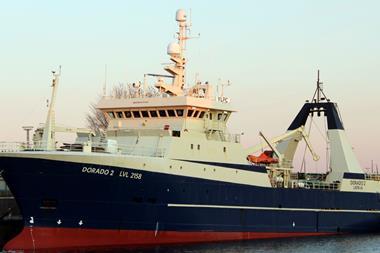
The fishing possibilities available under the new protocol include a fleet tonnage of 4,400 Gross Registered Tonnes (GRT) for shrimp and 4,400 GRT for fish and cephalopods, as well as 37 licences for tuna (23 tuna seiners and surface long liners and 14 pole and line vessels). The two parties have also decided to control the overall fishing effort on shrimps and to enhance fisheries management on this stock in Guinea Bissau’s waters.
The fishing possibilities have been calculated on the basis of the latest scientific campaign undertaken in September 2006 and scientific recommendations from the national scientific institute in Guinea Bissau and other regional and international bodies.
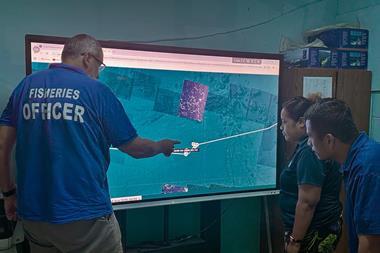
The new partnership agreement is based on political and technical dialogue between the EU and Guinea Bissau on the fisheries policy of Guinea Bissau. Both agreed on working to strengthen scientific research, monitoring, control and surveillance of fishing activities and the institutional capacity of Guinea Bissau in fisheries management so as to ensure sustainable and responsible fishing in the waters of Guinea Bissau. In this context, they also agreed to step up cooperation to combat illegal fishing activities in these waters. Agreement was also reached on enhancing the sanitary conditions of fisheries products as well as to encourage private investments in the fisheries sector in Guinea Bissau. Vessels operating under this fisheries agreement come from Spain, France, Italy, Greece, and Portugal.