



According to Seafish, a new type of prawn trawl developed by the organisation is offering significant environmental benefits, by producing a higher quality prawn catch whilst reducing the fish bycatch.
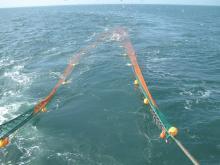
As part of an ongoing programme to develop and encourage sustainable fishing practices, Seafish has been actively involved with fishermen in encouraging the commercial uptake of a range of measures aimed at addressing whitefish by-catch and discard-related issues in the important prawn (Nephrops) fishery.
In 2003 this resulted in the successful development of a new design of trawl that reduces the whitefish bycatch, yet increases the amount of prawns caught. Further seagoing trials confirmed these results, and the net is now being successfully used by prawn fishermen.
The ‘coverless trawl’ works by incorporating a series of design features around the trawl entrance to discourage fish from entering the net. The most notable of these is the removal of part of the top panel of netting, giving fish the opportunity when pushed upwards by the ground rope to escape over the headline of the trawl. Previous technical measures have tended to focus on providing fish with a means of escape once they are actually caught in the net.
These encouraging results have now led to the successful completion of a new Seafish study to assess the quality of the prawns caught in the coverless trawl, by making a comparison with those from standard trawls.
This latest project was carried out on a typical single rig prawn trawler operating out of the north east of England during 2005. The trials were conducted using the ‘matched pair’ technique, whereby each trawl was towed under commercial conditions once per day for a total of eight consecutive days.
The results showed that prawns caught in the coverless trawl suffered from significantly less damage than those caught in the standard commercial trawl, with there being 12% more undamaged prawns and 18% less highly damaged animals in the catch.
In addition, the coverless trawl caught 10% more prawns than the standard trawl and reduced discards by 56%. It caught 26% less commercial groundfish (cod, haddock and flatfish) than the standard, and 66% less commercial whiting. So as well as improving the quality and catching more of the target species, there were also fewer discards.
The higher proportion of undamaged prawns means that more of the catch could also be suitable for the lucrative live trade for prawns.
Over the course of the trials, the coverless trawl produced higher earnings for the participant boat with the increase in the prawn catch; and its improved quality more than compensated for the reduced fish catch. These findings tally with other work that examined the economic implications of using the coverless trawl.
Further benefits include reduced damage to gear; reduced catch sorting times; easier handling; and the potential for lowered fuel costs, as the coverless trawl can be towed with smaller trawl doors.
Marcus Jacklin, Seafish fisheries technologist, said: “This work has established that the coverless trawl causes less damage than a conventional trawl and improves the quality of the prawn catch.
“As well as enabling fishing boats to gain financially through higher prices for a better product, the resultant reduction in discards enables prawn fishermen to operate in an environmentally friendly manner.”