


Second life for recycled satellite buoys
The Pacific Community (SPC) has announced the first deployment of recycled buoys from the drifting fish aggregating devices (dFADs) used in tropical tuna fisheries in its region, starting with the waters of New Caledonia.
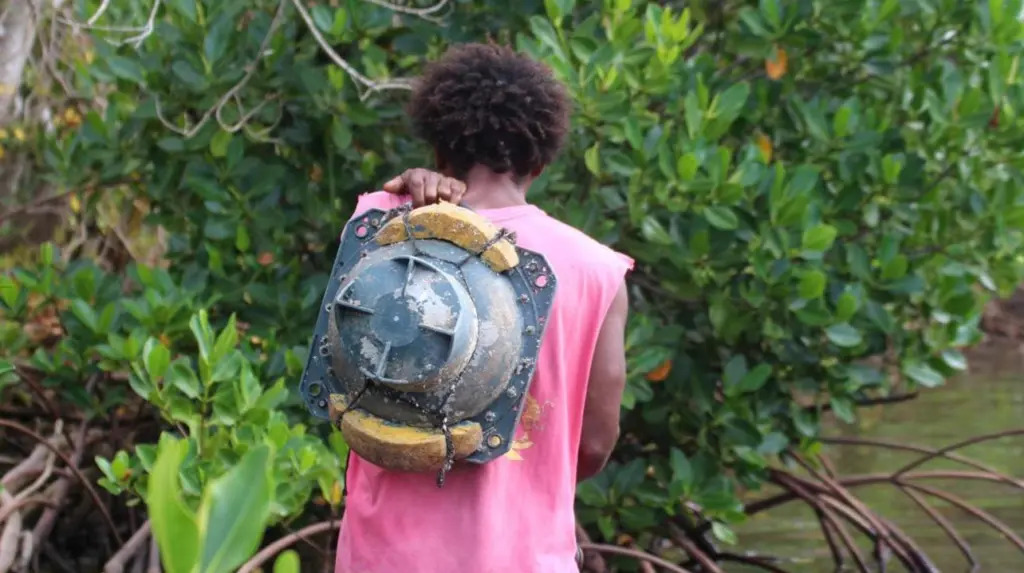
This marks a crucial stride towards sustainable ocean resource management. This initiative has been possible thanks to Project ReCon, a collaborative circular economy scheme created by tech company Satlink in 2022. Since 2019, SPC has been assisting national data collection programmes on stranded dFADs in the Pacific Ocean, collaborating with stakeholders such as fisheries departments, NGOs and local community groups.
Project ReCon was launched more than a year ago with NGO partner Tangaroa Blue Foundation, and has more than 100 participating vessels and 22 tuna fishing companies, including Albacora, Echebastar, Inpesca, OPAGAC/AGAC, Sapmer, Bolton Food Group, Cape Fisheries, Caroline Fisheries Corporation, Trimarine, Oakcity Tuna Fishing Corporation, Hartswater, and the entire US Pacific Tuna Group.
After taking its first steps in Australia with Tangaroa Blue Foundation through the Australian Marine Debris Initiative (AMDI), Project ReCon has also gained the support of The Nature Conservancy (TNC) and The Pacific Community (SPC), as local partners. As of today, the project has extended its reach to a total of eight countries, allowing it to be present in the major oceans where tropical tuna fishing occurs.
This first deployment of recycled buoys on aFADs in the Pacific marks a significant milestone, with plans to extend the initiative to the Cook Islands and the Federated States of Micronesia in the coming months.
“This project allows the region to monitor the number of dFADs lost and abandoned by industrial fishers and their environmental impacts while raising awareness and involving local communities,” said Dr Lauriane Escalle, senior fisheries scientist in charge of the programme.
The regular discovery of buoys lost by purse seiners on the shores of New Caledonia and other Pacific islands countries and territories, as well as the recent deployment of satellite buoys on anchored fish aggregating devices (aFADs) to support coastal fishing, has created the perfect scenario for re-purposing the found buoys for use on those nearshore aFADs, turning what would otherwise be waste into a resource.
“This initiative highlights our commitment to supporting sustainable ocean resource management within the region. Reconditioning and recycling buoys for local use contributes to a circular economy and mitigates the environmental impact of stranded FADs in the Pacific,” noted Dr Graham Pilling, SPC’s Fisheries, Aquaculture and Marine Ecosystems division Deputy Director and Head of the Oceanic Fisheries Programme.
With more than 30,000 buoys deployed on dFADs each year by industrial vessels and many ending up on the shores of Pacific nations, the need to reduce marine pollution is evident. This led to SPC joining Project ReCon to address the environmental impact of stranded buoys.
“Satlink is proud to count on SPC as a local partner for Project ReCon,” commented Kathryn Gavira, Satlink’s Head of Science and Sustainability.
“We are committed to working together with the fleets to reduce the environmental impacts of their activities, in this case through the reconditioning or recycling of satellite buoys recovered on shore. Together, we are working towards a more sustainable future for the Pacific Ocean.”
To be able to recondition the buoys, Satlink has obtained the support of more than 20 companies that agree to transfer the buoys to a local partner for reuse. This is followed by an evaluation is by Satlink, SPC and other partners to determine the suitability of a recovered buoy for re-use.
“Project ReCon not only helps prevent these devices from becoming technological waste due to ocean currents or adverse weather conditions, but also reconditions them for scientific and environmental purposes, such as marking and monitoring marine debris, scientific research, or prevention of natural disasters. Since its inception, over four tonnes of ghost nets have been collected thanks to ReCon buoys,” Kathryn Gavira added.
Related Articles
 FISHING TECHNOLOGY
 FISHING TECHNOLOGY
 COMMENT