






AI developed to optimise fish school identification
Spanish fisheries science and technology centre AZTI has developed an AI application designed to enhance the management and sustainability of commercial fisheries.
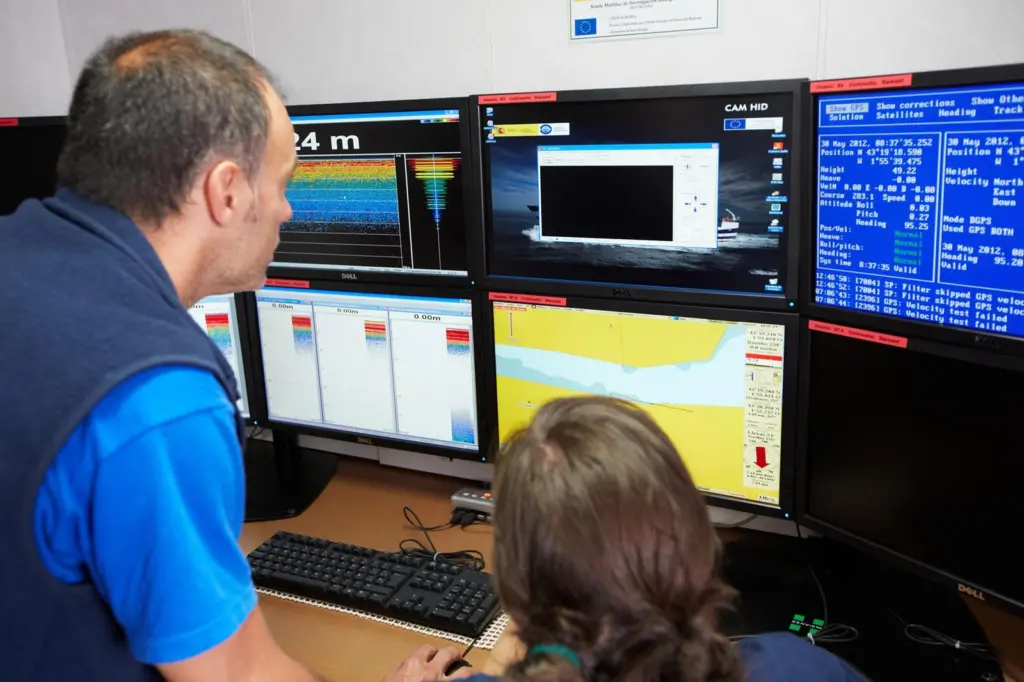
The AZTI team has built an automatic classification model that identifies the main pelagic species in the Bay of Biscay, such as anchovy, sardine and Atlantic mackerel, based on their schooling behaviour with up to 80% accuracy.
AZTI explained that the classification of fish schools detected by acoustic echosounders represents a crucial advancement for managing pelagic species found in highly diverse ecosystems and enables the study of specific behavioural changes in the presence of other species.
“This type of study allows us, through multidisciplinary surveys like JUVENA, to go beyond the management of the main pelagic fish species and aim to understand the functioning of the entire pelagic ecosystem, from plankton to apex predators such as birds and cetaceans,” it said.
The AI model, trained with poorly-labelled data, uses fully and partially-labelled schools. The model outputs are probabilistic, providing the likelihood of a given school belonging to each study species. Comparing the probabilities assigned to different species enables the assessment of the model’s reliability in each prediction.
According to AZTI, the results are promising: the use of AI in acoustic data from sonars and echo sounders on fishing vessels has emerged as an effective strategy to enhance fisheries management.
Automatically discriminating schools, in addition to reducing the data processing time in scientific surveys, can increase the accuracy of the data uses for the assessment of the annual pelagic species distribution and abundance, it said. Furthermore, automatic school classification can potentially increase fisheries efficiency and sustainability by reducing significantly the by-catch.
The results published in the ICES Journal of Marine Science, show a 63.5% accuracy in classifying labelled schools, and about 80% accuracy considering labelled and unlabelled schools at haul-level.
Aitor Lekanda, a marine scientist doing his PhD in AZTI under the supervision of Guillermo Boyra and Maite Louzao, said: “Automating species identification not only reduces data processing times for scientific surveys but also provides new opportunities to study the schooling behaviour and develop new technologies for increasing the efficiency and sustainability of the fishing industry.”
Related Articles
 FISHING TECHNOLOGY
 FISHING TECHNOLOGY
 COMMENT