



Dutch fleet says no to discard ban
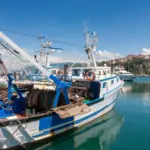
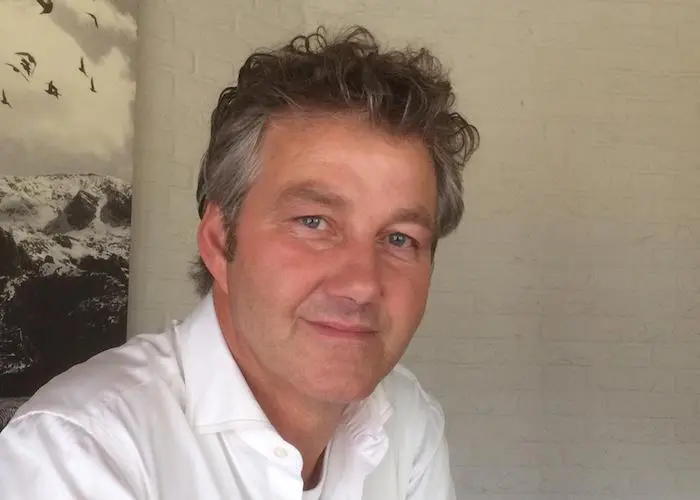
Based in Tholen in the south of Holland Job Schot and his family run the Belgian-flagged Eurocutter Job Senior Z-201. he’s an unlikely activist, but the apparently unending burdens being placed on the fishing industry have turned him and many others like him into protestors with a cause to fight.
The loss of fishing grounds across the North Sea and elsewhere has been the cause of increasing discontent among fishermen on all sides, but the breaking point was reached with the European Commission’s introduction of the loathed Landing Obligation. The requirements of the landing obligation are undoubtedly going to hit Belgian and Dutch fishermen hardest. Beam trawling can have a high rate of non-target species catch, but as beaming is almost always in shallow water with fairly short tows, fishermen argue passionately that the rate of survival of the discarded juveniles and unwanted fish is very high. The argument is that by being required to land these fish, they are being forced to ensure that good fish, which would otherwise have an excellent chance of survival, are definitely dead.
Things began to crystallise with the formation of an Anti-Landing Obligation group on Facebook only a few months ago, and a WhatsApp group through which a grassroots movement of skippers came together, leading to the formation of the EMK (Eendracht Maakt Kracht – Strength through Unity) movement with the aim of protesting against the fishing industry’s burdens and making the public aware of its problems.
“I was one of the earliest EMK members and from the start I said we should hold a demonstration in Rotterdam where we could make a statement about the Landing Obligation, where we could set out our position to the politicians and the NGOs,” he said.
After much preparation, the Rotterdam protest went ahead. Initially timed to coincide with the city’s World Port Days, it was moved forward a week and took place on the 27th of August.
“The port authorities were very positive towards what we had in mind. The original plan was to be there for the World Port Days, but because of the number of yachts expected to be on the water and the shortage of berths, they asked us to bring it forward a week instead,” he said.
On the 27th dozens of fishing vessels from all over Holland and Belgium steamed past the Hook of Holland and upstream to dock in the centre of Rotterdam at the cruise liner berth in the centre of the city.
“It’s the berth that the Holland-America Line uses, the place where a lot of emigrants left in the 1950s for the US, and today it’s the place to be in Rotterdam,” Job Schot said, commenting that they were clear from the outset that this had to be an entirely peaceful demonstration.
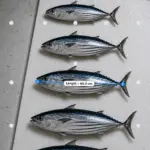
“We had a meeting at the auction in Urk, 250 fishermen and members of the EMK Group, to make certain of our position, that we would be presenting rational arguments. That’s what happened. We made a statement in Rotterdam, and a TV news team spent a night at sea with one of the boats before the demonstration to see the small fish that we were able to keep alive. We also showed them discard fish being marked with red dye at the auction before going for landfill, which was a big statement when it went out on the TV news.”
“It’s crazy that these live fish have to be dead,” he said, the anger in his voice unmistakeable. “It’s crazy that this fish can not be used for food for human consumption – only for animal feed. There is no fishmeal plant in Holland or Belgium that can handle this fish, so there is no alternative and it has to become landfill.”
“It’s a sin to do this,” he said.
“This is also happening as stocks of plaice and sole are at a historical high point, and that has nothing to do with a discard ban. Fishermen feel that they are being told to destroy spawning stocks of fish. We have an unworkable situation on board. The crew refuse to handle discards, as they get no money for it and if we put it ashore, the auctions asks what they are supposed to do with it. Fishermen are being asked to pay to destroy stocks and there is huge resistance to this.”
As present the Z-201 and others in the same position are able to operate using a selectivity device, a three-metre 120mm panel in the trawl ahead of the codend. While this is used, they currently come under de minimis regulations so discards up to 3.5% in area VIId and up to 7% in the North sea do not need to be retained, but have to be declared.
“The dilemma for a lot of fishermen is to declare the discards, and face the fishery being closed down as the government will tell us how terrible the situation is, or else refuse to declare them, and then we’ll be told there isn’t a problem,” he said, adding that the discards do not reach the de minimis levels.
The EMK Group has made a firm statement against the expansion of MPAs and windfarms (which are seen as de facto MPAs) and the Landing Obligation.
“Our concern is that we will be banned from the sea as NGOs, The EU and the energy companies behind the wind farms ensure that we lose more and more ground. It’s all about money – with the NGOs sponsored by wealthy US trusts,” he said.
“Fish stocks are strong, better than they have ever been – and they bring in this crazy law.”
This interview appeared in the November 2016 edition of World Fishing
Related Articles
 FISHERIES
 FISHERIES
 WORLD FISHING EVENTS