



Discarding the past
Adrian Tatum discovers how some European fishing nations are adjusting to the second phase of the EU discard ban, which came into force on 1 January.
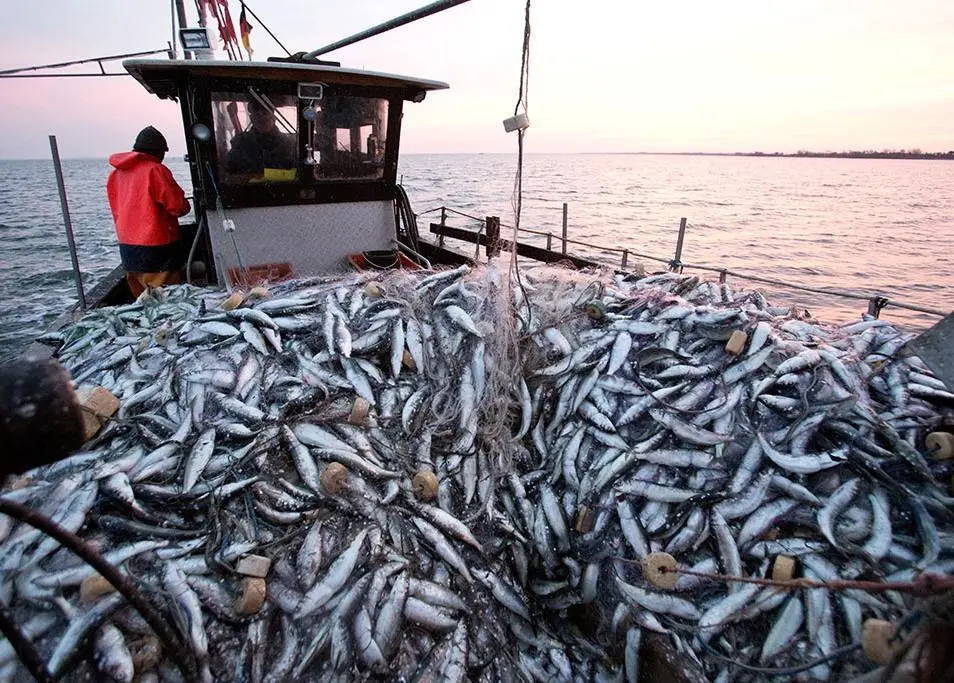
European fishing nations have reacted positively against the discard bans put in place over the last few years, both for demersal and pelagic landings. However, there still remains uncertainty over the overall impact that the ban will have on the fishing sector.
In the UK there have been ‘encouraging’ results from fishing trials with new trawl designs aimed at reducing unwanted catches.
According to the Scottish Fishermen’s Federation (SFF), preliminary trials using a new design of prawn trawl, invented by a skipper and a net-maker in Scotland, have seen a significant reduction in the amount of unwanted whitefish retained without any reduction in the prawn catch. It was also noted that the quality of prawns had also improved.
Trials were conducted onboard the Amity II vessel, where the new design features an inclined panel which separates fish from the prawns within the trawl itself. The fish are directed upwards with many escaping through large meshes in the top part of the net, while the prawn catch is retained in the bottom section of the trawl. The whitefish that remain in the net are covered by the vessel’s fish quota, meaning discards are kept at a minimum level. Trials will continue, where different mesh sizes and configurations will be looked at to determine the best design possible.
Co-inventor and skipper, Jimmy Buchan says, “Innovation never stops nor should it. Having the support of the Gear Innovation and Technology Advisory Group (GITAG) with the industry experts it offers will help fishermen find solutions in developing more efficient ways to catch fish which will help us continue sustainable harvesting over the long-term. We are entering a new era in fisheries management where fishermen are challenged to find new and better ways to harvest the sea.”
GITAG was formed by the SFF in 2015 after it secured funding from Marine Scotland to develop and trial innovative fishing gear exploring practical solutions aimed at reducing the amount of discards. Since then, many fishermen have been supported by GITAG and have conducted their own projects.
In Spain, reports from the country’s main fishing port, Vigo, have revealed that one of the latest new vessels being designed as part of ongoing fleet renewal plans is the first in the world with specific features built as a result of the discards ban. The Cooperation of Shipowners of Vigo said that five other vessels of a similar design have also been commissioned, highlighting how seriously the country is taking the discards ban and technology development as a result of it.
Economic impact
Recently a group of scientists from around Europe discussed their concerns in the European Parliament over the severe economic impact that the discard ban has had on the fishing sector. The discussion centred around the effect of ‘choke’ species – where vessels are prevented from returning to sea after quotas have been reached, thus ‘choking’ the fishery. The scientists said they believed this would be a disaster for the industry if it continued. Also, it was pointed out that the discard ban has meant an increase in labour costs onboard (by 50% in some cases) vessels as well as a series of unexpected additional costs such as weighing and processing, manual sorting and offloading.
But some of the figures surrounding discards support the need for action. In Portugal, it was estimated that 35.5% of the total catch was unreported between 1938 and 2009. In a discussion paper: What are we losing: an economic perspective of fisheries discards in Portugal, it says that new opportunities in fisheries economic sector might arise from unwanted fish that should be obligatorily landed. The Portuguese landings’ economic value were analysed and discards that account 96% of illegal, undeclared and unreported catches, and represent one third of the total catches, for the period between 1938 and 2009 were used to estimate the potential economic value driven from discards under discard ban policy.
The economic value of the fish was measured across time considering national inflation in 2011 and considering different scenarios based on auction sale prices. The decadal price of fish (€/kg) rises from 1940s until 1970s dropping thereafter. Under a discard ban scenario the economic value generated by discards could contribute between 10±4 to 53±16% of the total landings economical value and between 9±3 to 34±6% of the total catches (landings + discards) economical value. Fishing landings auction sales contributed 0.63% in average to gross domestic production (GDP), 1938-2009.
Maria Aria Martin, a policy officer at the Shetland Fishermen’s Association says the discards ban will still prove difficult to implement. “From Galicia to Shetland, it is hard to imagine a more unwieldy set of rules. Completely inappropriate to real-life fishing, they were framed without the benefit of fishers’ practical knowledge and experience and could prove completely unworkable. The fishing industry accepts that the landings obligation is here to stay; the question is whether it can be implemented without destroying perfectly sustainable businesses and communities in the process. So far, a wise decision to phase in the rules has highlighted their many shortcomings before they can wreak havoc, but those shortcomings still have to be addressed,” she says.
In Northern Ireland, reports suggest that fishermen are concerned that the discard ban has not been considered carefully enough. Northern Ireland’s fleet will now have to land practically all the prawns they catch, including undersized ones that would have previously been discarded. Over 7,000 tonnes of prawns worth an estimated £15 million were landed in Northern Ireland ports in 2015. Now one fishing cooperative has applied for a waste licence to take the unusable prawns back out to sea after they have been landed and counted because he says no solution has been found as to what to do with the unused prawns.