



A Danish company in Jutland, Frandsen WSC, has invented a method to separate various types of plastic so they can be recycled instead of combusted.
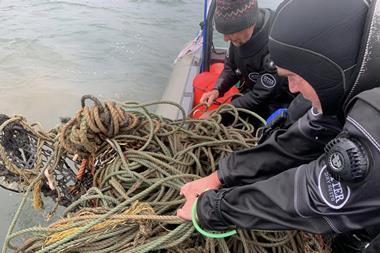
The invention has major potential for recycling most plastic products, reports Ingeniøren (The Engineer). Frandsen WSC will initially employ the new machinery for recycling fishing net and trawls.
The Danish fishing industry generates approximately 500-700 tons of plastic waste from fishing nets every year. Since nets and trawls are made from different types of plastic fibre which cannot be mixed if they are to be recycled, the nets have hitherto either been combusted or deposited as landfill. But with Frandsen WSC's new machinery, the fishing nets can be separated so that the plastic can be recycled.
Johan Frandsen of Frandsen WSC hatched the idea four years ago and built the first model of the machine three years ago.
"It worked, and since then we have further developed and refined it so that we now are ready to run an annual production in full operation," says Mr Frandsen.
Frandsen WSC has entered contracts with all Danish fishing ports to process their fishing nets, and the company is currently making similar agreements with fishing ports in the Faroe Islands, Iceland and Greenland.
But it is not only fishing nets that can be recycled. "Remember that two kilos of oil are needed to produce one kilo of plastic. With our technology you can recycle almost all plastic that has already been made and so help a lot to save on oil resources. In principle you can take milk crates, carpets, packaging and household plastic in one big hotchpotch and throw it into the machine, then it comes out finely separated at the other end," says Mr Frandsen.
The inventor has already had enquiries from the global recovery industry: "The concept can in principle be established anywhere in the world, and so it will be over time. I have had several international enquiries because it has been rumoured in the industry what we can do, but I have not decided anything yet. First we need to launch the project with the fishing nets," comments Mr Frandsen.