
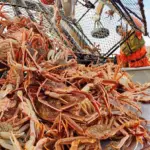

Cod farming breakthrough!
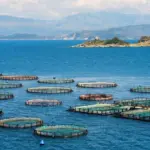
Marine research consultant, Diobas Ltd, has just completed its 16 year Freshwater Research Program and claims to have found a completely new way to rear cod in freshwater at any location in the world in a controlled environment, at approximately one third below current market price.
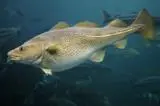
According to the company, the Freshwater System can be operated in a variety of sizes with the smallest producing in excess of 100 tons of cod, the first crop being ready for sale 18 months to two years after the installation.
The entire system is self contained and once filled with water will not require a re-supply of fluids. The main tank is connected to the second tank and water is pumped between the two with a tidal replication sequence at twice the normal rate. Coupled with simulated lighting operated with 12 hour daily cycles and seasonally comparative moon cycles, the fish are encouraged to develop at almost twice the normal metabolic rate, a further 30% growth rate is achieved through an enriched feeding program.
A series of UV units and the company’s revolutionary Particle Fractionators have overcome the problem of efficient bacteria removal. Whilst the main tank is almost entirely dedicated to the growth of the cod, the second tank performs several tasks – it acts as a giant biological filter and as well as fingerlings, will contain a variety of secondary income sources with filter feeding crustaceans, algae, crayfish and other sought after shellfish. When the main tank is cropped, the fish from the second tank are added and the whole procedure replicated to provide continuity. Once the water has circulated through this second tank it will be returned to the main tank in tidal sequence.
Diobas says that this is the first time that a truly self contained environment has ever been achieved in either fresh or salt water.
Steve Marriot, Head of Research, commented, “This success will remain our secret at this early stage… but suffice to say that no drugs or any genetic modification are used.
“Their predatory instincts are also catered for as the food is introduced in a unique way through turbulent currents and therefore ‘on the move’ which encourages competition and active feeding.
“We have removed the stress by providing a safe environment with ample food and plenty of opportunity to breed.”
So what happens now? Managing Director, Jean Marriot explains the next steps of this program: “Ideally the best way forward for us would be to build a full scale research and production facility in the UK which could be used to display the system to international buyers both commercial and governmental. This would clearly provide its own income and be a valuable and essential part of our expansion. To help take us to this next stage, we have just made available a small quantity of company shares. As far as global commercialisation, we fully realise that we need help and are quite happy to discuss all options.”
The company says that the benefits to the environment are obvious, particularly when considering the reduced transport costs and the chance to rest and restock the oceans, and claims that this innovation will revolutionise the way we harvest cod and other endangered saltwater species such as bluefin tuna and freshwater sturgeon.
Diobas says that perhaps one day, all fish will be produced this way right alongside processing plants situated where they are needed in major cities worldwide
Related Articles
 FISHERIES
 FISHERIES
 WORLD FISHING EVENTS