

Coalition launches at-sea project to protect tuna and marine life
Fisheries, research scientists and tuna fishers boarded a vessel in Manta, Ecuador this week and will spend the next two months at sea launching the next phase of a globally coordinated project to promote effective, practical techniques to reduce the environmental impact of tuna fishing.
Fisheries, research scientists and tuna fishers boarded a vessel in Manta, Ecuador in May and will spend the next two months at sea launching the next phase of a globally coordinated project to promote effective, practical techniques to reduce the environmental impact of tuna fishing.
Purse seine vessels provide the world with millions of tons of tuna every year. When crews use floating objects that attract fish, called FADs, it makes the method more time and fuel efficient. But there is one main drawback – bycatch. An average of 5% of a vessel’s catch can be non-tunas and sharks. The International Seafood Sustainability Foundation (ISSF) has called for a significant reduction in this potentially environmentally damaging waste and has spent more than a year facilitating the detailed planning of a worldwide project incorporating research, fisher education and development of new techniques and uses for existing technology.
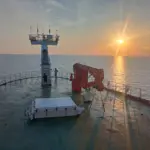
This first cruise – a scientific collaboration between ISSF and the Inter-American Tropical Tuna Commission (IATTC) – will spend two months in the eastern Pacific Ocean onboard the Yolanda L, a purse seine vessel owned by Frigorificos Pesqueros Infripesca, and led by Captain Ricardo Diaz. A workboat carried aboard the Yolanada L to conduct various experiments on aggregations of tunas associated with FADs will be equipped with a remotely operated vehicle (ROV), a state of the art echosounder and acoustic tracking systems. These technologies will be used by scientists to explore and potentially identify new fishing practices to allow purse seine vessels to continue harvesting healthy stocks of tunas while reducing the impact on vulnerable species.
IATTC Senior Scientist Kurt Schaefer will lead the team aboard the Yolanda L in trials that have promise to reduce the amount of bigeye caught in nets. Researchers will also look for ways to prevent the entanglement of turtles and sharks in FADs by testing different designs made of biodegradable materials.
Related Articles
 FISHERIES
 FISHERIES
 WORLD FISHING EVENTS