



Closed containment system begins production
Production has started at Cermaq’s new closed containment system built to provide maximum bio security and fish welfare and with a 400 tons biomass production capacity.
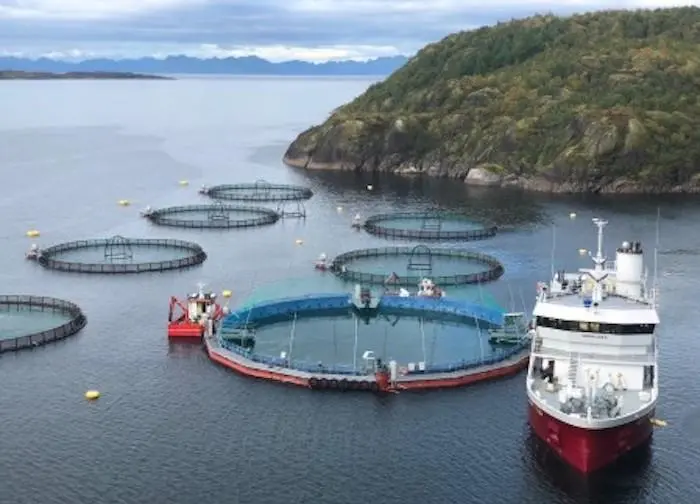
Water will be pumped into the Horsvågen-based pen from a 13m depth, preventing sea lice from entering the pen. The tarp wall is made of strong and flexible composite, which minimizes escape risk. This is the world’s largest closed cage using flexible walls, said Norway-headquartered Cermaq.
“We have been working on this project for a long time, and we are happy that we now are ready to put fish into the pen,” said Frode Holmvaag, manager at Seawater Nordland in Cermaq Norway. “This is new technology to us, and it will be very interesting to follow the growth and development of the fish in the new containment system.”
Multi-site use
The new closed containment system, which has been constructed in partnership with Botngaard and Serge Ferrari, is certified for locations with a significant wave height of two metres and can be used at most existing sea sites.
Magnus Stendal, system delivery manager at Botngaard, said the company would continue to work with Cermaq and its industry partners to further improve the technology and daily operations of the cage.
Serge Ferrari developed the Biobrane Aqua 2050 membrane, designed to make the containment system flexible and safe.
Harald Takle, R&D manager farming technology in Cermaq Group, said it has “applied for development licenses with the FlexiFarm concept, which takes closed containment systems a giant step further as it will include cost-effective water treatment against infections and allow harvest size production in more exposed areas.”
Related Articles
 AQUACULTURE
 AQUACULTURE
 AQUACULTURE