


Sociedad Nacional de Pesca has entered its Chilean hake (Merluccius gayi gayi) trawl fishery into the independent, third-party assessment under the Marine Stewardship Council’s (MSC) certification programme.
The fishery uses demersal trawl gear in the Exclusive Economic Zone of Chile (EEZ), FAO area 87, management areas IV to X.
For the pre-assessment and continuing into full assessment, a national committee was organised with representatives from industry, the government (Subpesca, Sernapesca) and research institutions with expertise in fisheries, including: Instituto de Fomento Pesquero, IFOP (Fisheries Development Institute); Instituto de Investigacion Pesquera, INPESCA (Fisheries Research Institute); Universidad de Concepción, UDEC (University of Concepción); and Pontificia Universidad Católica de Valparaíso, PUCV (Pontifical Catholic University of Valparaíso).
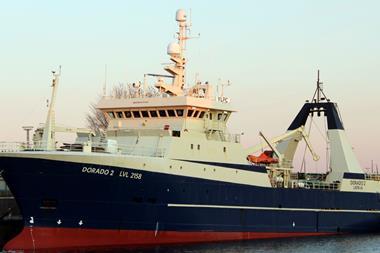
Companies involved in this process have 15 vessels in operation. The fishing season extends all year, except for a biological closure between mid-August and mid-September.
In 2010, the total annual catch quota of hake for this fishery unit is 55,000 tonnes.
The most significant markets for this hake, which is mostly sold in frozen fillets, is the EU, the US and South America.
Héctor Bacigalupo, Sonapesca manager, said: “We anticipate that MSC certification will bring a number of benefits to the companies involved in the industrial fishery for hake by demonstrating to the Chilean public and other stakeholders that we are managing what is a national resource responsibly, with catch and effort regulated to ensure not only conservation of the species, but also other elements of the ecosystem that are impacted by our fishing activities.
“Our priority as the client group of companies is to ensure effective management that allows sustainable fishing activities to underpin our long-term business model while providing all-important employment and income to the coastal economy.”
Bacigalupo said scientific observers are present during fishing operations; landings are verified; and the fishing gear has been modified to improve selectivity and allow juveniles to escape.
The assessment will be carried out by independent certifier Moody Marine.