




Driven by rising domestic consumption, expanding industrial applications and shifting global supply dynamics, India is set to play a critical role in the global seaweed economy over the next two decades, according to experts at a seaweed expo held at ICAR-Central Marine Fisheries Research Institute (CMFRI).
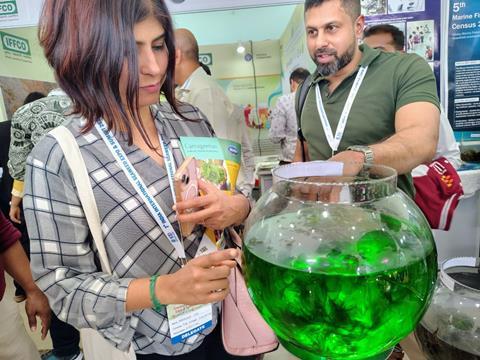
Organised jointly by the Indian Chamber of Commerce, CMFRI and the Central Salt & Marine Chemicals Research Institute (CSMCRI), the 7th India International Seaweed Expo and Summit concluded on 30 January 2026.
Citing global trends in seaweed production, Stevan Hermans, a seaweed industry analyst from Belgium, said: “India is emerging as one of the most promising future markets, both as a consumer and a processor.”
He continued: “India is expected to add nearly 600 million people to its middle class over the next 25 years, positioning the country as a major upcoming consumer of seaweed-derived products, particularly carrageenan used in food, pharmaceuticals, and personal care industries.”
India’s demand for carrageenan, a natural substance extracted from seaweeds used in food processing, is expected to rise faster than many mature markets in Europe and the US, Hermans said.
Referring to India’s fast-growing segments such as seaweed-based bio stimulants and plastic alternatives, he highlighted that this particular sector is growing at around 10% annually and is projected to require up to 1.16 million tonnes of seaweed by 2030 – raising questions about where the additional global supply will come from.
“India’s long coastline and policy push under the Blue Economy framework could support commercial seaweed production to meet this demand.”
Experts highlighted the growing commercial success of seaweed-based plastic alternatives, noting that global investments have exceeding ₹1,500 crore since 2020. From food and nutrition to cosmetics, pharmaceuticals and climate solutions, the seaweeds offer bright industrial prospects in the country, they said.
Meanwhile, emphasising the significant role of seaweeds in climate mitigation, marine scientists who spoke at the summit said seaweed farming would help absorb atmospheric carbon dioxide and contribute to the blue carbon framework.
CMFRI Senior Scientist Dr Divu D said: “Seaweeds exhibit very high primary productivity, fixing between 2 and 10 grams of carbon per square metre per day, with an estimated 0.5–1 tonne of carbon per hectare per year potentially exported to deepsea sediments for long-term storage.”
Seaweed production in India has increased nearly threefold over the last decade, rising from 18,890 tonnes in 2015 to 74,083 tonnes in 2024.