




BS30 Underwater Bait Setter
Amerro Engineering, from Queensland, Australia, has developed a mitigation device (BS30 Underwater Bait Setter) for the pelagic longline fishing industry.
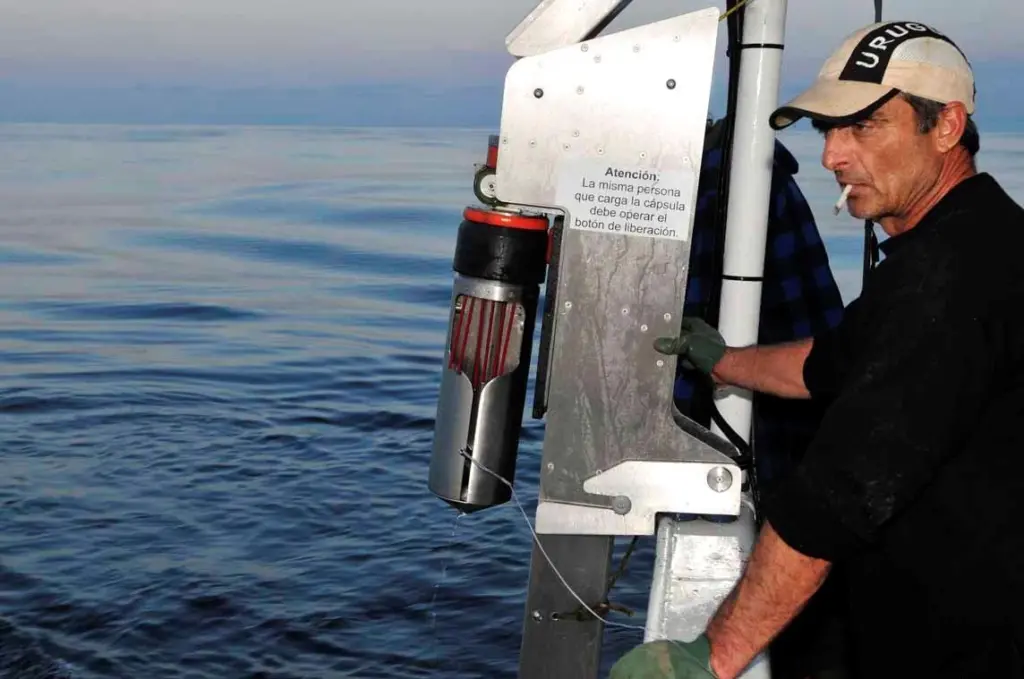
This stern-mounted, hydraulically-operated device deploys baits on a longline at pre-determined depths, effectively setting baits out of the visual sight and diving range of sea birds.
Mortality in longline fisheries is causing many seabird populations to decrease, some at alarming – and unsustainable – rates. As a result most albatross and many petrel species are listed as threatened (with extinction) by the IUCN.
The device will significantly reduce or even eliminate the loss of seabird by-catch within the pelagic longline industry worldwide. In addition to the critical conservation of seabirds the device will increase catch potential via eliminating seabird interaction. Current mitigation methods exist to reduce seabird-hook interactions but none have been able to eliminate mortality.
To operate the underwater setter, fishermen place a baited hook in a capsule, which is temporarily secured to a docking station via a cable; the docking station runs up and down a track which is mounted to the stern of the vessel. At the press of a button a series of hydraulic winches propel the capsule and the docking station down the track. Once the docking station reaches the bottom of the track the docking station releases the capsule where it freefalls to a pre-programmed depth. At the end of the descent, the system reverses the hydraulics, flushing the baited hook from the capsule through a spring-loaded door. The capsule then returns to the docking station to be set again. The speed of this cycle depends on the pre-programmed depth, and can be varied from 8-16 seconds/4-10m.
The problem of seabird mortality in longline fisheries is believed to be far greater than recorded statistics indicate. As consumers of seafood, it is imperative that we contribute to sustainable fishing practices by doing what we can to develop seabird-friendly fishing gear. It is vital that we understand our commitment to the conservation of all marine species and promote the culture of sensible eco-friendly fishing. Some countries tolerate seabird mortality and other unsustainable practices in their fisheries, but this is likely to change in the future as people become more concerned about the origins of the food they consume and the methods used (sustainable or otherwise) to produce it.
Related Articles
 ICELANDIC FISHERIES EXHIBITION
 WORLD FISHING EVENTS
 WORLD FISHING EVENTS