




Australia: Rising aquaculture output offers new potential
Australia’s fisheries industry has experienced a number of major changes during the past decade, with both output and production value having fallen during the past five years in spite of some growth in aquaculture output.
Foreign exchange changes are partly responsible along with trends in international prices for Australia’s main fishery exports.
The past decade also has witnessed a shift in fisheries production around the country. The value of fisheries production in Tasmania, for example, has grown due to the rapid development of salmon farming and the island state now accounts for 23% of Australia’s total fisheries production compared with 11% 10 years ago.
Over the same period the value of fisheries output in Western Australia, for example, has almost halved as a proportion of Australia’s total fisheries production in value due to declining lobster prices. The state today accounts for 17% of the value of Australia’s fisheries production compared with 31% 10 years ago.
In spite of Australia’s huge size, the fisheries sector is characterised by a large number of small fisheries scattered along the country’s lengthy coast line which stretches more than 19,000km.
In terms of value, around 86% of fisheries production including aquaculture is located in coastal waters within three nautical miles of the shoreline. Fisheries production, almost all being wild capture, extending from three nautical miles to the 200 nautical mile limit of the Australian fishing zone, accounts for just 14% of total output, similar in proportion and tonnage to the situation 10 years ago.
According to government figures, fisheries output has fallen by around 16% from a peak of 279,000 tonnes five years ago. The value of the country’s fisheries production has been in decline for even longer, in spite of a previous rise in output. The gross value of Australia’s fisheries production is down 30% from 10 years ago due to various factors, including declining prices in major export markets.
Fisheries production in 2008-9, the last year for which official figures are available, stood at 238,000 tonnes, down about 1% compared with output the previous year. At the same time the gross value of Australian fisheries production remained relatively stable at A$2.2 billion in 2008-9.
Most fisheries production is by wild catch which fell by 8,500 tonnes or 5% in 2008-9 to reach 173,100 tonnes, accounting for 73% of Australia’s total fishery output. The value of wild catch grew 1% the same year, however, to reach A$1.4 billion and accounting for 64% of the country’s total fishery production value.
Aquaculture production was 69,000 tonnes in 2008-9, including the southern bluefin wild catch to support tuna farming in Southern Australia, accounting for 29% of total Australian fisheries output. The gross value of aquaculture represents a higher proportion of fisheries production value. Including the southern bluefin wild catch to support tuna farming in Southern Australia, aquaculture output decreased 1% in value to A$861 million in 2008-9 but still accounted for 39% of the gross value of Australian fisheries production.
Australia’s fisheries production today is around the same level at the end of the 1990s following government action to prevent over-fishing of a number of important fishery stocks.
From 1999 fisheries output grew annually for six years due mainly to the rising Australian sardine catch. As a result total production rose by 25% from 223,000 tonnes in 1999-2000 to 279,000 tonnes in 2004-5.
While overall production increased, concern was growing that the expanding catch of other small species had become unsustainable and required action to prevent the situation from worsening due to Australia’s excess fishing capacity.
In November 2005 the then Fisheries Minister, Ian MacDonald, to announced a A$220 million fishing sector adjustment package called “Securing our Fishing Future.” A key feature of the package was the Fishing Concession Buyback scheme which received A$150 million of the total funding to subsidise the cost of companies giving up fishing concessions for species facing over exploitation.
Fisheries are largely a state-governed activity in Australia with the country’s individual states being responsible for coastal fisheries extending up to three nautical miles from the shore. Deep sea fishing from three nautical miles out to Australia’s 200 nautical mile fishing zone limit are known as Commonwealth fisheries and are managed by the Australian Fisheries Management Authority.
The Fishing Concession Buyback programme was targeted mainly at fishing companies holding licenses for Australia’s Commonwealth fisheries which covers all fishing grounds from three nautical miles out to the edge of Australia 200 nautical mile territorial fishing boundary.
Four fisheries were specially targeted: the Southern and Eastern scalefish and shark fishery; the Eastern tuna and billfish fishery; the Bass Strait Central Zone scallop fishery; and the Northern prawn fishery.
Fishery production dropped by around 30,000 tonnes in 2005-6 and then fell by a further 20,000 tonnes over the next three years. Production of small species has fallen the most in recent years with overall output not falling any further due to the growth of aquaculture output which has offset part of the decline in the wild capture catch.
The Australian sardine remains the largest species caught in spite of the lower catch in recent years with 31,500 tonnes caught in 2008-9 followed closely by salmon species totalling 29,700 tonnes. Prawn production remains stable with around 23,900 tonnes caught annually.
Australia’s two other major fishery species are oysters with 14,100 tonnes produced in 2008-9 along with 13,700 tonnes of tuna.
Three of the five largest fishery species in production volume are among the five major species in terms of value – salmon, prawns and tuna.
Rock lobster is traditionally Australia’s most valuable fishery with production worth A$404 million in 2008-9, accounting for 18% of the value of gross fisheries production followed by salmon with output worth $323 million representing 15% of gross output. Prawns are the third major species in value with output worth $289 million accounting for 13%, abalone valued at $188 million being 8% and tuna worth $187 million at 8% too.
Rock lobsters are produced mainly in Western Australia, South Australia and Tasmania. Caught by wild catch, production fell in 2008-9 in all Australian states, except New South Wales, dropping by 2,200 tonnes or 16% to 11,700 tonnes.
A decline in output in Western Australia and South Australia which account for 80% of national production was largely responsible for the decline. Output was about equal in both states due to a 15% decline in the western rock lobster catch and a 31% increase in the average unit value for southern rock lobsters.
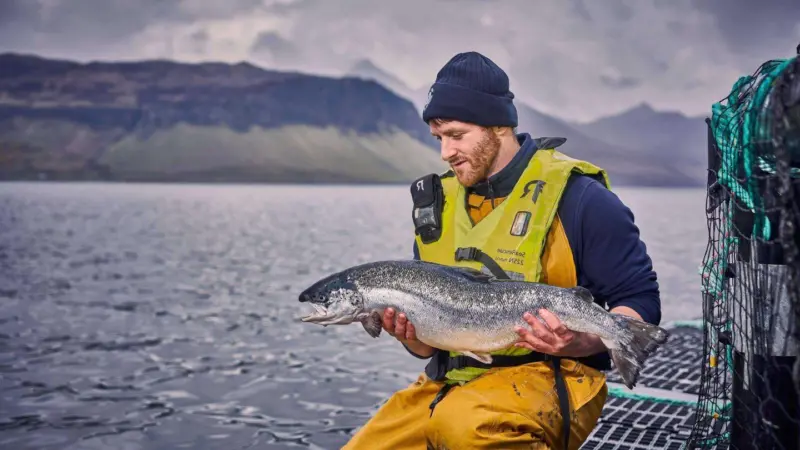
Salmon production has increased significantly since the start of salmon farming in 1998 with most growth taking place during the early period of the past decade.
Over 95% of production occurs in Tasmania which produced 28,700 tonnes in 2008-9 while Victoria and New South Wales produced 1,000 tonnes combined.
Most salmon are produced for the domestic market. The strong growth in output has been supported by investment in R&D enabling salmon farmers to adopt improved feeding techniques and better disease control measures.
Prawns are produced by aquaculture and wild capture with the growth in output in 2008-9 coming from a 29% increase in aquaculture production, mainly in Queensland, lifting total output to around 4,000 tonnes.
Wild capture of prawns in Queensland, Western Australia, South Australia and in the Commonwealth Northern and Torres Straits prawns fisheries rose just 1% to 20,000 tonnes overall with output down in the Commonwealth Northern and Torres Straits prawns fisheries.
Abalone is produced both by wild capture and aquaculture, mainly in Tasmania, Victoria and South Australia. Production rose 5% to 5,600 tonnes in 2008-9 over the previous year with both wild catch and aquaculture production rising.
Most of the increased output occurred in Tasmania which accounts for 55% of Australia’s abalone production. A large share of abalone is exported, mainly to Hong Kong, China and Japan, where it is served as a high priced delicacy.
Tuna production, meanwhile, fell in 2008-9 by 11% to $187 million in value, excluding wild southern bluefin capture for South Australia’s tuna farming industry. The main reason for the fall in production was the drop in aquaculture production of southern bluefin tuna.
Most of Australia’s tuna production is exported to the Japanese sashimi market with prices being largely dependent on the exchange rate between the Australian dollar and Japanese yen.
Among other tuna species, a 30% increase in yellowfin tuna production volume caused the output value to grow 87% to $14.3 million. Albacore tuna output also rose due to a 44% increase in prices and a 10% rise in production volume.
Australia’s major fishery species by value are the country’s major fishery exports as well. But in spite of its sizeable fishery exports, Australia has been a net importer of fishery products since 2007-8 due to the declining value of its exports and the increased cost of edible and non-edible fishery items.
In 2008-9 fishery exports rose by 14% overall to reach $1.5 billion, lifted by an increase in the export value of edible and non-edible fishery items, such as pearls. Edible products accounted for 75% of the total export value and included shellfish along with fish.
According to government figures, the real value of Australia’s fishery exports has fallen by 12% overall since 2004-5 due to an 18% drop in the value of edible exports while exports of non-edible items, mainly pearls, have grown 11% in value.
Rock lobster is the largest single export product with shipments worth $462 million being delivered in 2008-9. Pearls worth $366 million were shipped overseas the same year along abalone worth $208 million, tuna valued at $177 million and prawns worth $82 million.
About 90% of exports by value are shipped to customers in East Asia. Hong Kong and China combined imported fishery items worth $726 million in 2008-9 accounting for almost half of Australia’s total export value. Japan is another important market buying fishery items worth $367 million, almost one quarter of total exports by value.
The United States took items worth $87 million while Taiwan and Singapore are the two other important markets.
Meanwhile, Australia’s fishery import bill reached $1.7 billion in 2008-9, representing a 22% increase in value over the previous year due mainly to higher prices for imported items. Edible fishery products account for around 75% of the import value while non-edible items, mainly pearls and fishmeal, represent the balance.
Australia’s fishery imports have increased 29% in value overall since 2004-5. An 18% increase in the cost of edible fish items is the main reason along with a 77% climb in the value of pearl imports.
Canned fish worth $331 million account for about 20% of Australia’s fishery imports while frozen fish fillets worth $239 million represent a further 14%. Other major imports are canned crustaceans and molluscs worth $185 million and fresh, chilled and frozen prawns worth $135 million.
Thailand is the main source of imports accounting for about 18% in value followed by New Zealand with 14%, Vietnam 10% and China about 9%.