


Arabian Gulf countries to expand fisheries sector
David Hayes reports on fisheries development plans in the Arabian Gulf.
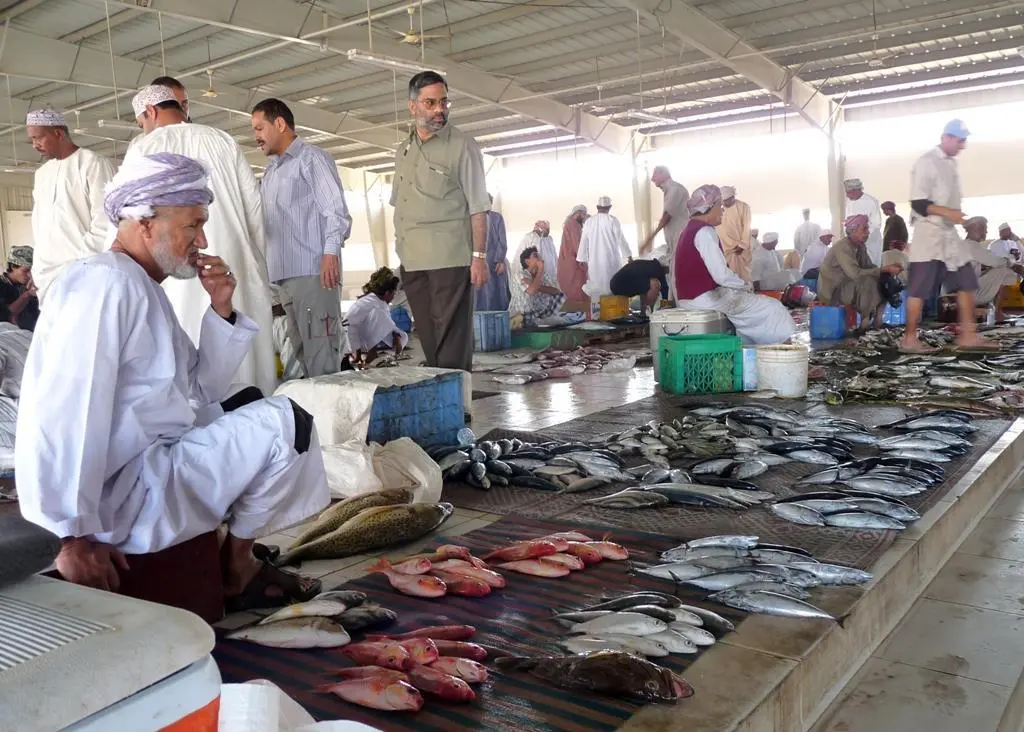
Efforts to boost fisheries development are gaining pace in various parts of the Arabian Gulf as governments in various countries launch initiatives to protect and restock the Gulf’s heavily exploited marine fishery resources.
Support is also growing for the region’s nascent aquaculture sector with most countries still at an early stage in developing inland and coastal fish farming programmes.
Investment
Oman appears to have the most ambitious plans for its fisheries sector with the country’s Minister of Agriculture and Fisheries, Dr Fouad bin Jafaar Al Sajwani, announcing government plans earlier this year to invest US$1.29 billion in fisheries development from 2013 to 2020 during a TV interview with Economic Vision, a programme broadcast by the Sultanate of Oman TV Company.
Drawn up by the Agriculture and Fisheries Ministry and approved by the Supreme Planning Council, the government’s fisheries support programme will help promote development of sustainable fishing and provide necessary infrastructure to increase the supply of fishery products across the country.
Plans include the construction of 41 modern fish markets in towns and cities across Oman, of which almost one quarter have been built. The first new fish market completed under the new programme is the central fish market in the town of Barka which was opened earlier this year.
In addition to fish markets, the government also is expanding the number of fishing ports in operation. Currently some 21 fishing ports are in operation in Oman. Government plans call for 10 more fishing ports to be built by 2010, lifting the number in operation to 31. Construction of four more fishing ports is due to begin shortly, while six other planned new fishing ports are at various stages in the design and tender process.
Fisheries complex
Since announcing the national fisheries investment programme, the Omani government has pledged to invest more than $250 million in developing a modern integrated fisheries complex with fish processing plants, cold storage, office buildings and other facilities occupying of around 8km2 within the Special Economic Zone at Duqm, an important coastal city located in one of Oman’s fastest growing economic regions.
Duqm’s Fisheries Industrial Zone, as the complex will be called, is planned to be developed alongside a major new commercial fishing harbour that is due to be built just south of the Port of Duqm.
Government funding will be used to construct the fisheries harbour and other infrastructure to support development of a modern industrial fishing and fisheries trading centre. Jetties will be built to accommodate local and foreign fishing vessels landing their catch for the domestic market or for export processing.
According to Ministry of Agriculture and Fishery officials, planned infrastructure will include training centres to build a pool of local fisheries expertise along with laboratories for testing the quality of fishery products that are processed and stored in the complex.
Due to be developed in several phases, some 60 plots of land in the Fisheries Industrial Zone are being offered to private sector companies in the initial launch phase to set up fishery processing plants and other facilities.
Long term land leases, tax holidays, soft loans and other incentives are being offered to encourage companies to set up operations in the complex. Both foreign and local firms companies are expected to set up fish processing and trading operations as the expanding Port of Duqm’s overall development programme offers air, sea and road transport options to supply nearby export markets in the Middle East, Africa and Asia.
Planned to be the largest fishing harbour in Oman as well as one of the largest in the Arabian Gulf region, the Agriculture and Fisheries Ministry sees Duqm fishing harbour and the Fisheries Industrial Zone as a key part of its ambitious long term sustainable fisheries development strategy.
Jobs and security
Intended to increase food security and generate jobs for Omani nationals, the government’s fisheries development programme is intended to boost socio-economic development among coastal fishing communities through encouraging the adoption of modern fishing technology and innovation.
According to Oman’s Under-Secretary for Fishery Wealth, Dr Hamed bin Said al Oufi, the government’s fisheries strategy is aimed at boosting total fishery production to about one million tons a year by around 2025, which will require a six fold increase in production compared with total marine and aquaculture output today.
Dr Hamed was recently reported in Oman’s local media as saying the government’s target calls for around 500,000 tons of fish for human consumption to be produced in 10 to 12 years time, along with about 400,000 tons annually of fish for other uses including fishmeal and dried fish production.
The government’s fishery production target will require the launch of a modern fish farming industry as aquaculture is expected to account for about 20% of total fisheries output. Modern fishing vessels are expected to play an important role in expanding wild capture marine fish production in future as most Omani fishermen currently rely on traditional fishing methods.
According to government estimates around 36,000 people are employed in fisheries related occupations, of which over two thirds are fishermen.
According to FAO figures, marine capture currently accounts for the vast majority of Oman’s fishery production which is estimated at about 160,000 tons annually. Although fishing accounts for less than 1% of GNP, the fishing industry is the country’s second most important employer with around 25% of all households thought to rely on fisheries for at least part of their income.
Unlike other Arabian Gulf countries, Oman’s geographical location means that most of the country’s 1,700km coastline borders the Arabian, Sea which is the main source of its fishing catch.
Around 27,000 traditional fishermen who use about 13,000 fishing boats, of which about 80% are fibreglass skiffs, produce over half of Oman’s total annual fishing catch mostly using hand lines, traps and gill nets.
Until recently the remainder of the nation’s marine fish catch was produced by a small number of Omani fishing companies, most of which use foreign-flagged fishing vessels. The vessels freeze their catch at sea and generally tranship an 80% share of their demersal catch, which they retain under joint fishing agreements with Omani companies to supply the South Korean and Japanese markets.
Licenses
Recently, in July this year, Oman Fisheries Company, the Sultanate’s leading fishing firm which is partly state-owned, was awarded 24 fishing boat licenses which the company will use to greatly expand its present coastal fishing fleet. Oman Fisheries has announced the company will acquire new vessels to expand its marine catch and expand the supply of fish to the company’s growing network of fish processing plants and to meet rising domestic demand for fish.
Issued by the Ministry of Agriculture and Fisheries, the new fishing boat licenses will cover the first two stages of the planned build up of Oman Fisheries Co’s coastal fishing fleet which eventually could reach up to 100 vessels when fully operational.
Oman Fisheries started up by initially purchasing four fishing vessels that entered service in 2011. These were followed by the purchase of nine new fishing vessels towards the end of last year, lifting the company’s fishing fleet size to 13 vessels.
Oman Fisheries’ five year plan calls for the firm’s fishing fleet to meet its 50,000 metric tons per year fishing quota target. This is set by the government under a long standing fishing concession agreement.
The quota consists of 20,000 metric tons of demersal fish and 30,000 metric tons of large pelagic fish annually.
Oman Fisheries first approached the Agriculture and Fisheries Ministry with a proposal to own and operate its own fleet of coastal fishing vessels after a government ban on trawling came into effect in June 2011. The ministry’s approval of the company’s business plan will allow Oman Fisheries to become a major new force driving fisheries sector growth in Oman.
Oman Fisheries buys in fish caught by other fishermen as well as processing its own fish catch. Artisanal fishermen already are benefitting from Oman Fisheries’ growing fish procurement programme which involves the company in buying fish for its fish processing plants from a number of fish landing stations around the country.
According to the company, procurement of fresh fish from local fishermen has been growing a compound annual growth rate of about 25% since 2008. Fish quantities purchased from fishermen grew from almost 12,000 metric tons in 2007-2008 to 26,000 metric tons in the financial year ended 31 March 2013.
Oman Fisheries believes the recent upturn in business is a result of the company’s decision to target new customers to expand turnover rather than enter fierce price competition with other fishing operators and begin cutting prices to increase sales.
The company’s decision to provide ice to fishermen from private ice factories which it has leased itself has helped assure Oman Fisheries of steady fish supplies.
Other species
Another factor which has made the company’s popular with local fishermen is that Oman Fisheries buys in fish species that are not so popular with Omani consumers such as cuttlefish, crab, hilsa, ribbon fish and sardines.
These fishery products are exported directly to major international markets. According to Oman Fisheries, cuttlefish accounted for 41% of the company’s total RO 13.7 million export sales last year. The next most important export species were hilsa and ribbonfish, each worth 10% of the total export value. Sardines and crab are the two other major exportable species.
Seafood buyers in the Far East purchased fishery products equivalent to 53% of Oman Fisheries’ total exports in 2012. Gulf Cooperation Countries including the United Arab Emirates, Saudi Arabia and Kuwait accounted for a further 18% of exports. Importers elsewhere in the Middle East and in Europe were important customers as well.
Fish processing will expand over the next few years with Oman Fisheries among those planning to expand their processing operations. Currently the company is building two processing units at Salalah and Sograh which are due to be operational by next fishing season.
The company also has announced plans to build two other processing plants at Duqm fisheries complex and at Barka. Both will be designed to process up to 35 tonnes of fish and other seafood products daily.
Aquaculture opportunities
Meanwhile, government plans to increase the size of the fishing industry are expected to boost fisheries employment opportunities for Omani nationals. The aquaculture sector, for example, which today produces less than 500 tons of fish and shrimp annually, is earmarked to grow in future and will offer new career and job opportunities for young people living in coastal communities.
In addition to the domestic market, farmed fish and various marine products are expected to be exported to other Arabian Gulf countries, some of which also are looking to develop their own aquaculture industries.
Government efforts to develop the aquaculture sector so far have included creating a regulatory framework for fish farming. With byelaws in place, the Agricultural and Fisheries Ministry is seeking investors for various coastal sites and mariculture opportunities in coastal waters.
Environmental and human health protection, the promotion of sustainable aquaculture production, licensing details, fees, investment guidelines, quality control and the use of fertilizer have all been included in byelaws enacted to control the aquaculture sector.
According to recent announcements, the Agriculture and Fisheries Ministry is aiming to attract investments totalling about US$100 million for the first phase of aquaculture development which was formally launched last year.
The ministry’s long term target is for aquaculture production to reach 220,000 tons a year worth $884 million in 2030.
According to ministry