

UK mussel farm benefits study
The impact of offshore aquaculture on ocean health is to be explored in a new project funded by the UK government.
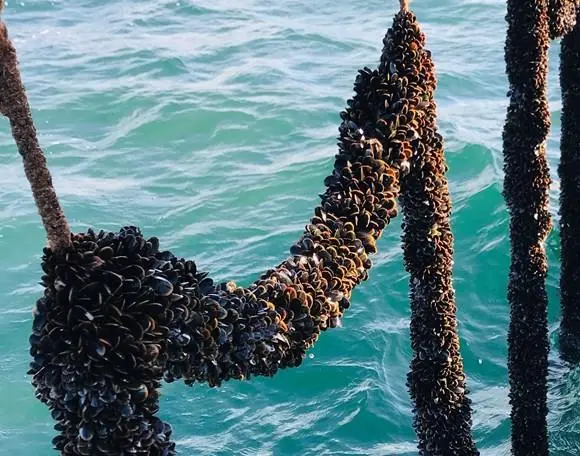
The £870,000 Ropes to Reefs project will assess the wider benefits of the UK’s first large-scale offshore mussel farm, located in Lyme Bay on England’s south coast, examining its impact on the area’s biodiversity including the habitats of other species.
The project is one of 12 initiatives receiving funding under the final round of the Fisheries Industry Science Partnership scheme, part of the UK Seafood Fund. It is led by the University of Plymouth.
“Offshore mussel farming has the potential to become one of the world’s most sustainable, large-scale sources of healthy protein,” explained Dr Emma Sheehan, Associate Professor of Marine Ecology.
“Through the Ropes to Reefs project, we can gauge the industry’s potential benefits far beyond just providing a sustainable source of food.”
The project will use an autonomous surface vessel with multibeam sonar to take non-destructive samples from the seabed and ocean around the farm, comparing data over the past decade since the reef was established.
Researchers will also use technology developed through the FISH INTEL project, another initiative led by the University, to track fish and crustaceans using acoustic tags via the world’s first multi-farm aquaculture telemetry network.
Project partners include Offshore Shellfish, Scallop Ranch, Biome Algae, the Shellfish Association of Great Britain, the Marine Management Organisation, the Fishmongers’ Company’s Fisheries Charitable Trust, Devon and Severn Inshore Fisheries and Conservation Authority, and Natural England.
“During the past nine years of operation, we have witnessed the regeneration of biodiversity in the farmed area and huge increases in the number of fish and shellfish such as bass, mullet, crab and lobster,” said John Holmyard, managing director of Offshore Shellfish.
“The Ropes to Reefs project will determine whether the offshore mussel farm provides an enhancement effect to surrounding commercial fisheries, as the other species spill over from the protected area.”
Related Articles
 AQUACULTURE
 AQUACULTURE
 AQUACULTURE