





New support launched for ‘improver’ shrimp farmers
Following successful pilots in different countries, the Aquaculture Stewardship Council (ASC) has presented the development of a framework for credible Aquaculture Improvements Projects (AIPs) under the ASC Improver Programme at the Global Shrimp Forum, held in Utrecht 5-7 September 2023.
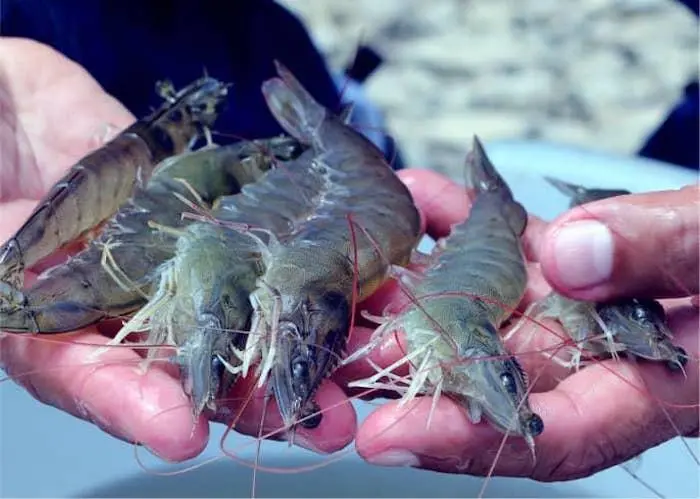
Producers can now apply to enter the programme and receive support to improve their farming operations.
ASC has also secured seafood giant Thai Union as one of its first partners to implement its AIPs for a total volume of 15,700 tonnes of shrimp by 2026.
With not all aquaculture producers being able to meet its standards’ requirements, ASC created the Improver Programme. It supports farms that are not ready or eligible for ASC certification, but which are committed to improving their farming practices.
Two routes
Recognising the aquaculture industry has been lacking a clearly defined AIP framework, ASC set a structured approach to monitor AIP progress. Each AIP starts with a baseline measurement including a gap analysis and a time-bound project plan. Progress needs to be reported on a regular basis and will be verified by independent entities; all this info will be public on ASC’s website under the “Find an AIP” search tool.
Producers can choose one of two tracks for their AIP: The first is through the AIP to ASC certification route, where a plan of four phases is defined to improve performance to a level where the producer is ready to begin the ASC certification process by the end of the AIP. The second is the AIP to Better Practices route which is set out to facilitate producers who do not wish to become ASC-certified but want to improve responsible practices in specific environmental or social areas.
ASC said the launch of its AIP model “pushes the bar on transparency and credibility” in the farmed seafood industry beyond certification. It anticipates the transparency will in turn drive informed conversations on actions and investments required under an equitable and fair model.
A network of qualified implementers and verifiers will be trained by ASC. It will also cover the costs of verification of an AIP in order to give back to the industry.
“The launch of this framework for credible AIPs, together with the support and investment that ASC aims to provide to the sector, will be a game changer to the industry,” said Roy van Daatselaar, ASC’s Global Lead Improver Programme. “Processors and seafood importers can now start an AIP within their supply chain and receive direct support from the ASC in the form of capacity building. Retailers and seafood buyers can now go to our website and see how AIPs are progressing, following independent verification and transparent reporting on progress.”
Successful pilots
The first pilots were conducted in Indonesia with PT BMI, Sekar Bumi and JALA, which have all taken part in an AIP to ASC certification. Additionally, ASC is running pilots with Lenk Seafood Services and Luna Seafoods, who are working with 125 extensive monodon farmers in Bangladesh and are implementing ASC Group Certification following an AIP.
Thai Union is one of the first setting up an AIP under the Improver Programme, with the aim to bring more than 4,000 tonnes up to ASC certification and another 11,700 tonnes in volume implementing best practices in line with the social and water quality requirements of the ASC Standards.
“We added responsible aquaculture as a new commitment within our SeaChange 2030 strategy, addressing key impact areas including human and labour rights, health and wellness, climate action and biodiversity,” said Adam Brennan, Chief Sustainability Officer at Thai Union.
“In July we committed to 100% of our shrimp and its feed being produced minimising ecosystem impact and meeting industry best practices in welfare and working conditions and that 100% of the farms we source from are a safe and decent workplace by 2030. With the framework that ASC has introduced, we are able to work with our suppliers on clear action plans, tracking, and verification in a way that wasn’t standardised in the past.”
ASC aims to scale up its portfolio in the coming years and offer support to AIPs in Southeast Asia and Latin America, while exploring with partners such as World Wildlife Fund (WWF) and Sustainable Fisheries Partnership (SFP) how improvement efforts can be driven in the wider landscape and at jurisdictional level.
Following the launch of the ASC Farm Standard in 2024, ASC plans to open the AIP scope to other species.
Related Articles
 AQUACULTURE
 AQUACULTURE
 AQUACULTURE