




Is Russia’s salmon industry in trouble?
Following a decade of consistent growth and against a forecast that was envisaging the upward trend to continue for at least the next six years, Russia’s aquaculture production declined to 380,000 tonnes in 2024, nearly 22,000 tonnes lower than in the previous year, according to figures from the federal agency for fisheries, Rosrybolovstvo. While governmental officials largely blamed adverse weather conditions, it’s felt by other stakeholders that some systemic issues and growing sanction pressure also played a role in the downturn.
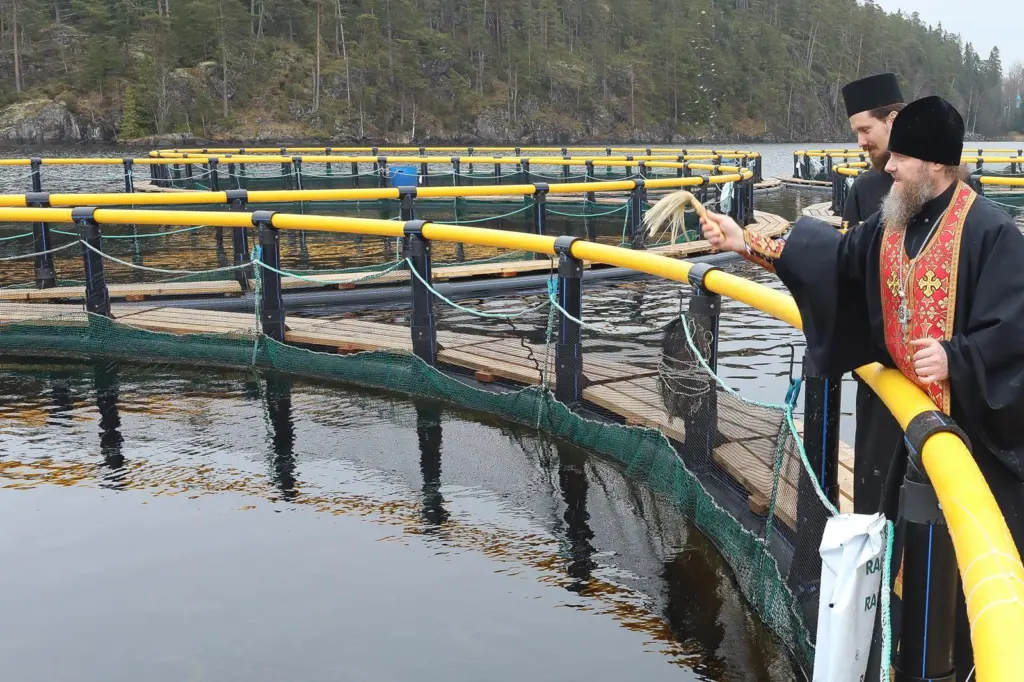
Figures shared by VARPE, a prominent Russian union of fishermen and fish farmers, confirmed that commercial fish farming and broodstock production experienced a steady upward trajectory during the previous decade – with the output jumping from 186,000 tonnes to 402,000 tonnes in the period between 2013 and 2023.
“In 2024, this tendency paused for reasons out of the fish farmers’ control,” VARPE President Herman Zverev said.
According to farmers in the European part of Russia, last year brought plenty of harsh weather abnormalities – an unusually cold spring, with frosts registered as late as May, gave way to an extremely hot summer. Only recirculating aquaculture system (RAS) farms, which are still somewhat rare in Russia, were unaffected by the negative weather conditions.
“In April, when warm weather settled, the hatcheries stimulated spawning,” said Vasily Glushchenko, Chairman of the Rosrybhoz Association, which unites fish farmers and wholesales. “And, when the temperature sharply dropped in May, [most of] the young fish died in the cold water.”
The weather abnormalities didn’t end there, Glushchenko explained. Against most forecasts, the 2024 summer was described by some fish farmers as “hellish hot”, with temperatures occasionally reaching 40 degrees C. The summer heat led to oxygen deficiencies, which also negatively affected fish growth, he said, adding that this situation led to a number of fish diseases becoming much more common in the country last year.
“Aquaculture is not about how much you grow, but about how much you can save during the growing process,” Ilya Bereznyuk, Managing Partner of Agro and Food Communications, a Moscow-based consultancy, said. “This is especially true for valuable fish species, which include salmon. And in this sense, we were unlucky last year.”
More than meets the eye
However, not every aquaculture sector was affected by the bad weather, determines Rosrybolovstvo’s figures. In fact, traditional industry segments like carp and sturgeon production experienced modest output growth, and the agency also recorded slight increases in some relatively younger seafood production segments, including oysters, mussels and scallops.
On closer inspection, salmon and trout production were the only segments where the volumes plummeted compared with the previous year. But the decline was so strong it dragged the entire industry’s performance down.
While the final industry data for 2024 is yet to be published, preliminary figures indicate the salmonid sector could have lost nearly 30% of output last year. During the first nine months of 2024, Russian Atlantic salmon and trout production reached 101,400 tonnes, compared with 131,300 tonnes in the previous year.
During an industry conference at the end of 2024, Rosrybolovstvo Deputy Director Maxim Sokolov attributed the negative dynamics to more systemic factors. For instance, in the Murmansk region, the heart of the Russian Atlantic salmon industry, high dependence on imported broodstock came to the fore in 2024.
“We purchase fertilised salmon eggs, we buy fry, and we have not gotten rid of import dependence on trout either,” Sokolov said, hinting that the quality of the Russian broodstock is inferior compared with imported products.
This, coupled with the unfavourable weather conditions, led to the production decline at farms breeding Atlantic salmon, he added.
Aquaculture is not the only Russian economy segment that seems to be suffering from the Russian government’s import replacement programmes. The Atlantic salmon sector’s current predicament is quite similar to what the grain industry went through last year, with production dropping 14% compared with the previous year to 125 million tonnes.
While the Russian government again blamed bad weather for the decline, it has also been urging authorities to move away from imported seeds.
Focus on quantity
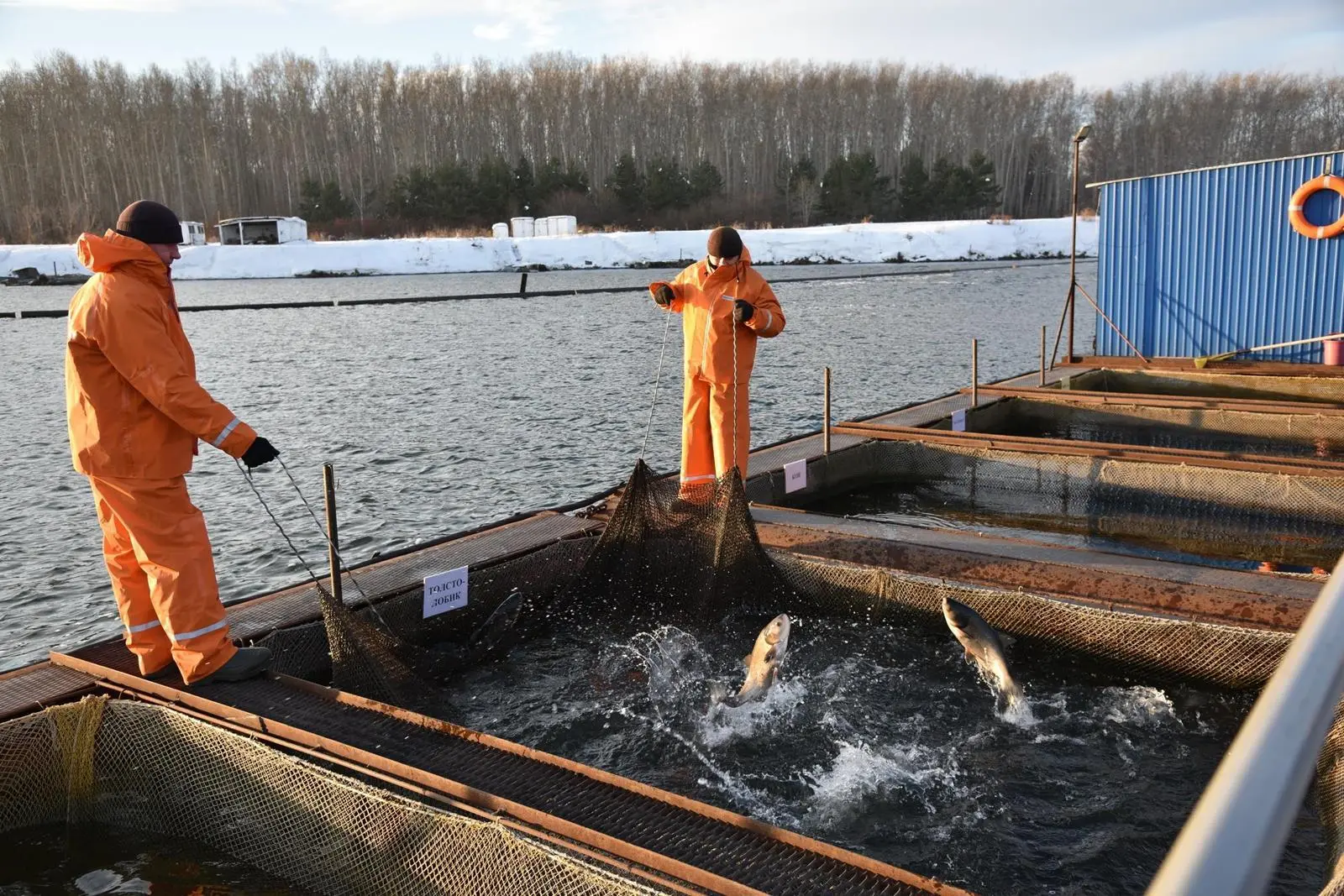
Nevertheless, Russian officials say the import-replacement campaign in aquaculture is proceeding apace, and Rosrybolovstvo advised that in 2024, Russian fish feed production reached 51,400 tonnes, up 19% on the previous year. As a result, the dependence on imported fish feed was lowered to 75%, compared with 90% before 2022.
The long-term plans are even more ambitious, with the Russian government aiming to boost fish feed production nearly fivefold to 250,000 tonnes by 2030, a volume estimated to be enough to meet almost all the domestic demand.
It’s a similar picture for broodstock, with Russian hatcheries last year meeting 15% of the domestic demand. Compare that to before 2022, when nearly 98% of broodstock was imported from Norway, the US, Denmark and France.
“In recent years, Russian fish farmers have been turning towards domestic breeding farms, where the breeds are adapted to our conditions, and the production itself is transparent in terms of epizootics, in other words, fish diseases,” Rosrybolovstvo advised.
However, Russian fish farmers do not entirely agree with the claim.
“The Russian state aid programme is built up in the way encouraging companies to ramp up production in the first place,” a source in the Russian fish farming industry told WF.
Over the past few years, the Russian authorities kicked off a set of generous support measures, including the reimbursement of 25% of capital costs associated with the construction and modernisation of fish feed production capacities. However, in exchange for the state aid, Russian hatcheries and fish feed producers have to show concrete results, and the key criteria is quantities.
“Russian officials need some robust production figures to demonstrate that the money allocated for the import replacement was not squandered. However, Scandinavians invested thousands of person-hours into achieving the highest level of product quality – you can’t simply achieve the same level in just a matter of a few years,” the source explained.
The quality of fish feed on the Russian market largely differs, and often commercial fish producers test the quality of new domestic feeds at their own risk, said Lybov Savkina, General Director of Feedlot, a Moscow-based think tank.
“It is worth choosing products from trusted suppliers and not trying to save money by buying feed from an underground production,” Savkina said.
Worsening prospects
For many, the weak infrastructure, coupled with waning domestic demand and general economic headwinds, make the long-term prospects for Russian aquaculture somewhat gloomy.
Under the Russian fish farming industry development strategy renewed in November 2022, aquacultural production is set to grow to 650,000 tonnes in 2030. Taking in 2024’s setback, market players and analysts no longer believe this forecast is realistic. Additionally, the investment activity in the Russian fish farming industry has fallen to an extremely low level recently.
“Investment activity in aquaculture has been stagnating for the last few years – we can only count on existing players implementing large-scale infrastructure projects,” Bereznyuk said. “And new participants are not entering the market as willingly as they were 5-6 years ago.”
To encourage investors, the Russian authorities need to develop new support measures, Bereznyuk suggested.
The Russian fish farming industry is at a turning point, Evgeny Katz, Director of the fish farming department under the Russian Agricultural Ministry, said during a government meeting. He explained that authorities are re-evaluating the production targets and the development strategies.
Katz indicated that the growth impetus given by the existing support mechanisms has wound down, and the authorities are now trying to figure out what to do next. The re-evaluation will also likely lead to establishing better traceability mechanisms, as government officials fear some farmers overstate their production performance.
He said: “We analysed the figures on the grown and sold aquaculture objects and saw a big difference between what fish farms report, how much they grew, and how much actually went to the market, to sale. The figures for a number of regions differ significantly from each other. The question is, where were the products that were grown?”
Related Articles
 AQUACULTURE
 SEAFOOD
 AQUACULTURE