






Gloomy outlook hits aqua
Demand for global aquaculture is falling, according to the latest research from Dutch financial services firm, Rabobank.
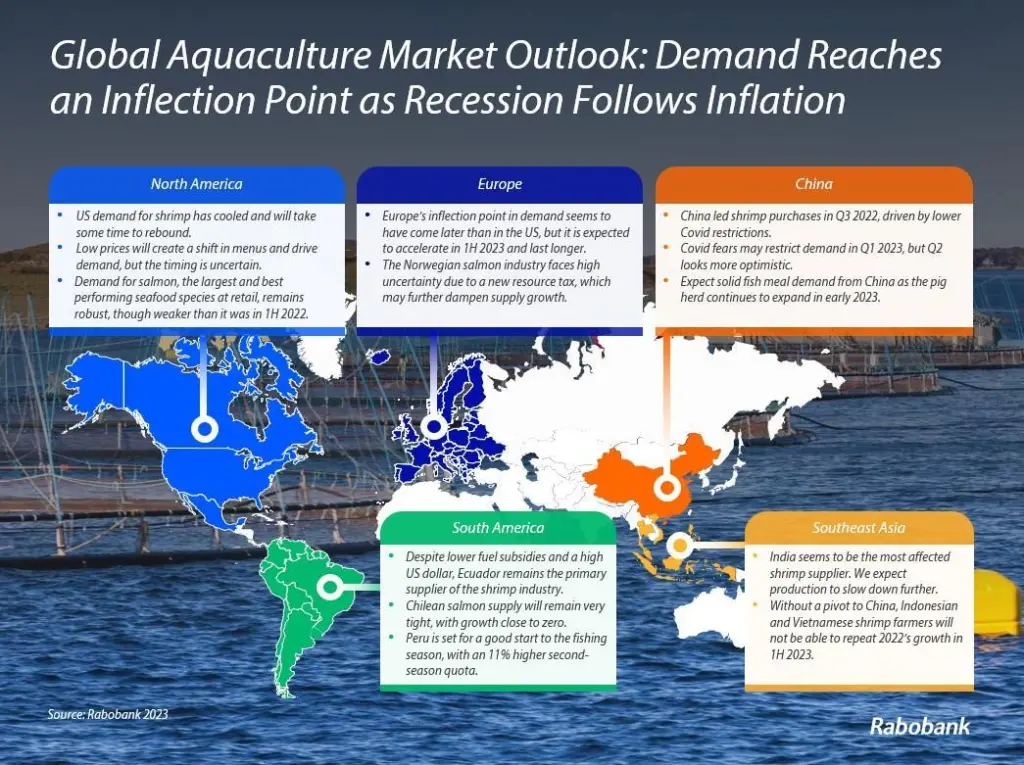
Sales are starting to fall in both Europe and the US as recession follows high inflation, with China still an unknown, the company said.
However, the sector shows resilience with salmon prices in particular expected to remain high, albeit below the prices seen in the first half of 2022. However, the Norwegian government’s proposed tax on the industry is creating uncertainty and could have considerable consequences for the industry.
Shrimp farming poses a greater risk with current low prices likely to bottom out in the first half of 2023 or possibly later in the year.
“Shrimp demand is more affected than salmon, which seems to be resilient,” explained Gorjan Nikolik, senior global seafood specialist at Rabobank. “It is expected to be a very challenging period for shrimp farmers globally.”
Fish meal prices remain supported by good demand and limited supply growth, despite a correction in soymeal prices. “Global supplies of fish meal and its co-product fish oil remain relatively stable,” said Nikolik. “In 1H 2023, possible upsides in Peru and Chile are likely to be balanced by declining supply in Europe.”
China is back as the driver of demand although its foodservice industry, at least in early 2023, will be impacted by fears of Covid infection.
“Demand for shrimp and fish meal in China has increased, but it remains an unpredictable factor,” concluded Nikolik.
Related Articles
 AQUACULTURE
 AQUACULTURE
 AQUACULTURE