



High seas uncertainty
On 5 March 2023, after around 36 hours of intense negotiations in New York, a breakthrough deal to protect international waters and their marine life from a multitude of activities was agreed by close to 200 countries. A key measure within the United Nations’ High Seas Treaty is to provide a legal framework to put two-thirds of the ocean that lies outside national boundaries and jurisdiction into marine protected areas (MPAs), with the aim to help achieve the goal of protecting 30% of the world’s oceans by 2030. This was agreed at the 2022 UN biodiversity conference. Currently, just 1% of the high seas have protection in place, which makes them more at risk from such threats as climate change and overfishing.
Delivery of the MPAs will allow activities to continue in these areas on the proviso that it’s consistent with conservation objectives, and therefore doesn’t damage marine life. This could see limits put on certain fishing activities, as well as shipping routes and exploration efforts like deepsea mining.
Alongside the MPAs, the treaty will also require environmental impact assessments (EIAs) of ocean-related human activities, the sharing of marine genetic resources (MGRs) that can be used in pharmaceuticals, food and other areas that benefit society, and funding and technical support for developing nations. A Conference of Parties (CoP) to provide monitoring and accountability will also be established.
Agreed after two decades of talks, the treaty has been hailed by many. UN Secretary-General António Guterres called it “a victory for multilateralism and for global efforts to counter the destructive trends facing ocean health, now and for generations to come”, while EU Commissioner for the Environment, Ocean and Fisheries Virginijus Sinkevičius described it as a “historic moment for the ocean”.
On the seafood supply chain side, UK body Seafish’s Director of Operations Aoife Martin commented: “We know that illegal, unreported and unregulated (IUU) fishing occurs on the high seas – those areas not within any one nation’s control or supervision…This High Seas Treaty will mean that, for the first time, the same levels of marine protection that exist inside UK waters will now also apply on the high seas.”
Short-term dangers
There is of course a “but”. Before the new treaty takes effect, countries will need to meet again to formally adopt the agreement. It will only enter into force once 60 countries have signed up and legally passed the legislation in their own countries. Signatory countries will then have to start looking at how these measures can be practically implemented and managed. Such endeavours could take years.
This presents a window of opportunity for those who would seek to continue or start exploiting these areas before the treaty comes into effect – something that has already been flagged up by observers. With the timings for ratification and implementation of the treaty yet to be set, fisheries governance pressure group Accountability.Fish is among those calling for international fisheries management bodies to urgently act to keep industrial fishers from “pulling a fast one”. The US-based organisation’s Global Director Ryan Orgera also suggested regional fisheries management organisations (RFMOs) could give overfishing a green light until they are forced to do so by the treaty.
According to Accountability.Fish, red flags in this regard include the extent to which industrial fishing interests were involved in fighting a UN agreement, and the fact that many RFMOs have policies that discourage outside observers from attending deliberations and decision-making.
“Without robust oversight, there’s every reason to believe that the RFMOs will let overfishers cash in before the treaty comes into effect,” Orgera said. As such, Accountability.Fish wants to open the decision-making processes of all RFMOs to a level equal to those of member countries like the United States, France, Canada and New Zealand.
Certification incentive
Essentially created by the 1982 UN Convention on the Law of the Sea, RFMOs are the primary body responsible for managing how fisheries operate on the high seas. These 17 international bodies (including five for tuna) were primarily set up to focus on the target species that many member governments wish to fish for in the high seas, but with an obligation to conserve marine resources.
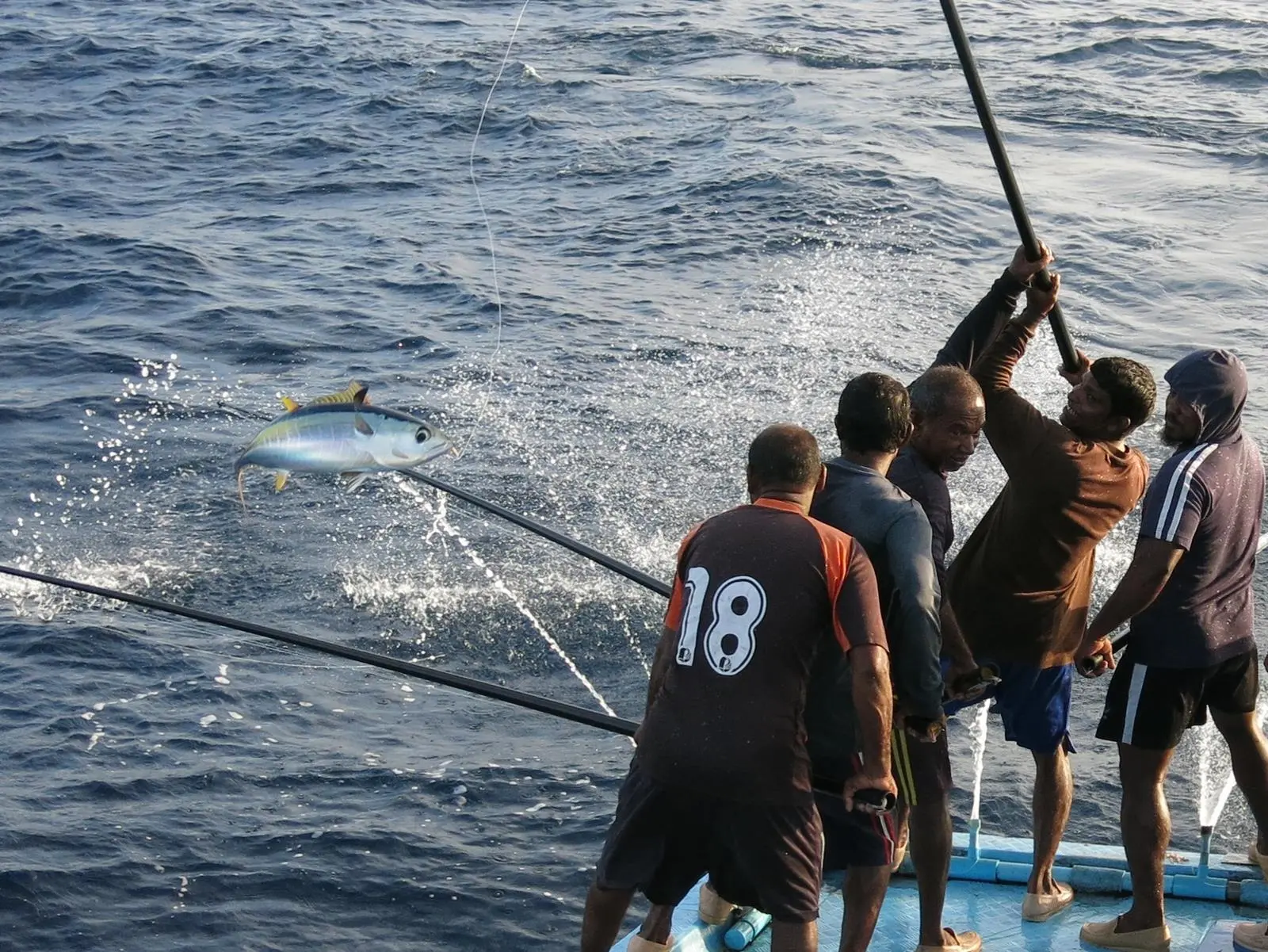
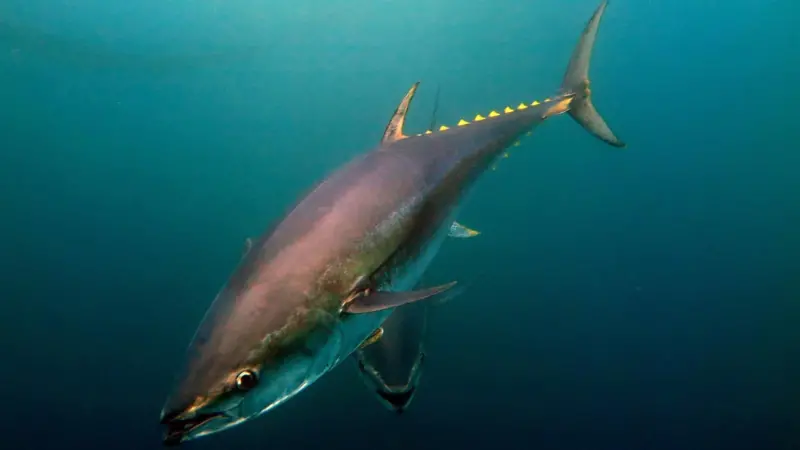
The role these RFMOs play in the current and future management of international waters was the subject of a recent Blue Deal Debate on ending high seas overfishing, organised by the Marine Stewardship Council (MSC). In the forum, it was highlighted many tuna stocks are now doing well as a result of RFMO best-practice measures, with Victor Restrepo, Chair of the Scientific Advisory Committee with the International Seafood Sustainability Foundation (ISSF) confirming that 85% of today’s global tuna catch comes from stocks deemed “healthy”.
It was also confirmed that where problems have tended to arise in the high seas is when exploitation has been very high – often due to a race-to-fish strategy or when highly-vulnerable species have been targeted.
Where there are exceptions to the healthy status, stocks and fisheries would benefit from better management, MSC Chief Science & Standards Officer Dr Rohan Currey told the debate. He also said that some of the upturn, particularly in the Pacific region, can be attributed to MSC’s expectation that fisheries wishing to be certified must have harvest strategies in place, including a management system that responds to stock performance.
“We have seen a number of fisheries management authorities associated with tuna – the big RFMOs – start to look at this quite seriously, and most notably over the latter part of last year, we saw the adoption of a couple of really important measures. One of these focused on Atlantic bluefin tuna in ICCAT [International Commission for the Conservation of Atlantic Tunas], and most recently for skipjack in the Western & Central Pacific Fisheries Commission [WCPFC] – the largest skipjack tuna fishery on the planet,” Currey said.
NEA pelagic failings
But it’s a much different story with the Northeast Atlantic’s shared stocks, managed by the North East Atlantic Fisheries Commission (NEAFC) RFMO, acknowledged Erin Priddle, MSC North Europe Regional Director, who said that in just four of the last 25 years, the region’s important blue whiting, mackerel and Atlanto-Scandian herring have had management strategies for in place.
“Without agreements in place you can have overexploitation of stocks, you can have overfishing, and in a worse-case-scenario you can have stock collapse. We actually saw this with the Atlanto-Scandian herring stock back in the 1960s. We don’t want to see that again,” Priddle said.
What’s happening in NEAFC, she explained, is that on a national level, coastal states are setting total allowable catches (TACs) in line with what they feel the pressure on the stock should be, but when all the TACs are combined, the total is far beyond the overall scientific advice from the International Council for the Exploration of the Sea (ICES).
“What we’ve seen in recent years is that there’s been overexploitation of mackerel, for example, of 40%. So, while the biomass of these stocks are relative okay, the stocks cannot withstand this sustained pressure of overexploitation without having some level of risk applied to them. Without management in place, the risk of stock overexploitation, and potentially overfishing is taking place.”
Priddle informed the debate that all seafood supply chain stakeholders have the same goal – to see healthy, thriving marine stocks, natural resources and healthy habitats. She added that RFMOs “have a huge role to play” in achieving this.
And while in the case of NEAFC pelagics, the supply chain is seeing national interests override the prevailing objectives of sustainability, other RFMOs have successfully “pulled through”, she said.
Increasing transparency
Key to moving this forward will be pressing RFMOs to adopt transparent decision-taking so that policymakers no longer avoid public scrutiny and can be held to account for the decisions they take, the forum heard.
There should be greater transparency around compliance, Currey said. “I think a lot of RFMOs are set up to achieve a certain objective, they have a lot of the right tools in place to go about achieving that, but we are not always seeing outcomes being delivered. But transparency equips us with better knowledge of where gaps exist, which then enable actors to keep analysing and working to improve those things.”
He added there’s an expectation that if RFMO members are sending flagged vessels to fish in a certain area there’s also an obligation for them to make sure those vessels are following the law that they should have put in their legislation.
“Just because it’s on the high seas doesn’t mean it’s completely lawless. So, if people are acting in that manner, that means those flagged-states who have sent them are letting things slide. This is why compliance needs to be transparent. It’s the only way you can hold these individual actors to account.
“The more transparency there is, the easier it is to do that. The difficulty comes when these things are shrouded in mystery,” he said.
Enforcement is also important, said Restrepo, although he added that doing this on the high seas can be very difficult, particularly for developing nations.
“They are a very important part of the RFMOs. ICAAT has something like 54 members and most of them are developing coastal states. But they don’t have the same resources as the EU or US, for example, would have to carry out enforcement.
“Fisheries management is really hard; it’s a multifaceted job with many components. It’s not as simple as some people would like to see – there’s no simplistic, silver bullet solution,” he said.
Engaging stakeholders
With regards to the new High Seas Treaty, Currey said member governments are still at the very early stage of working out precisely what it will mean in practice, but he believes there could be an interaction between the treaty and the way RFMOs continue to work.
“As the process evolves, one of the things I would be encouraging governments to think about is how they see this actually working, and how they can engage with the stakeholders who will be affected by it to make it effective, because I would be very concerned about seeing this instrument that was created with the intent of trying to be holistic just turn into something that imposes changes without consideration of those that will be affected.
“Equally, I would hate to see it turn into what’s often referred to as ‘paper parks’ where we have marine protected areas that are defined but don’t have concrete objectives or a way of delivering an outcome. It’s incumbent on governments to work out what this means in practice and to take that onboard as they try to move it forward. I expect we will see proposals for MPAs arise from this and a number of other initiatives in the coming months and years. It will be fascinating to see as it unfolds.”