



Amazonian fish farming
Nofima, the Norwegian Institute of Food, Fishery and Aquaculture, says that Brazil has chosen Norway as its collaborative partner to help modernise its aquaculture industry because it is a forerunner in fish farming technology.
Brazil needs to get better with aquaculture. Fish farming was set to be the answer to reducing deforestation and increasing food security in a fast developing country, but it appears it’s not taking off in the way people expected.
Atle Mortensen, senior scientist, Nofima, says that this is largely due to the fact that Brazil is the world’s largest exporter of beef and soya, so this is where the emphasis has always been placed.
But now at last he feels that a collaborative agreement between the two countries, which has the approval of both fisheries ministers, could help change the country’s reliance on these staples.
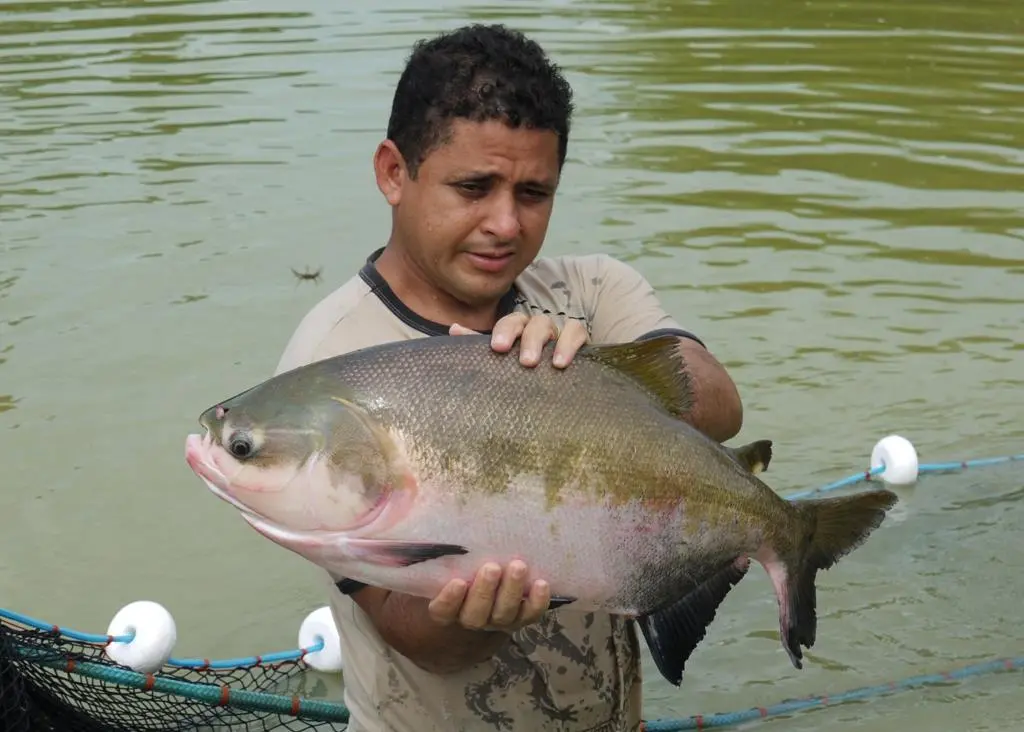
Nofima’s agreement with Brazil’s largest research institute for fisheries and aquaculture, Embrapa is working towards developing the local Amazon species, tambaqui, because stocks are severely depleted in the wild. Another farmed species it is focusing on is the giant fish, pirarucu, which can weigh in at up to 250kg.
Mr Mortensen says that these examples should act as a model for farming other species.
He said: “It is absolutely a win-win situation for Brazil to concentrate on fish farming in cages using the technology developed by the aquaculture industry in Norway. As in most coastal nations, the wild fish stocks are depleted. With increased fish farming, the offer of healthy food will increase, while at the same time striking a blow for the global environment.”
Brazilians consume a lot of meat, but the politician goal is for some of the meat meals to be replaced with fish.
They have already had partial success as Brazilians also love fish. Capture and aquaculture of fish has increased from 600,000 tonnes to 1.4 million tonnes since 1990. In the Amazon Region, people consume an average of 36 kg of fish per year which Mr Mortensen says is far higher than the average consumption in the highest fish-consuming countries.
Related Articles
 FISHERIES
 FISHERIES
 WORLD FISHING EVENTS