





‘Active’ fish more likely to eat their own eggs
A study into why fish eat the eggs of their own offspring has shown that personality might be a factor.
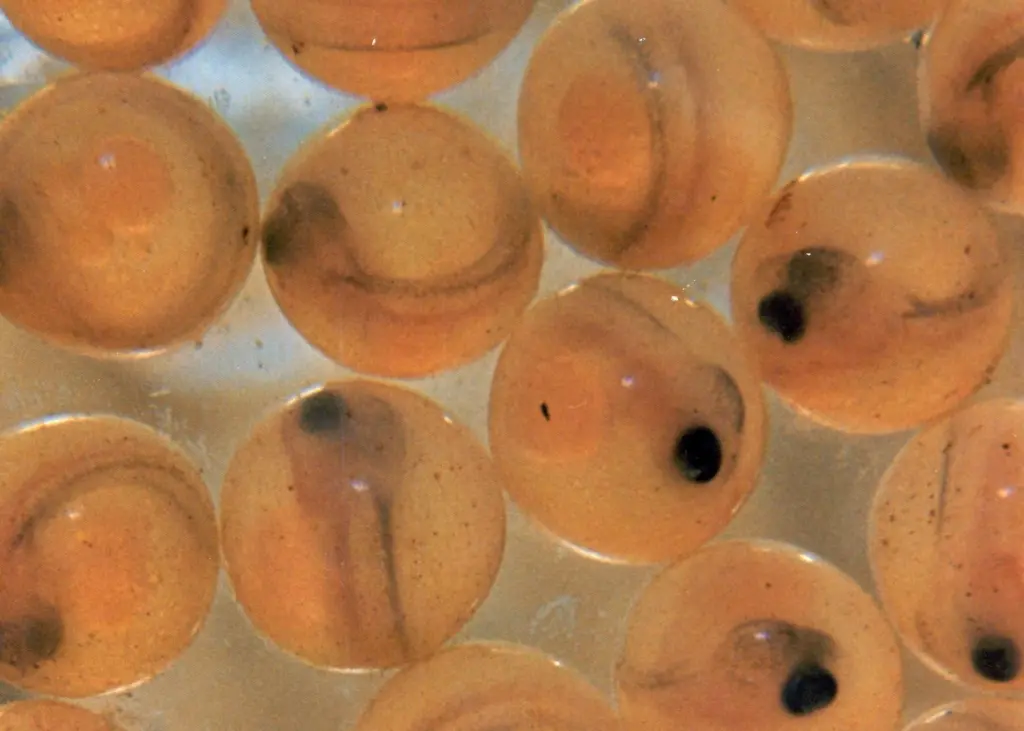
Researchers at the University of Tübingen in Germany have observed the Common Goby – a marine fish of up to 6cm in length – in an attempt to discover why some species practise this apparently destructive filial cannibalism.
In the first of two studies shedding light on why the male Common Goby eats its offsprings’ eggs, Martin Vallon and Dr Katja Heubel of Tübingen’s Institute of Evolution and Ecology discovered that more generally active individuals ate more eggs.
In a second study the researchers showed that, faced with a brood of freshly-laid and more developed eggs, Common Goby males preferred the younger, less valuable eggs.
Filial cannibalism often occurs in fish species in which males care for the eggs or young, such as the Common Goby, and earlier studies sought to determine whether external factors influenced the timing and extent of the phenomenon.
“Various hypotheses predict that the seemingly paradoxical cannibalism serves to get rid of damaged eggs or that reducing the number of eggs means that the remaining ones are better supplied with oxygen and that the male may do it to compensate for his own lack of food and energy,” says Dr Heubel.
“Researchers usually assumed that all fish act similarly under the same conditions. In our study we aimed to challenge that,” she added.
The research compared individual male Common Gobies’ behaviour while the fish were caring for their eggs and while they were not.
“Individuals with a high general level of activity were much more likely to cannibalise the brood,” said Dr Heubel.
The second study shows that egg-eating is not completely uncontrolled. The younger eggs, which are more frequently eaten, are of less value than the older, more developed eggs in which the male has already invested time and effort.
Theoretically, every additional day to maturity is a day in which some developmental problem could occur, therefore the older eggs have a better chance of reaching the stage of independent hatchlings. Moreover, the younger eggs are more nourishing for the adult male.
Rather than destructive and counter-productive, the cannibalism is thought to be part of an adaptive behaviour with benefits for the species as a whole.
“The males don’t just gobble eggs up at random,” said Dr Heubel.
Related Articles
 FISHERIES
 FISHERIES
 WORLD FISHING EVENTS