




A hidden fleet: Chinese ownership of Ghana’s industrial fishery
An investigation by The Environmental Justice Foundation (EJF) focuses on ownership of Ghanaian fishing capacity by Chinese companies, in contravention of Ghanaian law which does not allow foreign ownership or control of fishing vessels under the Ghanaian flag.
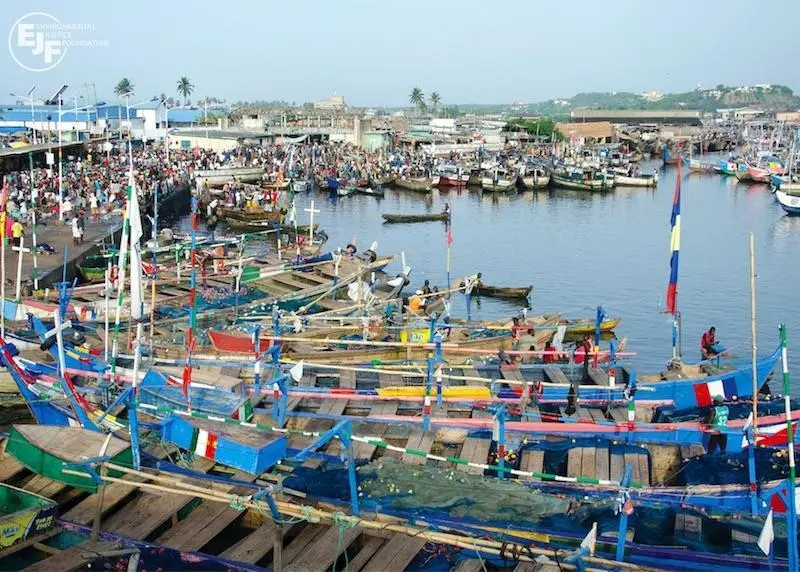
According to EJF, the Chinese and Ghanaian governments must now work together to eradicate the illegal fishing practices which are rife in Ghana’s industrial fleet, improve transparency, and apply sanctions against those contravening ownership laws.
Ghana’s Fisheries Act states that, with the exception of tuna vessels, fishing vessels cannot be owned, or part owned, by any foreign interest, a measure that is intended to ensure that the financial benefits from industrial fisheries go directly to Ghana, rather than being sent overseas.
EJF findings are that foreign companies, overwhelmingly Chinese entities, operate through Ghanaian front companies, using opaque corporate structures to import vessels, register them and obtain licences. In 2015, 90% of industrial trawl vessels licensed in Ghana were built in China, and 95% were commanded by Chinese nationals.
With the balance of control invariably resting with the Chinese investor, such arrangements clearly contravene the purpose of the legislation, if not the letter of the law. The result is a complete lack of transparency as to who is responsible for illegal actions, and who controls and benefits from Ghana’s industrial trawl fleet.
According to EJF, new vessels have continued to arrive from China, despite a moratorium on new industrial trawlers entering Ghanaian waters.
Earlier this year, China launched a crackdown on illicit activities of Chinese operators in West Africa, withdrawing subsidies and fishing licences from three Chinese companies involved in illegal fishing in the region.
“China is already aware of some problems across its fleet in West Africa, and the government has taken some steps to resolve these abuses,” said EJF’s executive director Steve Trent.
“With this new information about the Ghanaian fisheries, China can, and should, adopt a leadership role, working with the Ghanaian government to ensure that laws are upheld, and that Ghanaian fisheries are both legal and sustainable. Failure to take such action will see the further declines and the possible collapse of these fisheries, leading to great suffering across coastal communities.”
EJF is calling upon both governments to pay particular attention and collaborate to end the damaging practice of ‘saiko’ fishing, where industrial trawlers target fish such as the small- pelagic species that are a vital staple food for local communities. The catch is then illegally transferred at sea to specially adapted canoes and sold back to lcocal fishing communities.
EJF states that the Ghanaian and Chinese governments need to swiftly identify Chinese ownership in Ghana’s industrial fleet, and ensure any arrangements comply with all fisheries, company and tax laws. To tackle illegal fishing, both governments must thoroughly investigate suspected cases, and impose sanctions tough enough to truly deter offenders.
“Crucially, both China and Ghana can secure wide-ranging economic and environmental benefits by making an active commitment to transparency. To do this, lists of all fishing vessels licensed to fish under Ghanaian and Chinese flags should be published online, along with details of all cases of illegal fishing and the sanctions imposed. The ownership of all industrial vessels operating in Ghana, and who actually profits from them, should be public knowledge.”
Related Articles
 FISHERIES
 FISHERIES
 WORLD FISHING EVENTS