




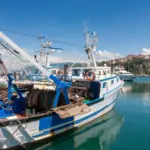

Seafood industry under threat
The seafood industry is under threat as climate change and ocean acidification issues worsen, according to a new report.
The Intergovernmental Panel on Climate Change Fifth Assessment Report reveals that the total loss of landings to global fisheries by 2050 due to climate change range from US$17bn to US$41bn based on a global warming scenario of two degrees.
Blake Lee-Harwood, Sustainable Fisheries Partnership (SFP), which developed the report, said: “This report is a wake-up call for the seafood industry to recognise the scale of the threat to ocean resources from climate change and acidification. We need to see urgent action in trying to mitigate the likely impacts while adapting wherever that’s practically possible.”
Fishery yields are also expected to increase by 30-70% in high latitudes, but fall by 40-60% in the Tropics and Antarctica based on two degrees of warming. Large species like tuna in the Pacific and Indian oceans are therefore likely to move eastwards, according to the report.
On top of this, the 400 million people who depend on fish for their food face reduced access because of climate change and acidification, with artisanal fishermen in the tropics most at risk.
But it’s not just the obvious problems that we face. The report reveals changes in the distribution of particular marine species could lead to conflict between fishing nations and significant increases in illegal fishing. And all this could be made worse by other factors like pollution, habitat loss and over-fishing.
“Companies in this sector will have to take the implications of climate science into account as they plan for the future. We hope that this briefing, developed with experts from both business and science, will help them do so,” added Eliot Whittington, University of Cambridge Institute for Sustainability Leadership, which co-developed the report.
Action needed includes adaptation where possible – for instance, some shellfish hatcheries in the northwest USA have learned to avoid taking in seawater during periods of high acidity. The SFP says improvements should also be made to strengthen coastal zone management, create new habitats and carry out vulnerability assessments, among others.
The briefing, and an associated infographic, is now being distributed across the seafood industry with a call for action to address this global threat.
Related Articles
 PROCESSING & REFRIGERATION
 SEAFOOD
 SEAFOOD