




S&TAS demands answers
The Salmon and Trout Association (Scotland) (S&TAS) is looking to the Scottish Salmon Producers Organisation (SSPO) and the government for answers on the ongoing sea lice problem surrounding Scottish salmon farming.
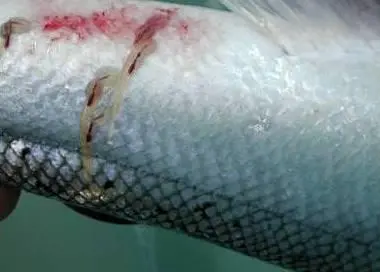
This comes after three key fish farming areas in Scotland were found to have sea lice numbers in excess of the industry’s own limits for sea lice for every month from January to June 2013, according to SSPO reports:
- ‘Inchard to Kirkaig North’ – eight active salmon farms, all run by Loch Duart Limited. Between February and April the average monthly lice count on Loch Duart farms was more than three times the industry’s own threshold
- ‘Kennart to Gruinard’ – seven farms operated by two companies, Wester Ross Fisheries Limited and Scottish Sea Farms Limited. Between February and June the average monthly lice count on farms in this area ranged between four to more than nine times the industry’s own threshold.
- ‘Isle of Harris’ – 12 fish farms operated by three different companies including The Scottish Salmon Company and Marine Harvest (Scotland) Limited. Between February and June the average monthly lice count on farms in this area was at times more than five times the industry’s own threshold.
Hugh Campbell Adamson, chairman, S&TAS, said: “Sea lice numbers are out of control and consequently the fish farm companies are failing to protect wild fish from the devastating effects of the release of vast numbers of juvenile parasitic sea lice into west coast sea lochs.”
Guy Linley-Adams, solicitor to the S&TA(S) Aquaculture Campaign, added: “The Scottish government still has the power under the Aquaculture Act 2007 to order the publication of farm-specific data and we call upon them now to use that power.”
The S&TAS added that both wild salmon and sea trout are in decline in Scotland’s ‘aquaculture zone’, but populations have stabilised on the east and north coasts where there is no fish farming.
Related Articles
 FISHERIES
 FISHERIES
 WORLD FISHING EVENTS