


Samherji in ambitious aquaculture venture
Samherji fiskeldi ehf. has entered into agreements with HS Orka for the development of a programme of land-based salmon farming in the Resource Park of the Reykjanes Power Plant, with the aim of developing quality products with a low ecological footprint.
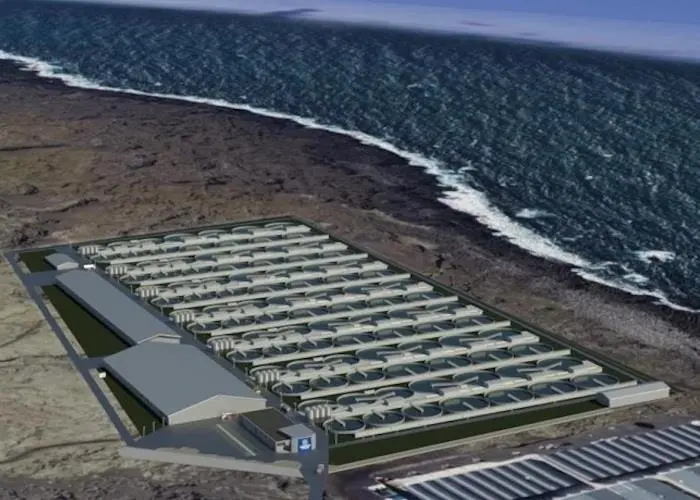
Access has been secured to water and power required for a 40,000 tonne salmon production, making use of warm seawater sourced from the cooling of the Reykjanes Power Plant. The development will take place in three phases over eleven years.
The facility will consist of a hatchery, an ongrowing farm, a processing centre, and service buildings.
“The management and staff of Samherji fiskeldi have worked hard on this project in Reykjanes for almost a year. It’s a big step for us to finalise these agreements and be able to start building the project. We have achieved good results in aquaculture on land, and this investment reflects the confidence we have in the continued growth of this industry,” said Samherji fiskeldi’s managing director Jón Kjartan Jónsson.
“We are excited to build in this area and to enjoy the benefits of close proximity to HS Orka and the Reykjanes Power Plant. In this area, there are some of the best conditions for aquaculture we have seen. The utilisation of warm seawater flowing from HS Orka’s power plant is a major factor in making this project feasible. Not least, this is a very environmentally friendly production which the market is demanding.”
The total investment is estimated at over ISK45 billion. The Samherji board decided to provide funding for the first phase of the project, but plan to seek funding from investors for further expansion.
“The Board of Directors of Samherji has already agreed to contribute ISK7.5 billion to this aquaculture project to ensure the development of the first phase. In my opinion, it shows the confidence we have that this is the right path to the future of food production and value creation. At a later stage, we will look for more investors to ensure the complete structure of the project,” said Samherji CEO Thorsteinn Már Baldvinsson.
Work on the assessment process, licensing and design has begun and is scheduled to be completed next year. Juvenile production is planned to start in a first phase in early 2023, with continued farming and processing of products in 2024 and 2025.
The first phase is planned for with a 10,000 tonne salmon production backed by an estimated ISK17 billion. The second phase will be a further 10,000 tonnes, followed by a 20,000 tonne third phase.
Samherji fiskeldi already has activity in the southern peninsula region, as well as a salmon farm in Núpsmýri near Kópasker and a hatchery at Núpar in Ölfus.
HS Orka currently operates two geothermal power plants and one hydropower plant. In the Resource Park around HS Orka’s geothermal power plants, a unique community of companies has been built that utilise resource streams from the power plants in their operations. Today, eleven companies have operations in the Resource Park, and Samherji fiskeldi will be the twelfth.
The construction of the proposed fish farm supports the Resource Park’s goal of utilising excess resource streams from geothermal power plants, which today flow partly unused to the sea. Conditions in the Resource Park are favourable when it comes to access to electricity, geothermal energy, warm sea and geothermal seawater.
“The Resource Park’s ideology is precisely to promote better resource utilisation,” explained HS Orka CEO Tómas Már Sigurðsson.
“In this project, seawater from the Reykjanes Power Plant will be used to ensure a constant ideal temperature for fish farming. Finally, it is gratifying that with these plans, activities in our area of operation will increase, whether in terms of increasing the number of jobs in aquaculture activities within the Resource Park itself or related industries in the Southern Peninsula.”
Related Articles
 AQUACULTURE
 AQUACULTURE
 AQUACULTURE