


Producing krill oil at sea improves quality and saves costs
Andrew Martin looks into the benefits of producing krill oil at sea.
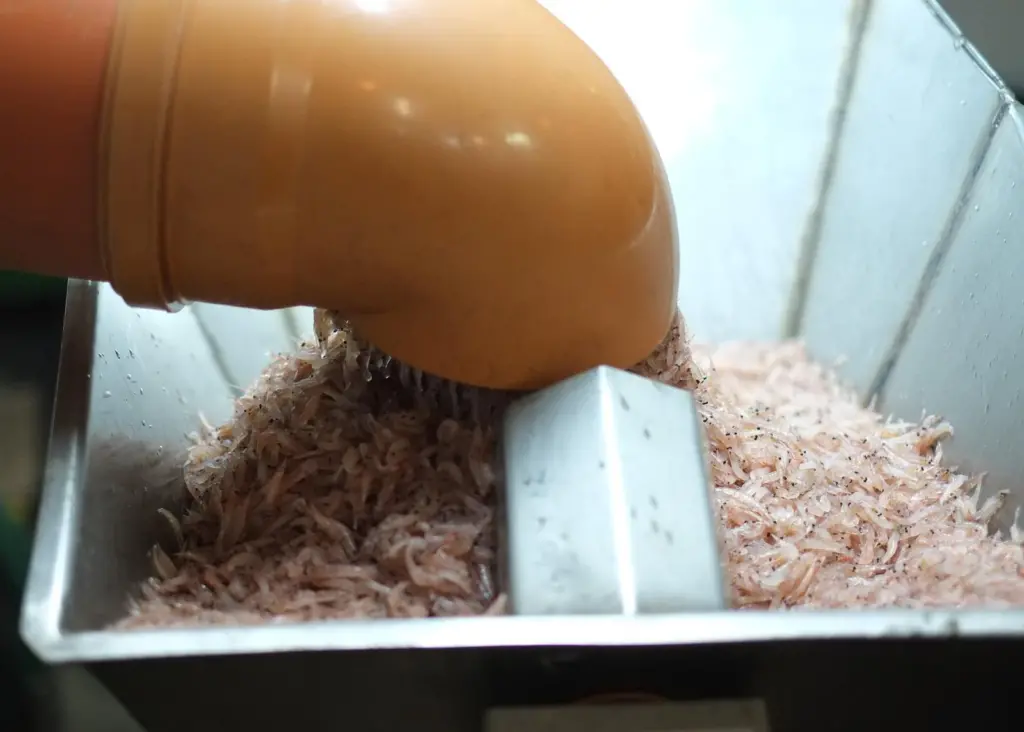
Compared with current krill oils which are all manufactured on land using either dried krill meal or frozen krill, both previously produced at sea, Chilean krill consultancy Tharos’ krill oils are manufactured entirely onboard the catching vessel.
“They are extracted from fully and traceable freshly captured raw krill with a process that it is 100% chemical and solvent free,” says Tharos’ general manager, Dimitri Sclabos.
“To preserve krill’s unique health and nutritional properties, krill oil extraction should be very fast after capture has taken place. Tharos’ process takes less than two hours after raw fresh krill has been fished from the South Antarctic Ocean until the final product is obtained, preserving freshness and avoiding oxidation.
“This unique concept sources the health and food industries with a highly competitively priced krill oil which preserves krill’s original nutritional and medical properties. It is pure and unblended; also there is no lipid oxidation, no aftertaste or burping problems, no residual material.
“The process extracts the entire phospholipids’ profile that raw fresh krill contains, preserving the natural omega-3 content and a high content of pure and natural antioxidant as astaxanthin.” It avoids the normal high temperature and oxidation impact of manufacturing dried meal, and the drip loss and oxidation problems which reduce valuable krill compounds when freezing krill onboard, he adds.
According to Mr Sclabos, Tharos’ process works perfectly well on South Antarctic krill (Euphausia superba) caught during its normal low fat or high fat seasons, sourcing, in parallel, triglycerides enriched krill oils, and food and animal feed grade dried krill meals.
As Tharos’ krill oil is entirely obtained onboard with high processing yields, financial margins for the fishing vessel are very attractive, says Mr Sclabos, without the need for extra processing investment on land, all favouring competitive final prices for the consumer.
Tharos has identified three key stages which krill follow after capture when stored at approximately 0 deg C, which reinforce why it is better to get phospholipids enriched krill oils manufactured at sea.
Stage 1
Before the onset of rigor mortis, which takes place 1-2 hours after capture, krill is transparent and its carapace is shiny, the colour varying from brick to pale pink with a green to yellow spot (due to its phytoplankton diet). Once stored, krill gradually becomes opaque opal pink in colour. Recently captured krill has a pH of 7.3 or higher.
Stage 2
Krill becomes stiff in 1-2 hours due to rigor mortis, becoming soft again after 2.5-3 hours, although the ‘neck’ (between the head and the thorax) becomes firm and acquires an arched shape. The pH drops to below 7.2 so the krill become more acidic, and the solubility of salt-soluble proteins is at a minimum.
Stage 3
There is severe autolysis (self digestion by its own enzymes) in krill stored for more than four hours. As a result of the intense hydrolysis, the meat protein softens, valuable lipids are lost, and pH and protein solubility at the krill’s ‘neck’ rise and there is a sharp increase in the content of non-protein substances and harmful volatile nitrogen bases.
For krill stored for more than five hours, there is autolysis and microbial spoilage of the viscera and muscles.
At this stage, the nitrogen volatile base content ranges from 30-50mg/100g while for recently captured raw krill it is 8-13.7mg/100g. Within the first six hours of storage, the colour fades and the texture softens. By the tenth hour there is blackening of the cephalothorax.
Other damaging effects:
a) Acceleration of autolysis and degradation of krill is also impacted by the capture volume of each trawl. For large tows (> 10 tons) there is long term damage resulting in a significant loss of proteins and acceleration of hydrolysis.
When raw krill is captured by a continuous pumping system instead of the regular net gear system, problems due to squeezing diminish. Raw krill arrives at the processing line almost alive. This is a good fishing method to prevent the problems described above.
The nature of the post mortem changes described are similar to those of other crustacean species, but occur much faster in krill.
The increase of volatile nitrogen occurs through the action of krill enzymes adenosine deaminase and adenosine-mono-phosphatase . There is also microbial growth alongside a decline in enzyme activity.
b) Another significant effect on recently captured krill is storage temperature with microbial spoilage and the formation of nitrogen containing volatiles occurring at temperatures above 0 deg C. (Krill denaturalization occurs at very low temperatures, even as low as -70 deg C, which helps to explain why the crustacean lives in such harsh conditions.)
Krill’s post-mortem changes have strong autolytic and microbial effects which are accentuated four hours or more after catching. This shortens the shelf-life of raw krill components such as lipids and proteins.
Consequently, by manufacturing valuable phospholipids enriched krill oil at sea from fresh raw krill, there is no detrimental impact of such forces.
Great difficulties in the processing of crustaceans, particularly krill, are caused by their rapid post mortem deterioration. This is due to the high enzymatic activity of the proteolytic system of the raw material after it has been stored for four hours at 0 deg C in the correct conditions.
As a result of the autolytic process, the salt soluble proteins of krill are modified causing drip loss. There is also a deterioration in organoleptic characteristics – colour, taste, smell, texture – of whole krill when it is later frozen. These are intensified after four hours.
Why frozen krill is not the best option for krill oil extraction:
- Oxidation and rancidity increases
- Resulting krill oil odour deteriorates
- Increase in free fatty acid content
- Deterioration in phospholipids
- Increased lysophosphatidylcholine
A research trial in 1986 was conducted with frozen krill (Euphausia superba Dana). Lipid classes were compared between frozen krill and fresh krill after various periods of storage at 251 K (-22 deg C). Krill lipid composition is badly affected when fresh krill is frozen and stored for long periods.
Phospholipids proved most susceptible to changes, as opposed to triglycerides, which were most resistant; diglycerides and cholesterol esters were also destroyed. The freezing process per se affected the lipid composition only slightly. However, after 30 days storage the amount of free fatty acids almost doubled.
After six months storage at 251 K, 70% of phospholipids had decomposed and the amount of free fatty acids increased by a factor of 6 to 20. Monoglycerides, absent from fresh krill, appeared after several months of frozen storage.