


Wasted fish = opportunity missed
Ahead of the 5th Fish Waste for Profit conference in Reykjavik, leaders in the 100% Fish utilisation space discussed innovative approaches to maximise the value of seafood through secondary-yield products.
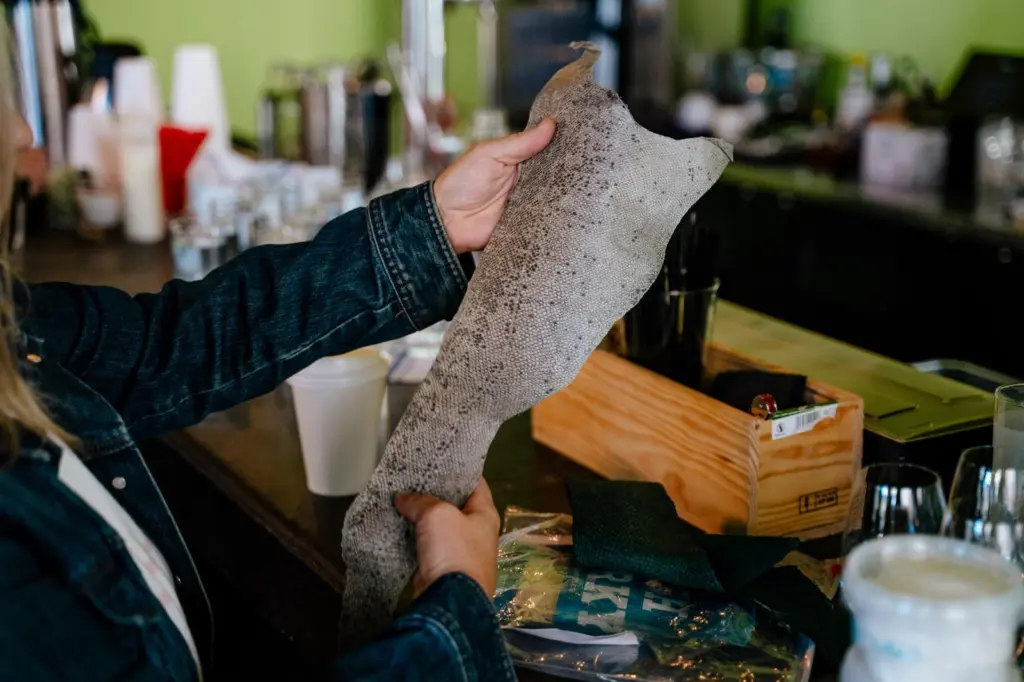
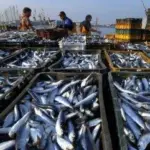
There’s a colossal challenge that unites all component parts of the global seafood economy; whether its supply chains focused on wild fisheries or instead on farmed aquatic species, there’s too much precious product being wasted after people and ventures have spent considerable resources capturing or cultivating it.
Not only is this environmentally incompatible, it’s also a lost opportunity for sustainable economic growth, stressed Dr Alexandra Leeper, Managing Director of the Iceland Ocean Cluster, setting the scene in a recent Fish Waste for Profit webinar.
Held as a precursor to the 5th Fish Waste for Profit conference, taking place in Reykjavik, Iceland, on 19 and 20 September 2024, the online event heard some of the innovative ways by-products are now being utilised and generating value rather than entering landfill.
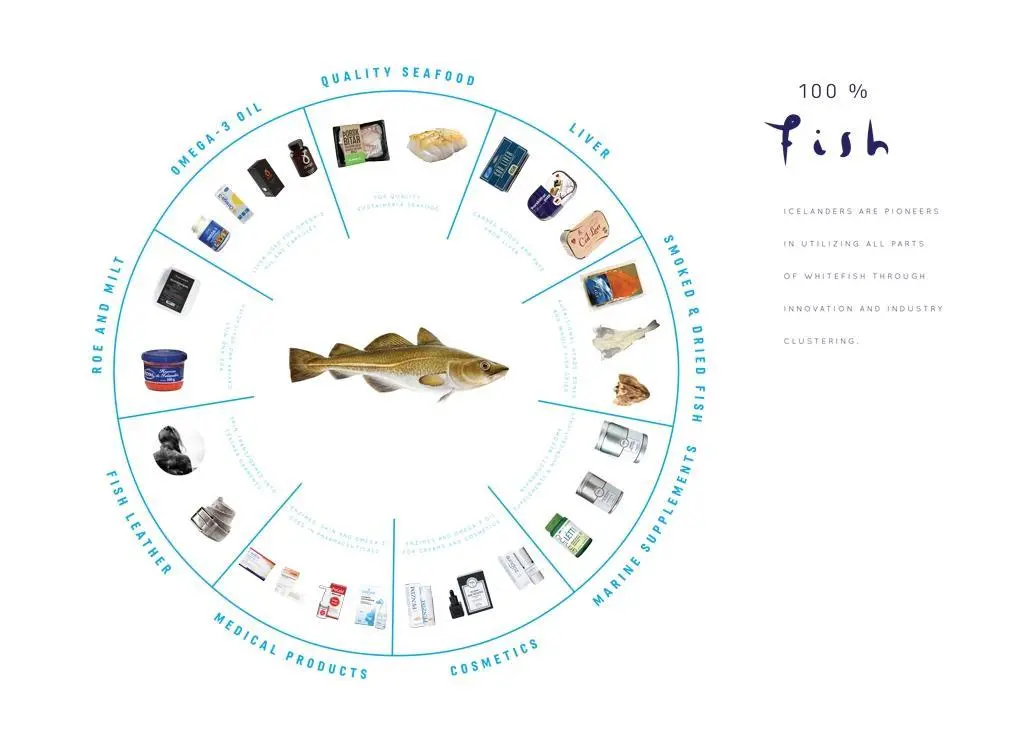
“At the Iceland Ocean Cluster, the ‘100% Fish’ philosophy is really at the heart of everything we do,” Leeper said. “The idea is that we can use every single part of the fish, not just the fillet, but those secondary yields – the heads the skins, the bones, the guts – to not waste anything and to create a lot of value.
“This 100% Fish thinking has really changed the narrative around how we treat the seafoods that we produce and capture and also how we use every single part. Where it used to be for the Atlantic cod that the fillet was thought of as that part of the fish that had value, now those other secondary yields – the heads, skins, guts – have been developed into a wide range of different value chains and across different sectors.”
These secondary-yield products include feeds for aquaculture and for land animals, food and snacks for human consumption, nutraceuticals with powders made from collagen going into smoothies, cosmetics and skin care, textiles with fish skin leathers, clinical products like cold and flu treatments, and even into biomedical applications like skin grafts.
“This has really transformed a fish once worth about US$12 – for just the fillet of the cod – to a fish which when all of these different value chains are realised is worth almost $5,000. This is a philosophy that really makes sense, and it’s being applied to seafood around the world,” Leeper said.
Inspiring momentum
“100% Fish” is also the title of the new book written by Dr Thor Sigfusson, Founder & Chairman of the Iceland Ocean Cluster. He told the webinar that during its compilation, he came across lots of heroes in the seafood industry, with “so many people doing amazing things”, but that a lot of these actions are still being conducted “in the shadows, away from the public eye”.
He said: “Our problem is we never talk about these stories. We need to bring them out and tell people that there are so many possibilities and so many people that we can learn from. It’s so important to let people know we’re actually on it right now, that things are happening right now.”
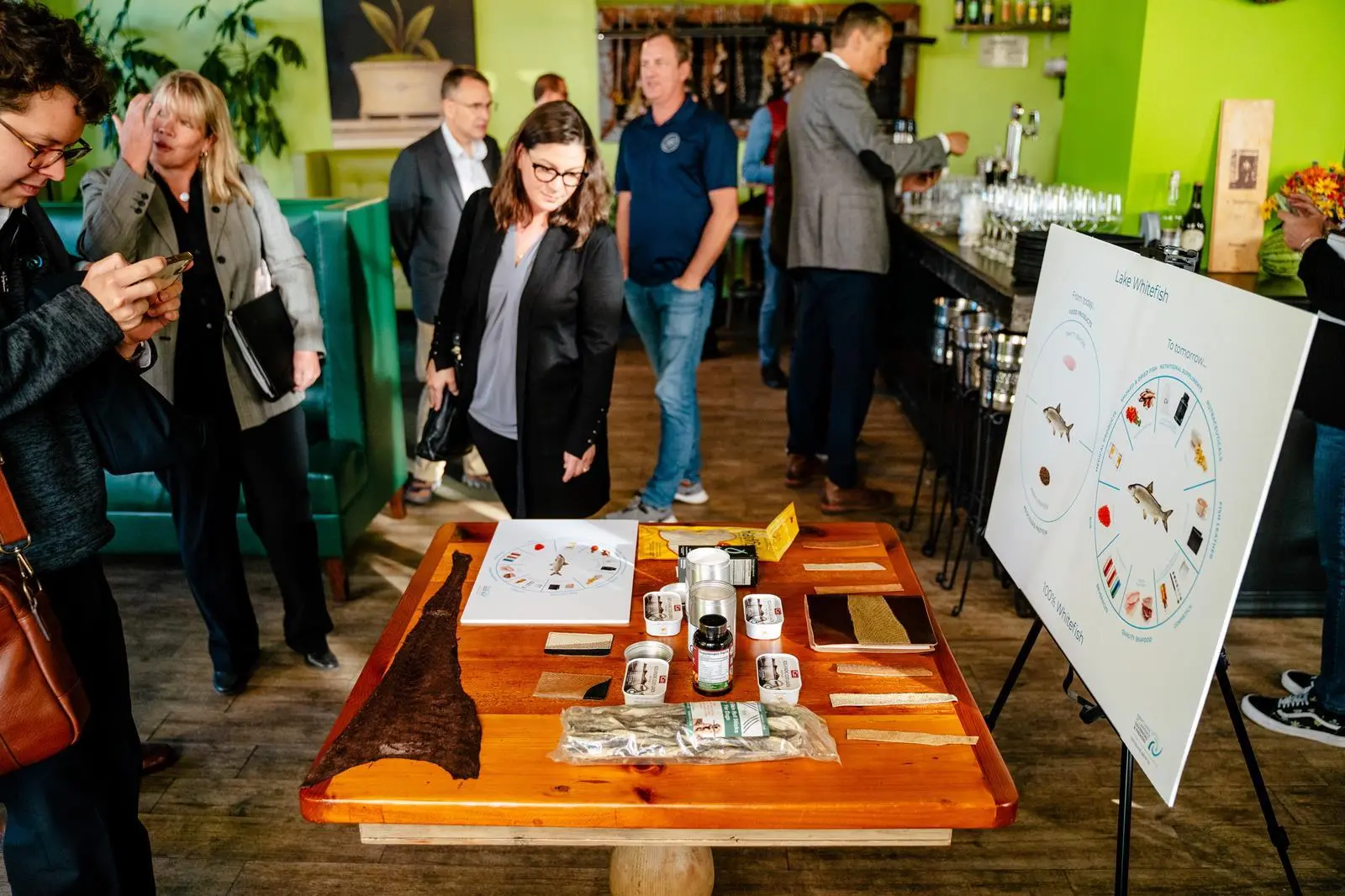
Pointing to various examples of innovation, including a new hand cream made from lobster shells by a cluster in Maine, fish leather produced from Great Lakes whitefish and Alaska cod skins being turned into dog treats, Sigfusson insisted much can be achieved from telling such stories and by showing how real value can be derived from products that are still being thrown away all over the world.
“I think that’s why our movement is so important. If we can inspire the industry, if we can inspire researchers and universities to look at this sector which has been in the dark in the past, to see the opportunities to bring their skills and collaborate with fisheries, we can do so much more.”
Scratching the surface
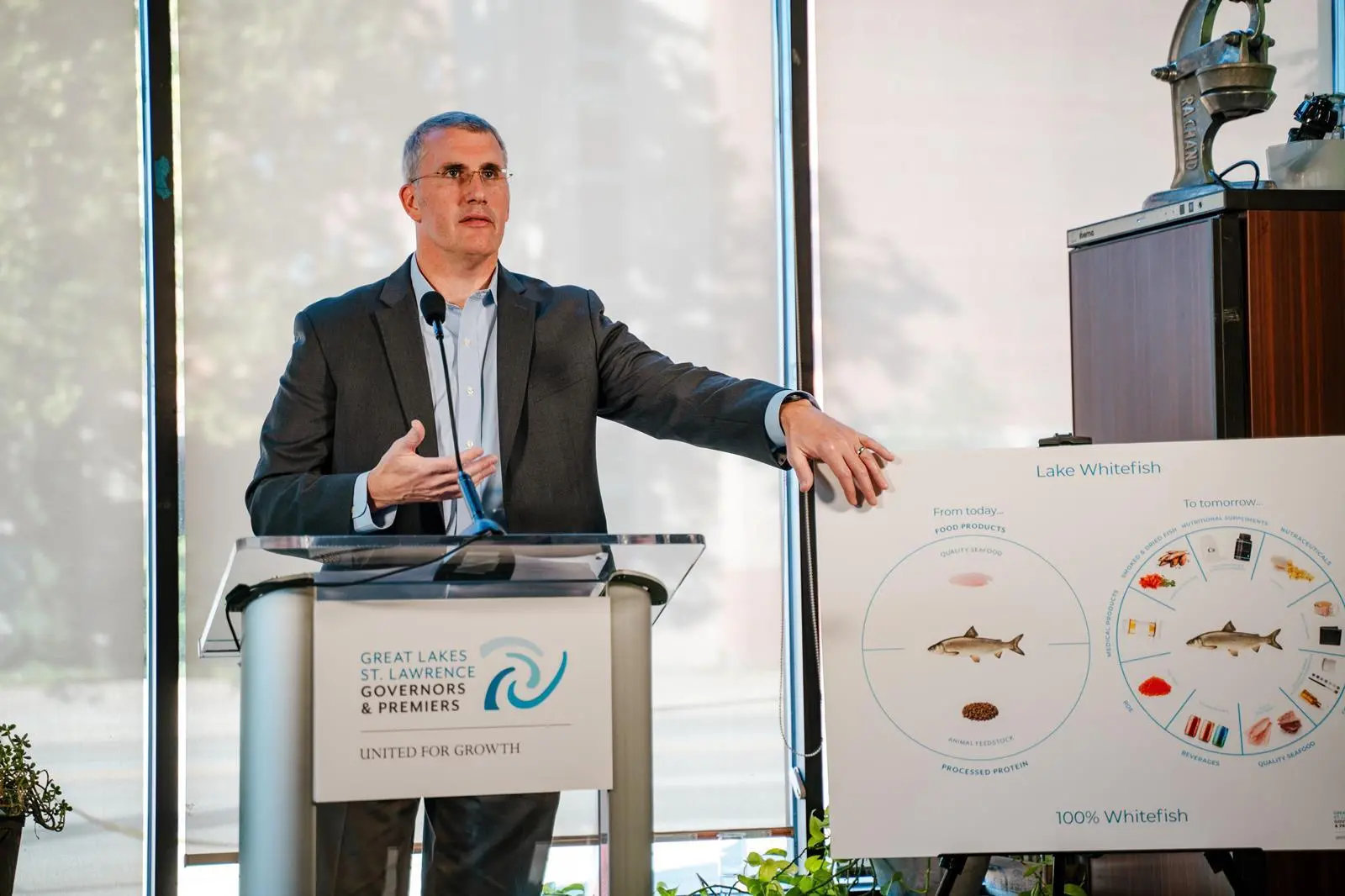
It was the steady demise of the Great Lakes whitefish catch and the subsequent recognition that a 100% Fish utilisation strategy could offer significant opportunities that put North America’s Great Lakes St. Lawrence region on this sustainable pathway, explained David Naftzger, Executive Director, Great Lakes St. Lawrence Governors & Premiers (GSGP), a Chicago-based organisation that represents the Governors of the Great Lakes States and the Canadian Premiers of Ontario and Québec.
Together with its partners, GSGP launched the 100% Great Lakes Fish initiative in September 2022, with the aim to generate greater economic returns, create jobs and further develop rural economies. The project has been supported with grants from the Great Lakes Fishery Trust , the Great Lakes Fishery Commission and the Ontario Commercial Fisheries’ Association.
“The lake whitefish is the historic backbone of the commercial fishery in the Great Lakes, [but] the catch has declined by about half in just the last 10 years. This has had a profound impact on our commercial fishery, and while efforts are underway and have been showing some promise in terms of reversing the trend, regardless, revenues are down for many of our fishers. And there’s a desperate need to try to support them in different ways, rather than just trying to increase the catch. One of the ways that we’ve been doing that is by leading this 100% commercial fish partnership.”
Naftzger continued: “Our fishery is not a large one by global standards, we catch about 13,000 tonnes of fish a year. But it’s incredibly important to our tribes and first nations that have a cultural and historical relationship with the fishery, as well as to commercial fisheries across the region that are the backbone of many of our rural communities. For the most part, as with much of the fisheries around the world, our fishery has been a fillet-based economy. This overwhelmingly drives the value that’s produced from each fish. And for the most part, non-fillet parts of the fish are either put into low-value animal feeds or compost for landfill. This, I think is a fairly common situation around the world.”
What the 100% Great Lakes Fish initiative is trying to achieve is full utilisation of all the components of each fish that’s caught, he told the webinar, with some of these products already being made and having a “wonderful opportunity to scale” such as liquid fertilisers, while others are really just starting to be researched and commercialised.
Among the prototype products are a collagen produced from lake whitefish and a fish protein hydrolysate made from the heads and frames of walleyes. Product applications and opportunities for both are currently being evaluated. The initiative is also working with companies in the fish leather space.
“We’re just starting to scratch the surface of these opportunities, but we’re really excited and energised by the response that we’ve had,” Naftzger said. “We’ve done a number of public events; we’ve done biotechnical testing on multiple different species to really understand the raw material and what it could be used for. And we’re now in the process of doing some value chain mapping.”
One of GSGP’s most successful ways of activating community interest in the 100% Fish movement is its 100% Great Lakes Fish Pledge, unveiled in October 2023 at the Governors and Premiers Leadership Summit. The pledge is an opportunity for commercial fish companies to commit to 100% utilisation by the end of 2025.
“Some companies are already using 100% of each commercially-caught fish. And our mission with them is to help them move up the value chain, so if they’re involved in compost, we want to move them up to liquid fertiliser. If they’re involved with liquid fertiliser, we want to help them get into food additives or other applications. And for those that are not already using 100%, our challenge is to look at opportunities for them in full utilisation.
“In many cases that starts with compost, but we found that by aggregating different sources of raw material together, there’s a lot of different possibilities, including fishmeal and oil, which is an opportunity that’s being actively researched and explored, particularly in southwestern Ontario.”
Having these companies come together sends “a clear demand signal” that they are hungry for opportunities and it’s also a signal to the marketplace that there’s a “ready and willing” community of fish companies that want to create new products and take them to market, Naftzger said.
Walking the walk
In the aquaculture sector, tilapia producer Regal Springs has committed to using 100% of each fish by 2030. To this end, the company, which has been farming the species for over 35 years in locations in Honduras, Mexico and Indonesia, recently launched a new business unit called Regal Springs Natural Additions.
Regal Springs recognised that with tilapia, fish fillets make up around 30-35% of each fish and that around 65% is considered by-product (heads, bones, bellies, skin etc). Through its 100% Fish utilisation policy, the company has reached a level of 95% with blood being the only by-product that’s not yet being used, said Regal Springs Managing Director Europe Petra Weigl.
The company has also been separating the fish as much as possible and as much as labour costs will allow to establish higher value applications for its by-products. This is where Natural Additions comes in, Weigl said.
“I think we should all feel morally obliged to utilise 100% of the fish we catch or produce on our farms. Of course, every fish is different, every company’s size is different. Their capability to invest is different, the infrastructure around them is different.”
Therefore, her advice to anyone embarking on a full-fish utilisation journey is to first of all understand the properties of the fish through thorough analysis. This includes seeking scientific support to really understand each part of the fish – skin, eyes, heads and so on – and what’s in it with regards to omega-3 content etc. The next step is to try and map the potential markets for these by-products and what returns can be achieved.
Ventures should also look into the available volumes as this will also drive decisions on where to invest in value-adding machinery, and to what level to create value in-house and/or where it’s best to simply save as raw materials.
Other aspects to take into consideration include logistics and certification requirements, she said.
More value than seafood
Canadian clean biotech manufacturing company 3F Waste Recovery began its 100% Fish journey in 2019, since when it has built a portfolio of technologies, markets and brands to achieve its goal of utilising local Newfoundland industry by-products. It has encountered and overcome many barriers along the way”, explained the firm’s Founder and CEO Ben Wiper.
3F Waste Recovery built its model to fit any fishery in the world, even those with small quotas, but how it executes that depends on whether the fishery is focused “seafood first” or “by-product first”, Wiper said, adding that for a traditional seafood-first approach, growth comes from selling seafood and consolidating quota and by-products are an afterthought, and sometimes even a nuisance.
“A few companies control the quota and supply, and seafood is exported with as little processing as possible. They rely on cheap labour to compete, the cost of disposal is low, and they lack the capacity to upcycle by-product anyway.”
In contrast, a by-product-first fishery has the secure and sufficient supply that investors require, he said. They’re also already making secondary and value-added products with low energy costs and high costs of disposal, while disruptive technologies are embraced as the new way to maximise profits and socio-economic benefits from fish.
“3F looks at fish holistically. Rather than just assume seafood is the most valuable use, we identified fish species whose by-product is more valuable than the seafood. We asked ourselves what products can we make profitably even with small quotas, but sell into huge markets that need lots of by-products? After nearly four years and millions invested in R&D, the answer was clear – marine ingredients for pet and human health markets.”
Working closely with its scientific team in Iceland, 3F developed two trade secret processes to make four products from fish heads, skin and bones. According to Wiper, its cod chews for pets are the most nutritious and healthy chews on the market, while earning an 80% gross margin in direct to consumer and 55% at wholesale. But he said 3F’s collagen process is its “crown jewel” and “likely the most valuable technology in the world right now for fish skins”.
It’s the world’s first commercial scale process for 99.5% pure, pharmaceutical-grade collagen, suitable for medical implants, artificial skin, tissues and organs. Medical and pharmacologists deliver about 80% gross margins at wholesale, and they sell at $500 to $1,500 per kg at retail, he said.
Alongside its technologies, 3F has also built brands for the North American pet health human health markets. These, Wiper said, add value, lower risks and make licensing the company’s technologies more attractive to fish processors.
“What we offer processors is a plug and play solution to achieve 100% Fish. They already have the supply capacity, labour and seafood markets. We bring the technologies, brands and markets to upcycle and sell the by-products and to profit from the whole fish. Our team of experts works with processors to design the plant, select the equipment, train the workforce to make the pet treats and marine ingredients. In exchange, we get a licensing fee for our technology, and our markets get the rights to buy the products that they make.”
He added: “It seems like a no-brainer, doesn’t it? However, some companies stuck in a seafood-first approach, view 3F as an existential threat. Our model makes seafood one of the least profitable uses for the fish, diminishing the power of big quotas and giving it to those with the best technologies and markets. When we look at Atlantic cod, the numbers speak for themselves: a seafood-first company with 1% of the world quota sells about $15 million of seafood, but they pay to dispose of more than half of the fish. Using the 3F approach gets its share of an extra $50 million from the exact same amount of fish at profit margins three to five times higher than the seafood.”
Entitled ‘Transforming the Blue Economy to 100% Green’, the 5th Fish Waste for Profit conference is taking place at the Hilton Reykjavik Nordica Hotel. The programme of guest speakers includes Alexandra Leeper, Thor Sigfusson, David Naftzger, Petra Weigl, Ben Wiper and many others.
Related Articles
 PROCESSING & REFRIGERATION
 SEAFOOD
 SEAFOOD