






Old data digitised for modern scientists
NOAA Fisheries Alaska Fisheries Science Center has been successful in translating old survey data into a form that could be useful to modern scientists.
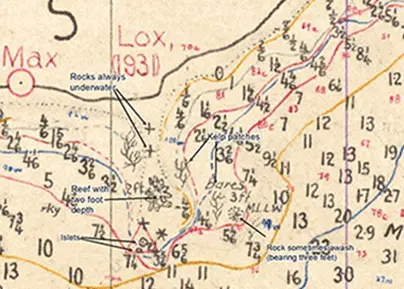
For years, researchers, fishermen, and policy makers have had to rely on low-resolution navigational charts with limited fish habitat information to analyse fish habitat in Alaskan waters. But now, with the help of technology, detailed survey data from the 1930s may help to improve fish habitat analysis and help us learn more about important commercial fish stocks.
In the past the data was documented by hand on large flat, one-dimensional sheets of paper called smooth sheets. NOAA Fisheries scientists have developed a new methodology to transform the one-dimensional data on the smooth sheets, into three-dimensional digitised layers of data. They used a geographic information system (GIS) to do this.
Smooth sheets provide 10 times as much bathymetry or seafloor depth than traditional nautical charts. They also provide other data such as; shoreline location, seafloor sediment type, and various features such as kelp beds, rocky reefs, and islets.
“We now have a much more detailed picture of the seafloor in some areas,” said Mark Zimmermann, research fish biologist with NOAA Fisheries’ Alaska Fisheries Science Center. “We can see variations in depth between areas and unique features like troughs and banks. We will also be studying how fish and other marine life use these different habitats.”
Scientists used the digitalised maps to compare five inshore study areas known to be important habitat for juvenile Pacific halibut and flathead sole. They were able to quantify differences and similarities between bottom type and depths at each of the sites to determine which ones would provide preferred habitats for these fish.
Scientists in the Gulf of Alaska Project sponsored by the North Pacific Research Board (NRPB), are using these same data sets to predict the preferred habitat across the central Gulf of Alaska for juveniles of five other important species: walleye pollock, Pacific cod, Pacific ocean perch, arrowtooth flounder and sablefish. This knowledge could help design more focused research surveys in the future, saving valuable resources.
Related Articles
 FISHING TECHNOLOGY
 FISHING TECHNOLOGY
 COMMENT