





New research reveals the taste of fish
Geosmin and 2-methylisoborneol occur naturally in lakes and watercourses, but excessive concentrations of these two substances can give fish a ‘muddy’ taste.
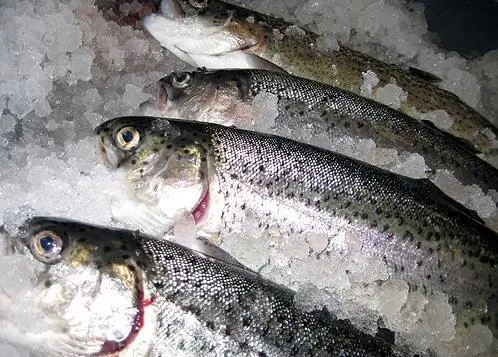
Researchers at the National Food Institute, Technical University of Denmark, have now developed sensory profiles that can predict problems with taste in aquaculture fish and thus make it possible to eliminate such problems entirely.
The sensory panel at the National Food Institute have tasted their way through numerous rainbow trout with various concentrations of geosmin and 2-methylisoborneol. The purpose of the project was to develop sensory profiles of the taste and smell of the fish to make it possible to predict taste problems in aquaculture fish, with especial emphasis on off-taste and off-smell.
Geosmin and 2-methylisoborneol are naturally-occurring substances which are harmless to people and animals in their usual concentrations – however, the problem is that these two substances can cause the fish to taste ‘muddy’ and ‘mouldy’.
Using sensory analyses, the National Food Institute has evaluated the off-taste of the fish at different concentrations of the substances and has subsequently prepared sensory profiles of the relationship between the levels of the substances and the smell and taste of the fish. In collaboration with the Faculty of Science, University of Copenhagen, researchers at the National Food Institute mapped out the scope of the problem, so that it is now possible to perform analyses of the water to measure the levels of the substances and thus predict problems with the taste of the fish. It is therefore now possible at an early to take steps to prevent the development of geosmin and 2-methylisoborneol.
The results obtained by the researchers do not apply exclusively to rainbow trout; they can also be extrapolated to other species of fish farmed in fresh water. The working relationship and the results from the fish farm project have opened the door to organising aquaculture fish production in which taste problems of this type can be completely eliminated.
Related Articles
 SEAFOOD
 AQUACULTURE
 SEAFOOD