

Optimising restorative aquaculture
Much in the same way that the restorative agriculture movement is looking to increasingly nurture and restore terrestrial food production systems that deliver positive environmental impacts, in the water, restorative and regenerative aquaculture is also gathering decent momentum.
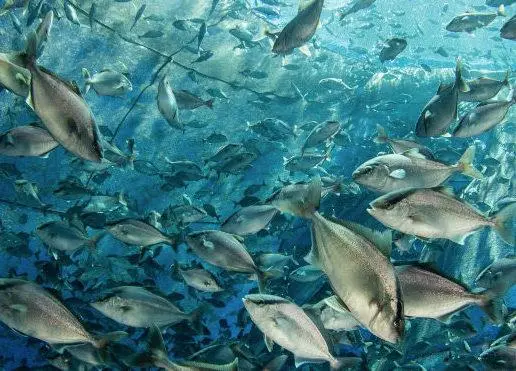
Indeed, the recent Blue Food Innovation Summit 2023 in London heard that with the pressure on society to find ways to produce foods that contribute positively to ecosystems, biodiversity and nature, there’s significant evidence that restorative aquaculture operations, such as shellfish and seaweed farms, are not only an ecologically and economically sound approach, they’re critical to the future food production system and meeting growing demand. It was also stressed that environmentally and socially harming practices have no place in that landscape.
“We are in a new age in this space, [when you compare] what’s available to us now and what was available to us 20 years ago in terms of tools and capital to do the kinds of things that we are talking about, which is to use the production side of aquaculture to benefit the environment,” said Nik Sachlikidis, Managing Director of Aquaculture at Cadman Capital Group. “The opportunity we have now is unprecedented.”
Sachlikidis said that what the private equity investment firm is looking to do is apply the tools, the production and the capital to get these outcomes. This, he said, involves getting things right in the hatcheries so that economic opportunities are created for the production of endemic and keystone species.
Then those best-practices must be used “knowledgeably and thoughtfully” to find opportunities for restoration, using relevant ecological practices, while also getting the most economic benefit for those operations, he added.
Doing right
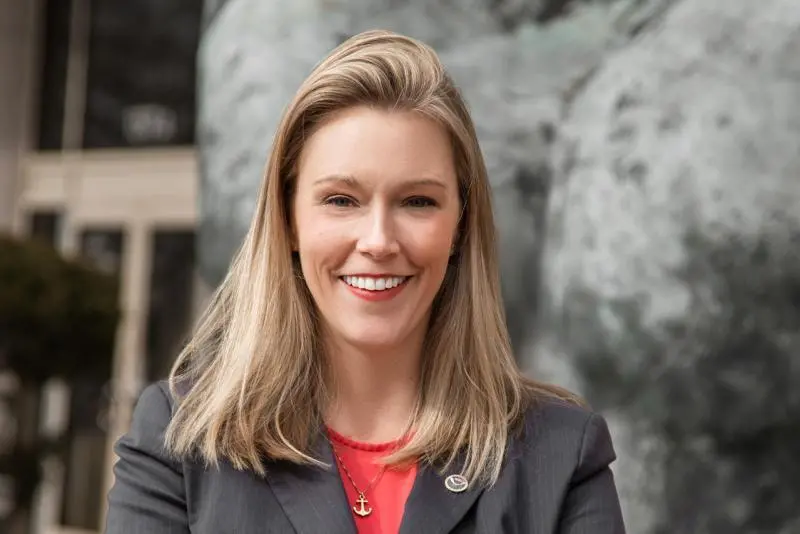
Danielle Blacklock, Director – Office of Aquaculture at the US’ National Oceanic & Atmospheric Administration (NOAA), suggested that terms like “restorative” and “regenerative” might be confusing the process of establishing sustainable aquaculture systems, including new international guidelines that are now moving through the United Nations process for approval.
“All types of aquaculture can be sustainable if done right. Complicating things by adding terms like these creates some kind of moral hierarchy with consumers. But in the store, we want people to choose things from the sea. That in itself is a good choice, so the simpler we can make it to choose things from the sea and also implementing things like these global guidelines so that everything coming from the sea is sustainable, especially when it’s farmed.
“That setting of a baseline is a clear and simple message that all aquaculture can be part of the solution as long as it’s done right,” she said.
To this end, NOAA has been building on the concept of an ecosystem approach to aquaculture, whereby you must have a thorough understanding of the ecosystem that you’re working in, so that in some locations, bivalves are the best and/or most beneficial form of farming, while in other places it might be algae or fin-fish, or perhaps all three, she explained.
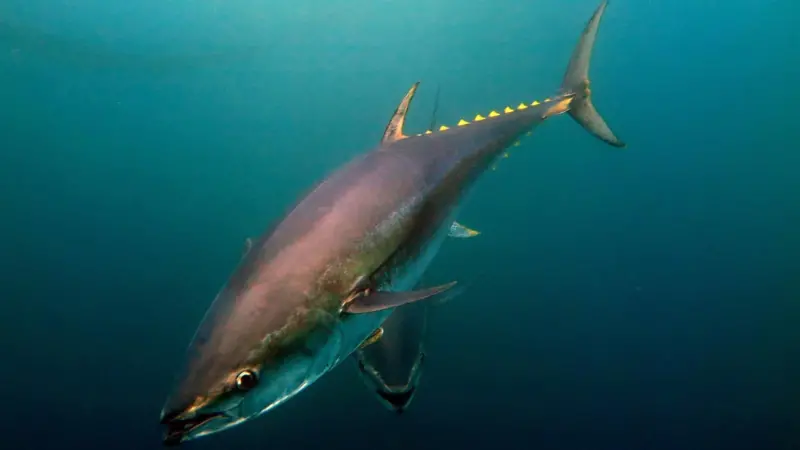
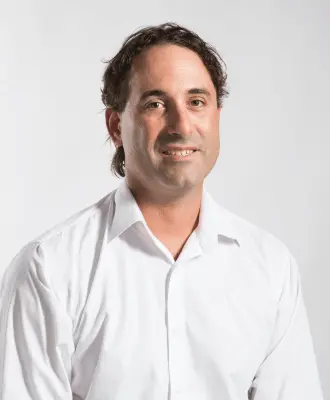
Fin-fish aquaculture can have positive benefits for the environment, insisted Bill Bien, CEO of offshore kampachi (yellowtail) producer Forever Oceans.
“It all starts with the product,” Bien said. “You can’t be sustainable unless you have a successful business. You have to find a way to combine both. That’s what I think we are doing at Forever Oceans.
“For us, it’s not do no harm, it’s actually do better,” he said.
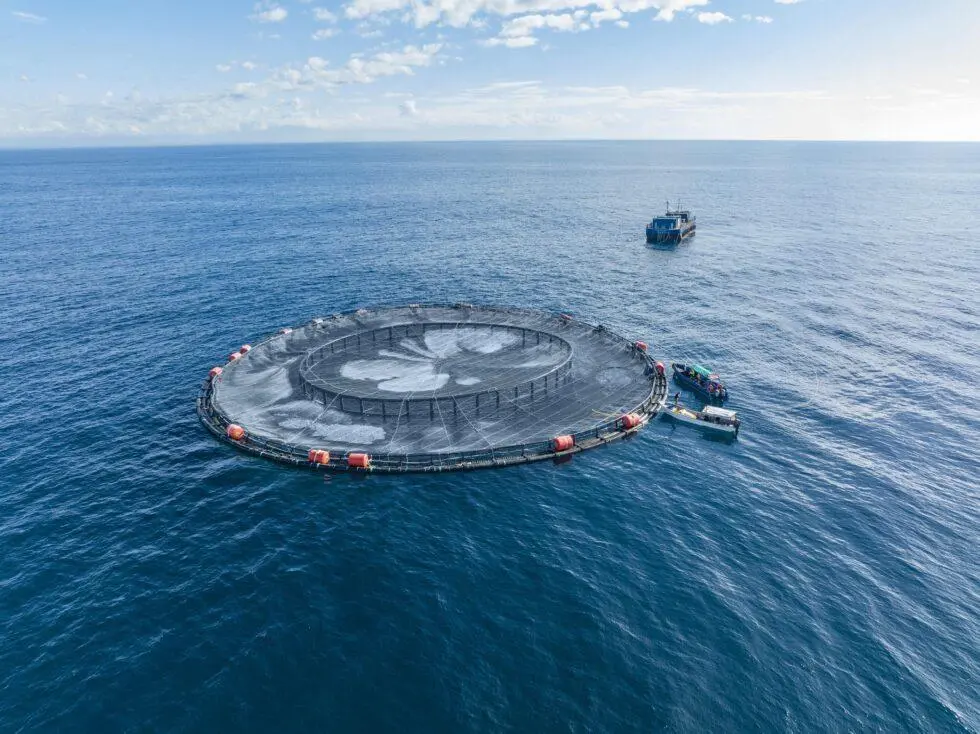
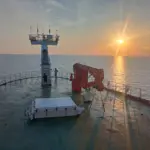
Forever Oceans has 200,000 hectares of water under its control through its concessions with the governments of Panama, Brazil and Indonesia and is farming its fish 10 miles offshore using a lot of sophisticated technologies, including machine learning-based cameras that diagnose fish health, growth, and fully automated barges that double up as data centres.
“This has enabled us to automate farming and animal husbandry, so we produce the fish better,” Bien said. “With our technology, we have created a way that creates less greenhouse gas emissions into the atmosphere and less sediment into the water. That’s our starting point. We thought it, we designed it, and we made it.”
It has also been audited on it after opening its farms and its books to The Nature Conservancy.
But the company isn’t stopping there, Bien said. Recognising that it only uses about 1 or 2% of its 200,000 hectares to grow fish, it’s hoping that, with the support of the local governments, it can open up the remaining 98% to start-ups in the aquaculture space “to see if they can do good things”.
He confirmed talks are already underway to look at how seaweed can be grown in its waters by other parties. It has reached an agreement with the Indonesian government to reinvest in mangrove planting, and it will also look at seagrass planting as it will in turn “make the seawater healthier for us, our fish, and better for the whole ecosystem”.
“I would challenge the whole industry to look at this. We have 15 years to fix this planet. Let’s not just think about how we do no harm, but how we do better. Food should be sustainable, and we can do this if we work together.”
Building brands
Under its licenses, Forever Oceans has the capability to build farms with US$3-4 billion worth of product, but Bien insisted that the point is “to do something good with it”. As such, and with the help of local and global NGOs, the company is exploring what to do with all of its water rights.
“We are looking at MPAs and protected zones. For example, in Indonesia, where we are building our next farm in north Bali, there are coral reefs within the zones that we have deliberately designed in and so some of our money and others will go back into MPAs.”
There’s good commercial reason for this too, he added. “If you can build a brand equity that goes to the 30% of the consumers that think about the environment, you can build an affinity with them. It pulls them back to the companies that we are building. You can’t charge exorbitant prices, but you can be the same price and have a brand advantage if you’re reinvesting into the ocean.
“I think we all need to do that because the ocean is the major source of our oxygen and one of the primary sources of carbon sinks.”
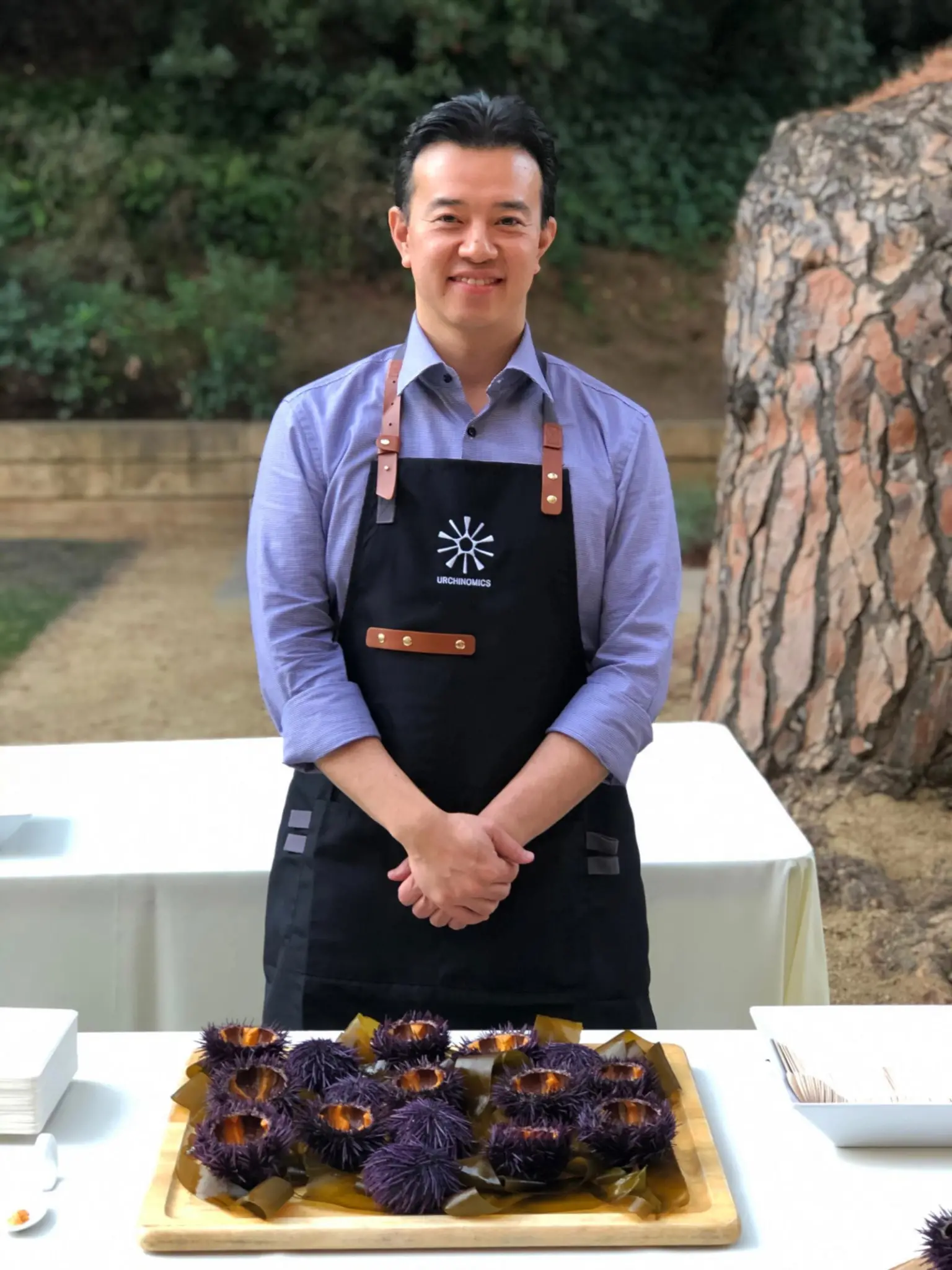
Reinforcing the point, Brian Tsuyoshi Takeda, Founder and CEO of Urchinomics, said the restorative urchins his company are selling are now at price parity – equivalent or perhaps higher – than some of the world’s best wild-caught sea urchin roe.
Urchinomics is essentially removing overgrazing sea urchins and ranching them on land before selling them as a high-end seafood. The concept has helped turn what had become barren seabeds back into vibrant wild kelp forests.
“Our aquaculture is really about rewilding nature – not on land but in the sea,” Takeda said, advising that kelp forests are one of the planet’s most important ecosystems, with an ecosystem services value estimated at 30 times that of tropical rainforests. They also account for 25-30% of global coastal environments. And yet, nearly half of them have been destroyed.
“We are averaging between $400 and $500 per kg with our product, and as much I like to say our products are good and can compete with quality, it seems to be that the driver is that affinity and the ability of consumers to say, ‘by eating this I am contributing to the restoration of our kelp forests.
“The more we generate revenues and profits, and the more we pursue profit, the better the environment becomes,” Takeda said. “Our model of aquaculture is really using and leveraging technologies to not only drive profits but to also support rural coastal communities, and most importantly restore wild kelp forests.”
Urchinomics currently has commercial operations in Japan, as well as pilots in California, eastern Canada and Norway. It has also identified the potential to apply the model in Australia, New Zealand, Mexico, Spain and Russia.
“Essentially anywhere that has industrial overfishing also has urchin barrens, so our business model could apply to all of these places,” Takeda said.
Building back
With the global challenge of climate change, one of the areas a lot of aquaculture ventures are now looking at is the carbon footprint of their operations and Bien highlighted that if Forever Oceans achieves its plans, it will take out 26 million tonnes of carbon by displacing red meat.
But that is only a start, he said. “You need to design your farms so they are carbon-reducing for your own operations and then think more broadly about providing a platform for others. Our goal, for instance, is within five years of scope 1 and 2 we want to be completely carbon-free. We have a plan to do that; it will involve seaweed use and this is what we want to move forward on. You have to have plans and you have to act.”
NOAA’s Blacklock also highlighted the growing importance of aquaculture to individuals.
“We know that aquaculture is incredibly efficient and that food from the ocean is always a good choice. But one thing that I think we sometimes miss is that aquaculture can also be good for the resilience of communities and the people along the waterfront. In the United States, we’re seeing wild stocks shift and fishing communities are going to have to start to transition and go without as these stocks shift.”
While the US government won’t be looking to turn fishers into farmers, one of many ways it could look to offer help, is to create seafood “anchors” in communities by diversifying portfolios, including adding aquaculture, Blacklock said.
“In the US, we recognise that aquaculture is part of the solution. The Whitehouse recently released the Ocean Climate Action Plan with goals like carbon neutral future and resilient communities, nature-based solutions, and one of those climate actions is to increase US aquaculture production.
“All the way up to the Whitehouse, they are seeing aquaculture as a solution. And we are ready to make sure we create an enabling environment to do that,” she said.
Aquaculture also has role to play in restoring some of the ecosystems that make these communities, Sachlikidis said. He highlighted that Cadman company, the Oyster Restoration Company, based in Orkney, is looking to restore the native oyster and associated ecosystems through restoration (as well helping in decarbonisation efforts).
“It’s putting back whole ecosystems like oyster reefs – putting them back along coastlines where they are missing. Ninety-five percent of the European native oyster population has gone – that’s an unacceptable statistic.
“Aquaculture done thoughtfully enables us to take that production ability and apply it back in a meaningful scale where it can then put those systems back in place to protect us and rebalance,” he said.
“Sustainability needs to be sustainable for the local community; it’s not just environmentalism,” added Bien. “I grew up on a farm – it’s hard work; fishing is even harder work, and it’s not a lucrative job. So, if you go in there as we do – as a foreign company – but just running a farm for the benefit of the environment and consumers, you’re not doing the right thing…so what we did, and what everyone should consider, is become as local as possible.
“Our workforce is 50-60% local employees, local people from the universities, giving them good, high paid jobs. The second thing is we put money back into the local community because we want to be part of that community. So in Panama we’ve paved roads and put in bicycle improvements, and in Indonesia, we’ve put in hatchery piping to have good water for us but also for the local community, as well as vaccinations for Covid.
“Sustainability means so much more if it includes people and not just the planet.”
Community engagement
While communities can benefit from aquaculture, historically, a lot of them in a lot of different places have pushed back on the industry. This trend has been acknowledged by US officials, Blacklock confirmed. “Communities often feel like they have been put in a reactive state, like ‘this is coming; there’s nothing you can do about it; these are the benefits’ rather than being a part of the conversation to begin with,” she said.
Therefore, a major effort at NOAA is the creation of “Aquaculture Opportunity Areas”. These, she explained, are intended to take the conversation away from an individual permit applicant with society to the government with society – asking where aquaculture should go? Also asking what communities want aquaculture and what can it bring to them?
As part of the process to find these Aquaculture Opportunity Areas, NOAA is looking for areas that appropriate in three ways: economically, they can’t be too far from shore – ideally near a port or processing facility; they need to be appropriate environmentally and ecologically – in areas that are away from protected species and have plenty of current flow; and it is looking at areas that are appropriate socially, with a lot of social engagement while staying out of the way of transit paths, fishing grounds etc.
“That’s a lot for an individual company to take on, so we’re trying to take it off the plate. Let’s find the space upfront that’s appropriate for aquaculture; let’s have these conversations with communities from the beginning and clear out some of the noise in the system so that we know we are finding sustainable locations for aquaculture to grow – making it easier for farmers and applicants to get in.”
The first Aquaculture Opportunity Areas are currently in development in the Gulf of Mexico and southern California, with plans to expand further very soon, Blacklock said.
When it comes to some regions where there are strong indigenous communities, Urchinomics has asked them to become co-investors in its operations. One such arrangement is in place in New Zealand, said Takeda.
“To be able to deploy our models around the world, we are looking for collaborative partnerships. The indigenous communities know what their oceans looked like not just 10, 20 or 30 years ago, they have historical records going back thousands of years and that knowledge can be leveraged.
“For us to be able to go to the New Zealand government and say this is what it looked like a few thousand years ago or 100 years ago, and now it looks like this because of fishing practices – [telling them that] we’ve got to change it. Essentially, the local communities give us the extra rocket fuel to be able to do what we need to do.
“Partnerships are not about just trying to appease or accommodate, I think they can be one of our best allies and drivers for restoration,” he added.