


Subsidy opposition gathers momentum
For the Fisheries Subsidies Agreement reached by World Trade Organisation (WTO) members in June 2022 to come to life and start delivering benefits for fisheries sustainability and improving the lives of fishers, it’s critical that two-thirds of those 164 members accept it as soon as possible, according to WTO Deputy Director-General Angela Ellard.
In a rally cry issued to parliamentarians around the world on 15 May 2023, Ellard urged politicians to engage further with their governments as well as legislators from other countries to help deliver the multilateral agreement.
She explained the agreement is significant because by prohibiting certain harmful types of fisheries subsidies, it delivers on UN Sustainable Development Goal (SDG) target 14.6 after more than 21 years of negotiations, making it the first SDG target addressed through a multilateral agreement. Additionally, this is the first WTO agreement where members have used a subsidies discipline for an objective other than addressing purely economic effects of subsidies.
The agreement is designed to address the consequences to the ocean and the environment caused by harmful subsidies. It will seek to make fishing more sustainable by prohibiting subsidies to illegal, unreported, and unregulated (IUU) fishing as well as subsidies to fishing overfished stocks, and subsidies to fishing on the unregulated high seas.
This will be of major benefit to people in developed and developing countries alike, who depend on the fisheries sector to make a living and as a source of protein, Ellard said, adding that one of the most fundamental challenges facing the ocean is the dramatic and unabated deterioration in global fish stocks.
“By some measure, nearly half of assessed fish stocks are overfished, [up] dramatically from 10% in the ’70s and about 18% in 2001 when the fisheries subsidies negotiations began. Not only does this decline have huge repercussions for marine ecosystems and thus the global environment, it also has grave consequences for millions of people around the world who depend on fishing.”
Unfortunately, some governments continue to provide fisheries subsidies without regard for their impact on sustainability, she said.
“By doing so, they are investing in the destruction of natural capital that should instead be paying generous dividends globally. Data shows that governments spend about $22 billion per year in unsustainable fishing subsidies. Just imagine what it would mean for fish stocks and marine health if that amount was instead spent on restoring fish stocks and sustainable fishing.
“The agreement thus is a meaningful leap forward in the race to preserve our ocean and its precious living resources as well as to promote sustainable development.”
Next steps
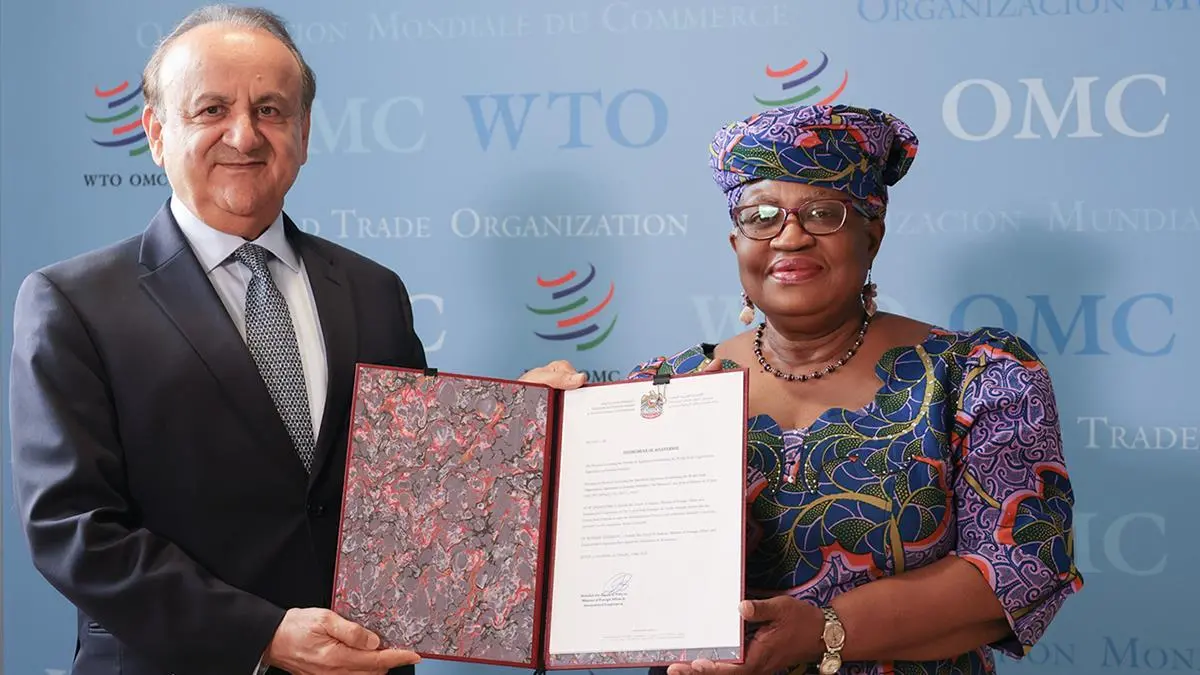
Moving forward, now that the agreement is concluded, Ellard confirmed that WTO members are engaged in two parallel work tracks to achieve further progress. The first of these is accepting the new agreement, whereby for it to enter into force, two-thirds of members must deposit their instruments of acceptance with the WTO.
At the time of going to press, seven WTO members – the United States, Canada, Iceland, Switzerland, the United Arab Emirates, the Seychelles and Singapore – had completed their domestic processes and submitted their instruments of acceptance, while many others are at advanced stages of their acceptance processes and are expected to deposit their instruments in the upcoming weeks and months.
“The more members accept the agreement, the more positive momentum this creates, which encourages other members to expedite their processes,” Ellard said.
“My plea to parliamentarians from all WTO members that require parliamentary ratification is to say ‘yes’ to this agreement so that it can start delivering its benefits for ocean sustainability as soon as possible. Translating this agreement into meaningful action is squarely in your hands. Even if your system does not require parliamentary approval, I encourage you to urge your responsible authorities to take rapid action, for the sake of the fish and those who depend on it for their livelihoods.”
The second track is continuing negotiations to resolve the outstanding issues that could not be agreed at WTO’s 12th Ministerial Conference. At that meeting, WTO members agreed to keep working on a second wave of negotiations, with a view to recommending further disciplines to the next Ministerial Conference, which will take place in Abu Dhabi in February 2024.
A central focus of the second wave of negotiations is disciplining subsidies that contribute to overcapacity and overfishing as well as appropriate and effective special and differential treatment for developing and least-developed country members, Ellard said.
Furthermore, to compel a successful conclusion of these second wave negotiations, WTO members agreed to a termination clause in the existing agreement, which would kick in four years after it enters into force if these negotiations are not completed.
“That puts a hot deadline in our members’ hands,” Ellard said, adding that delegations in Geneva are actively working on these negotiations.
She also highlighted that Article 7 of the agreement provides for the establishment of a dedicated funding mechanism to support its implementation by developing and least-developed country (LDC) members who have ratified it. This fund has now been established, with donations already made by Japan, Canada and Germany.
“Many others have made pledges to the fund, which we expect will become contributions shortly,” Ellard said. “A robust fund sends a strong signal to developing and least-developed country members that they will receive the assistance they need to implement the agreement, thereby encouraging them to ratify the agreement quickly.”
EU fuel subsidies
Separately, a new report has been published that finds EU subsidies are driving fossil fuel use instead of supporting socially and environmentally sustainable fisheries.
Commissioned by the Our Fish campaign and environmental law charity ClientEarth, the study “Better use of public money: the end of fuel subsidies for the EU fishing industry” determines that the EU fishing fleet was exempt from paying between €800 million and €15.7 billion in fuel taxes between 2010 and 2020, equating to up to €1.4 billion annually.
This could be about to change as under the European Green Deal and Fitfor55 package every industry in the EU, including commercial fishing, is being directed to reduce emissions and cut fossil fuel subsidies. However, the report states that in the revised Energy Taxation Directive (ETD) proposal, the tax rate for fishing industry fuel is as low as 3.6 cents per litre, which is approximately 20 times lower than average tax rates used for road transport at 67 cents per litre. Even though the tax is small, a number of member states are opposing the removal of fishing fuel subsidies.
According to Our Fish’s report, removing the subsidies doesn’t mean a reduction in the support for the fishing industry. Instead, it argues that EU member states could fund a more ecologically sustainable and socially equitable and resilient fishing industry by removing fuel tax subsidies, while also delivering good economic outcomes, with an average impact score calculated by the report authors of 188% above fuel subsidies.
Our Fish has calculated by cutting fuel subsidies, the EU could have instead generated between €653 million and €1.4 billion in annual revenue and used it to pay the salaries of 20,000 fishers or fund over 6,000 energy reduction and decarbonisation projects.
No time like the present
Launching the report in a webinar, Our Fish Programme Director Rebecca Hubbard said the study showed that subsidising fossil fuel use does no favours to the fishing industry or communities, because alternative subsidies can deliver better outcomes for fishers, the environment and the climate.
“The EU fleet is exempt from paying fuel taxes and these tax exemptions are indirect capacity enhancing subsidies that can exacerbate overfishing and carbon pollution, so they work against decarbonisation and the environment,” she said, adding that the subsidies must be removed if the industry is going to transition to low impact, low carbon fishing.
Instead, EU member states who have important small-scale fishing fleets such as Spain, France and Germany could invest the revenue generated by fuel tax to pay annual salaries, train fishers professionally, support low-impact fishing projects, energy reduction and decarbonisation, regenerative practice and fisheries management initiatives, Hubbard said.
Furthermore, since the EU fishing fleet is currently very profitable, and the large-scale fleet is benefiting the most from fuel subsidies, member states could better support their small-scale fisheries with alternative subsidies, delivering improved socio-economic conditions and accelerating an urgently-needed decarbonisation of the EU fishing fleet, she suggested.
Hubbard also recognised that Russia’s war on Ukraine and the consequent inflated fuel and energy prices mean now might not be the most ideal time to instigate a fuel tax, but said the worsening climate and biodiversity crises have quickened the need for action.
“We’ll still be in this crunch point of having to rapidly change the way that we have to do things. Hopefully, the war in Ukraine will pass, but that doesn’t mean the rest of those crises will [too],” she said. “It’s a really tricky time – politically it’s very difficult to talk about introducing a fuel tax, but that’s really one of the reasons why we commissioned this report, because we know there are a number of other subsidies that are already provided to the fishing industry, and we also know that there are other ways that you can support the fishing industry.
“Instead of burning more fossil fuel, we could actually be promoting increased resilience of fishing communities, we could be promoting a reduction in high impact gear, the transition to low carbon fishing, other professional endeavours or safety at sea – there are so many other things that we can do to support the fishing industry that deliver better social outcomes, better environmental outcomes and often better economic outcomes,” she said.