

The Seafish Fuel Efficiency Programme
The soaring price of fuel has become a major issue for the UK fishing industry in recent years, especially since it has come at a time of ever tighter quotas and other catch restrictions; all of which put extreme pressure on the viability of the fleet.
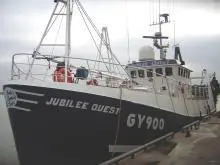
It is extremely unlikely that there will be any significant drop in the price of fuel for the foreseeable future – in fact most analysts see fuel prices going up – and this has resulted in there being a real need to find ways of reducing fuel costs.
In a move to research these issues in more detail, the UK’s Sea Fish Industry Authority (Seafish) is currently engaged in an integrated programme of fuel efficiency research projects. This includes research into the use of low-cost and environmentally friendly biofuels; investigations into new types of fishing gear; improvements in fishing vessel design; and research into other ways of conserving fuel.
A major focus of the Seafish project is on biofuels which are seen as offering good potential for savings, given that they can be cheaper than diesel. Two main types of fuel are being investigated – straight vegetable oil (SVO) which can be extracted from oil producing plants or recovered from waste frying oils, and biodiesel which is refined from SVO.
Working in conjunction with specialist research partners Regenatec and Camborne School of Mines, the project is currently investigating the application of biofuels by testing engine performance, ease of use, exhaust emissions and cost efficiency. The research project includes both onshore and at sea activities including the use of engine test beds and hi-tech fuel laboratories.
Two fishing vessels have also been contracted to carry out working sea trials with the new fuels. One of the vessels has already completed two successful fishing trips using vegetable oil. The skipper has been happy with the results, with there being no perceived difference in performance compared with traditional diesel; although the full results of all these trials will not be known until the middle of 2007.
Seafish has also been looking at the potential of fishing vessels switching to Heavy Fuel Oils (HFO) as an alternative. Commonly used by deep-sea shipping, these oils are cheaper than diesel.
Seafish has produced a guidance document outlining the pros and cons of HFOs. The main message to come from this is that the conversion to HFO is not an option for the vast majority of vessels in the UK fleet, given the nature of the engines used. However, there is the potential for some vessels with larger propulsion units – such as beam trawlers – in making the switch.
Other parts of the Seafish study will be looking at the effectiveness of electro-magnets on fuel lines in improving engine efficiency and reducing emissions, along with the use of fuel additives in reducing engine friction and wear.
One interesting element will be an assessment of the use of flow-meters on fuel lines. Such meters will provide skippers with instant information on the fuel consumption of the vessel at any given time, providing the opportunity to find the most cost-effective engine speeds for running the craft.
Alterations and modification in fishing gear design is another area where fuel savings could be made, and Seafish is co-ordinating a project to compare the fuel efficiency and catching performance of a single Nephrops trawl with that of a half-size, twin trawl system.
The project – which is currently underway – intends to demonstrate that it is possible to achieve the same catch returns for less fuel expenditure by using a half-size 10 fathom twin-rig trawl system compared with a 20 fathom single trawl in a targeted Nephrops fishery.
It is also anticipated that the lower headline height of the twin trawl system will aid selectivity and, where appropriate, reduce the bycatch of species such as haddock and whiting – bringing additional conservation benefits.
Seafish is working in direct collaboration with the Irish Sea Fisheries Board (BIM) on this project. BIM is providing staff and resources to assist in conducting the sea trials; and both organisations are working closely with fishermen and netmakers in selecting the most appropriate fisheries and gear designs.
During the trials the catch composition of the two trawl types including target species, bycatch and discards will be monitored. The fuel consumption will also be analysed, which will then allow for direct comparison of the costs and benefits between the single and twin trawls.
Training will be another fundamental part of the project, providing fishermen with a means of putting these new ideas into practice. This will include the development of guidelines for fishermen that will give technical and practical advice on ways of conserving fuel.
Tom Rossiter, Seafish Research and Development Manager, says: “This is an all-encompassing programme that aims to address the problem of high fuel prices in the short and long-term for the fishing fleet. We will be drawing upon the huge range of expertise in Seafish and from other organisations to develop practical and economically viable solutions.
“The aim is to ensure that we have a profitable and sustainable industry for the future.”
Much of the project work has attracted Financial Instrument for Fisheries Guidance (FIFG) funding and is supported by Defra and SEERAD, along with close collaboration and support from Bord Iascaigh Mhara (BIM) in Ireland.
More information on these projects can be found on the Seafish website, www.seafish.org