



A first-ever winter fisheries survey has uncovered new secrets of the Antarctic toothfish at the edge of the advancing winter sea ice in the Ross Sea.
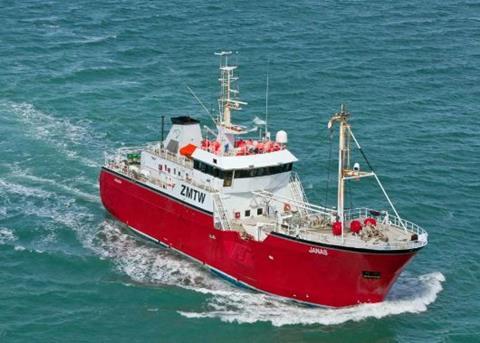
The New Zealand commercial fishing vessel Janas, an ice strengthened longline vessel owned and operated by Talley’s Ltd., New Zealand, working with voyage scientists from the National Institute of Water and Atmospheric Research (NIWA) and the Italian National Programme of Antarctic Research (PNRA) have collected the embryos of Antarctic toothfish for the first time by using plankton nets to sample down to a depth of 500m. They have also fertilised eggs from captured adults in spawning condition, which provides a known start time to observe developmental rate.
The research is part of a collaborative survey on the reproduction of Antarctic toothfish, their population distribution, and their role in the Ross Sea ecosystem
NIWA fisheries scientist Dr Steve Parker said the discovery of developing toothfish embryos was important for several reasons: “Finding them documents the spawning season of the fish, confirms some areas where spawning was suspected to occur, and most importantly, provides information about the depth at which the drifting eggs reside in the water column.
“This new information can be integrated with models of ocean currents to predict where the eggs and larvae will be transported as they develop and grow to become part of the juvenile population.”
Antarctic toothfish spawn under sea ice that extends more than 1000km from the continent during the winter, and protecting them for most of the year from Weddell seals and killer whales, but also from scientists and fishers.
All fishing in the Ross Sea is highly regulated by CCAMLR through catch limits, 100% observer coverage, and closed areas. The new information from this survey will be used to improve stock assessment and ecosystem models and advance management of the fishery.
The Ross Sea toothfish longline fishery was certified as sustainable by the Marine Stewardship Council in November 2010. Gear use in the fishery is regulated and only bottom set longlines are permitted. Much of the bait used is squid and mackerel from directed fisheries on assessed and managed stocks in New Zealand.