


Savings through overhung load adaptor
Saving thousands of gallons of fuel while battling through thunderous 50-foot waves is a challenge for commercial fishing boats operating in the Bering Sea. However, the challenge has been met by a patented workboat power generation improvement that is a major energy and fuel saver, claims manufacturer Gen-Tech.
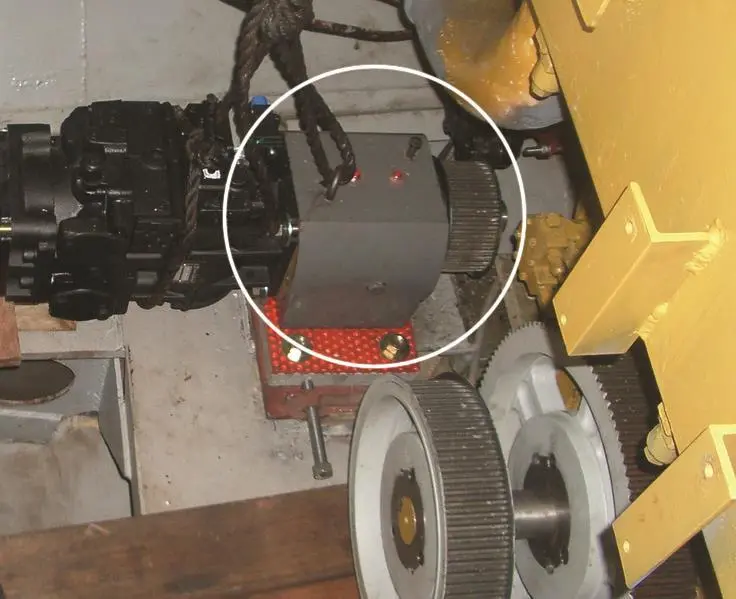
The Gen-Tech system eliminates running a separate auxiliary engine for generator operation when the main engine is in travel mode.
When equipped with the overhung load adaptor (OHLA) from Zero-Max, the two hydraulic pumps connected to the primary engine provide generator power so auxiliary engine operation is unnecessary.
A fuel cost savings of $2,300 (€1,660) or more in an eight-day fishing excursion is typical using this system, according to Gen-Tech.
“The auxiliary engine is not fuel efficient when in the travel mode,” said Erling Skaar, president of Gen-Tech. “Our system maximises the operating efficiency of the primary engine with the help of the overhung load adaptor so running a secondary engine is unnecessary. The additional load on the main engine from operating the Gen-Tech system is negligible, and therefore highly efficient and fuel saving. There is no added wear to the engine or connecting components. Thanks to the OHLA’s rugged design, we’re assured of smooth and reliable pump and generator operation. That’s extremely important in the adverse and hostile environments that these fishing vessels are subjected to.”
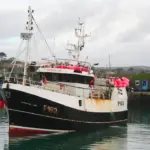
The first application for Gen-Tech system was a workboat called the North American, a 35 year-old 110-foot fishing vessel capable of carrying a full load of king crab weighing 170,000 pounds.
The North American fishes the Alaskan king crab fishing season, and the equipment needed to deal with these conditions requires the most robust technology.
According to Skaar, the system is a product of over nine years of research, rigorous testing, development of new technology and a dedicated mission statement.
“When the fishing vessel isn’t risking it all for a quick fortune and the continuation of an epic lineage,” according to the North American’s website, “its being put to use as a working model for the environmentally conscious vessels of the future.”
Gen-Tech told WF its secret is in the patented controller and software design. The company claims the controller “learns” the power requirement for the input to the hydraulic pumps from the ship’s main engine. Using that information, the controller then adjusts the displacement of the hydraulic pump to maintain stable frequency and voltage through the entire RPM range of the main engine.
In the Gen-Tech system, OHLA from Zero-Max provides a rock-solid, permanent mounting surface. It transmits rotary motion from the main engine to the hydraulic pumps.
Using the OHLA in the system eliminates the need for a secondary gearbox to operate the hydraulic pumps that can be more costly. Also, the OHLA adds much more stability in the drive train than a gearbox. Most important, the OHLA enhances motor operation by eliminating premature motor or pump failure due to overhung loads (axial or radial) on the pump and motor shaft, said Gen-Tech.
The OHLA (Model 1036S) is belt-driven off the main engine (Caterpillar Model 399-1125hp) via a 2.8 to 1 speed ratio using a Gates polychain drive. With a SAE-D face mount, the OHLA has a 132 spline input, a 2-1/4 inch output shaft and a 7-inch pitch diameter on the OHLA’s pulley.
For added durability, spherical bearings were selected for this application. Extra rugged to meet all operating conditions, the OHLA housing is made of 25,000 PSI tensile cast iron with shafts of 130,000 PSI stress-proof steel.
The OHLA operates at 1540 idling rpm, 2500 cruising rpm and 3360 maximum rpm. Connected to the two variable displacement hydraulic pumps mounted “piggyback”, the pumps produce 3000 psi pressure and deliver 120 gallons per minute.
“With Gen-Tech, the North American cruises at 10 knots using only 21 gallons of fuel an hour,” said Skaar. “Without Gen-Tech, the North American cruises at 10 knots using 25 to 26 gallons of fuel an hour. While the dollar savings for an actual eight-day fishing excursion is huge at $2,300, also huge is the reduced carbon emissions and pollutants that help preserve our fishing environment.”