

After 30 years of working with local trout producers at Lake Arapa, in the Andean highlands, with a strong focus on sustainable development and organic production, Peruvian company Truchas Arapa now aims at improving its product quality and value through scientific innovation, reports Eduardo Campos Lima.
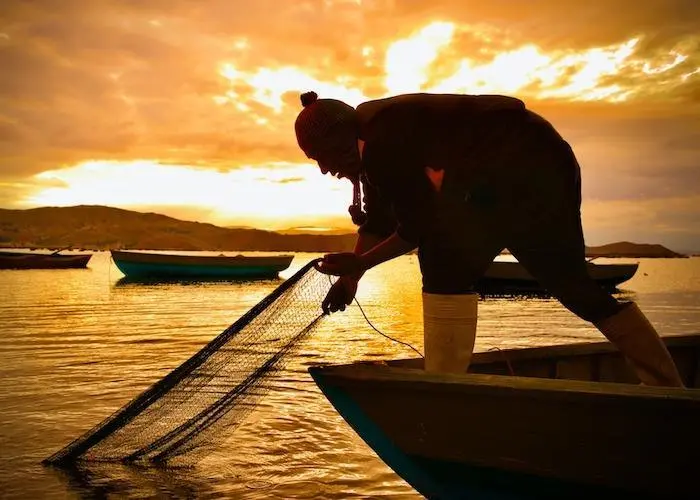
Organic trout from the Andean highlands

Based in the Andean highlands, fish farming company Truchas Arapa aims at improving its product quality and value through scientific innovation

The company has recently established partnerships with universities and with a research institute in order to develop new methods and systems, explained the general manager Reyna Callata.

“We’ve been investing in training and innovation in order to increase our projects’ efficiency,” she said, commenting that among the latest projects is the implementation of a water recirculation system for hatcheries, which used to demand fresh water.

“This allowed us to optimise the fish size before releasing them into the lake – with a stronger immune system.”

With different universities, the company is doing research on possible uses for fish skin, including gelatines. Studies are also being conducted on the destination of the production residues and on enhanced methods for the development of trout in its environment.

In 2019, one of the company’s projects was selected by the Technological Fishing Institute of Peru from among 6000 competitors.

“We’re searching for new natural pigments for the fish,” Reyna Callata said.

“Consumers expect trout to have a distinctive red colour, not always achieved during production. Given that Truchas Arapa doesn’t use artificial pigments, natural solutions are being analysed, such as the utilisation of the red squat lobster from the Pacific. It’s caught along with the anchoveta by artisanal fishermen, but it’s discarded due to its lack of commercial value. The idea is to extract astaxanthin from it at the institute,” she explained.

The study will be concluded by April and the company expects to run tests shortly after.

Another goal for the near future is to work on the commercial exploitation of local species, especially suche, boga, and karachi, which have high protein values.

“Basically, our model is to be sustainable. We don’t use antibiotics and preservatives and we try to take care of all aspects involving production, even the lake. We don’t let people use motor boats because of fuel spills and all the noise they generate,” Reyna Callata continued.

Truchas Arapa is the result of a social project that was launched 30 years ago by the Swiss-born priest Marcos Degen. Local fishermen were desperate because there was a serious scarcity of fish at Lake Arapa and asked Fr. Degen to celebrate a Mass in honor of Saint Peter, the patron saint of fishermen. So, the priest decided to start an initiative to generate income in the region and trout was his first choice.

“I saw this project since I was a child. The focus was always on people; creating work to the local families, offering good products to customers, taking care of our environment,” Reyna Callata recalled.

Truchas Arapa’s products have reached over the years most major cities in Peru and even international markets, such as Belgium and Australia.

“We used to work with canned fish, but we discontinued that product in order to prioritise fresh and smoked products,” she said.

Five years ago, the initial project had to face an large-scale transformation to improve its competitiveness, but all fundamental principles have been retained. The model is based on the association of 18 local producers of trout, who sell their production to the processing plant. Those producers are constantly trained and assisted by the company.

“From our hatcheries, the fry are taken into the lake, no more than one kilometre far from the plant. After one year or so, the fish go back to the processing plant,” she explained. Cages are positioned in areas of the lake with depths of 40 to 70 metres and densities are low. Although nearby mining projects pose a future threat, the water is currently 100% free of contaminants.

Truchas Arapas’ volumes aren’t high, so the company can keep its strict standards of sustainability. Reyna Callata said the company is currently developing ways to aggregate value to its fish and to resume exports.

“Our fish is used in ceviches, carpaccios, and so on. It has a unique flavour of its own, in contrast to salmon.”

National and international partnerships are always desirable, she pointed out – the company is visited by at least a thousand people every year, particularly by students and professionals.

“We’re a company that’s always ready to learn new things. But our focus is to keep the current model of aquaculture. We’re not interested in industrialisation, for instance. We want to generate bonds with companies and people in order to create new opportunities.”