


Moving from inefficient nearshore production approaches to higher energy offshore industrial methods can be a success, according to the first session of this year''s Offshore Mariculture Conference. Erik Vis, Director of Farming Operations at cobia farm Ocean Blue began the session by introducing his company''s three-pillar approach to sustainability when working offshore.
The approach includes social responsibility (educating and training employees, keeping them up to date), full accountability (to aim to exceed the highest standards and be checked through certifications and audits to achieve this) and environmental care (growing fish that are native species with no influence on wildlife, monitoring conditions regularly).
Sustainability is also significant when it comes to the use of marine areas in tropical SE Asia for food production. According to Independent Aquaculture Advisor Niels Svennevig, this use has not reached the level of its potential, perhaps due to Asia's existing business structures, lack of generic marketing and whether to have technology or market-driven business plans.
Because of the predominantly small-scale approach in the SE Asia region, there is little growth in production volume and little interest from investors. Shifting aquaculture offshore, according to Svennevig, ticks all the right boxes, with a better environment and less environmental impact.
"A lack of applying good management practices, lack of investments and marketing understanding are all challenges for marine fish farming in SE Asia today," he said. "But a large-volume approach in exposed sites offshore could be key there. Such sites can make fish thrive through best water quality, and be a good opportunity to target specific markets, such as the large, fresh, frozen white fish market. Risk management during the planning and operating stages, and skilled, trained, educated staff who can react when something is wrong, are valuable assets of a farm as well."
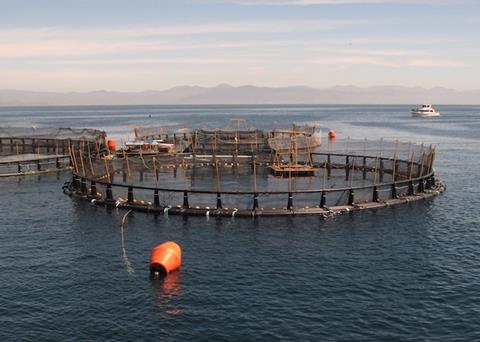
Refa Med started out with flexible offshore net pens, and floating PE cages that increased in size, strength and ability to withstand exposed sites. According to the company's co-founder and CEO, Darko Lisac, mooring systems and net pen designs play crucial roles in offshore aquaculture, and this must be taken into account when moving offshore. He also warned that it was essential to study and analyse possible sites properly and that assessing prevailing and extreme conditions including winds, waves and currents, were key.
Other factors to take into account when deciding on a possible site include seabed topography, composition, infrastructure, the availability of skilled seamen, proximity to harbours, possible marine predators, and feeding -- can you install automated feeding systems, or do you need feed barges, buoys or feed boats? Just as important is fish harvest, or the need to harvest regularly to supply the market continuously, as in the Mediterranean where the public is used to having fresh fish, so fish must be harvested at least two times a week. It is also important to ensure the stocking of juveniles and nursery rearing, while feeding can be done manually or with small barges, small feed buoys for a few cages at a time.