
AIPCE-CEP: Using salmon supply to solve pelagic impasse would damage European processing
While there are strong concerns about the disruptive effects that the lack of catch share agreements for certain species in the European Economic Area (EEA) will have on fish processors in the EU, any attempts to address these issues through other trade interferences such as import measures on farmed salmon should be greatly discouraged, cautions AIPCE-CEP, the EU Fish Processors and Traders Association.
Particularly in the case of the high-volume Northeast Atlantic pelagic fisheries, the failure of coastal states to bring fishing effort into line with scientific advice amid the continuing dispute over quota allocations, and the subsequent suspension of Marine Stewardship Council (MSC) certification, have brought the long-term sustainability of these stocks increasingly into question.
These fisheries are very relevant for the supply of the EU processing industry, while the MSC certification has been a “valuable asset” in the marketing of these products, Guus Pastoor, President of AIPCE, and Peter Bamberger, President of CEP, told WF.
Bamberger and Pastoor acknowledged that historically, reaching such agreements has proven difficult for the relevant states and the EU to achieve, and that with Brexit as another complicating element, and possible effects of climate change on the migration of fish stocks, it won’t be any easier in the future.
“We have to find ways to manage this to ensure sustainable fisheries and smooth trade flows. We are concerned about the disruptive effects that the lack of agreement eventually could have for the rest of the supply chain, i.e., the importing and processing industry within the EU. We [also] understand the pressure being put on Norway and other coastal states to reach compromises.
“However, permanent loss of the MSC certificate would be felt in the market, and there is a risk that defensive instruments could be activated affecting supplies to the EU.”
With regards to the pelagic fisheries, coastal state talks have been paused while a working group takes a closer look at how the stocks have been moving between zones. Further negotiations will await these conclusions, probably resuming in March or April 2022.
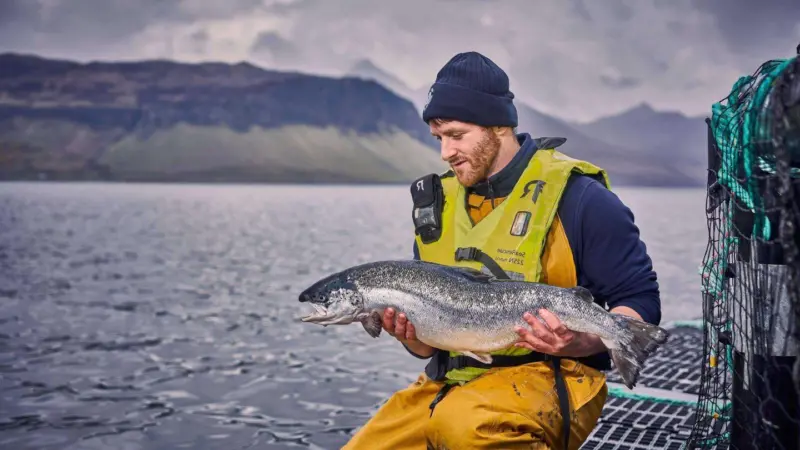
Pastoor and Bamberger also advised that any “defensive instruments” applied by the EU to force the desired solution to the pelagic stalemate, such as tougher import measures on third-country salmon supplies would have “a serious impact” on processors, as the supplies from the bloc’s Nordic trading partners are substantial.
“Farmed salmon and pelagic fisheries are two totally different value chains. It would be a strange case if the problems in the fisheries were to be connected to the supply of farmed salmon.
“Norwegian seafood, including aquaculture, creates more jobs in the EU than it does in Norway, and if we take salmon, this is currently the most important raw material for the fish processing industry in many EU countries. And salmon is the most consumed seafood species in the EU. So, clearly maintaining free import is very important both for industry and consumers within the EU,” they said.
From AIPCE-CEP’s conversations and interactions thus far, using the salmon trade in such a way would be “very unlikely” from a legal point of view and it’s a scenario that the association would firmly contest.
Before such a measure could be applied, all other ways to reach a consensus should be exhausted, Pastoor and Bamberger said.
“We take note of the fact that the EU does not, to our best knowledge, have any legal base for raising a trade instrument to punish non-sustainable mackerel with barriers on farmed salmon, and we really doubt whether such a step would comply with WTO rules for fair trade.”
The pair also underlined that such a measure aimed at Norwegian farmed salmon would have a severe economic impact on the processors and traders in the EU, and put jobs at risk.
“There is no alternative sourcing in the short- or medium-term. It would also heart the consumers, as salmon would be more expensive to buy, or even hard to get. We like to promote the consumption of fish because of the positive health benefits, and salmon is one of the most consumed fish species.”
Instead, AIPCE-CEP would like to see the situation settled among the involved coastal states, with the hope that they will have a better basis for deciding on the division of quotas once the working group has concluded its work.
“This is the right forum to solve an issue clearly within its mandate. International fisheries management is a public issue. Without a clear governmental decision, the market cannot solve these kind of problems,” Pastoor and Bamberger said.