


The Intergovernmental Authority on Development (IGAD), a trade-bloc of eight African nations focused on development and environmental control, has approved a regional fisheries and aquaculture strategy to harness, review and develop practices in the IGAD region.
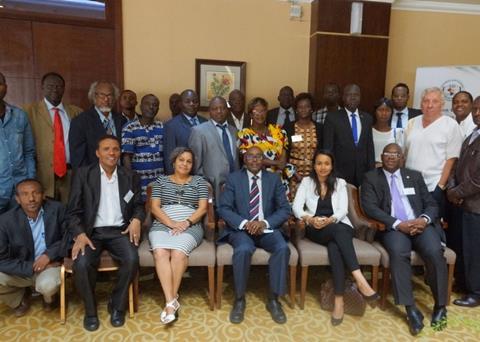
Together with IGAD member states and development partners, namely the European Union, Oxfam-Somalia, the UN’s Food and Agricultural Organisation (FAO) and the African Union InterAfrican Bureau for Animal Resources, IGAD rubberstamped the framework that was put together in December 2015.
Ambassador Tewolde Gebremeskel, director of Peace and Security Division at IGAD emphasized the importance of growing the fisheries and aquaculture sectors for economic growth and development.
“IGAD as a regional organization has taken the responsibility to develop and mobilize resources through partners like the European Union to support the development of this strategy which will harmonize existing policies of the Member States to uniformly adopt the African Global Strategy framework and to ably utilise the resources sustainably in harmony and with understanding for socio-economic development of the region,” he said.
In agreement was Khola Mohamed Ali, programme manager, European Union Delegation, who pointed out that because of increased population in the region there is need for increased income and sustainability.
“Through proper coordination and execution by IGAD and its member states we as the European Union believe and know that the regional integration agenda can indeed be met through our support to be able to enhance, facilitate, grow the fisheries and aquaculture sectors for a better future for these communities,” Ms Khola commented.
Most of the current fishery activities in the IGAD region are focused on inland waters located in the highlands and populated areas. The fish resource potential and its contribution to resilience, food and nutrition security and livelihood diversification in arid and semi-arid lands are often overlooked by member states and development partners because the larger rivers with high potential for fisheries are mainly found in the lowlands.
The participants mutually agreed that, with the effects of climate change, there is urgent need for collaboration, mutual understanding and cooperation of both human and technological resources to advance the fisheries and aquaculture sectors while taking into consideration environmental protection, conservation of aquatic species and operating within the regional framework.
Ana Menezes, fisheries and aquaculture officer at the FAO Sub Region Office for East Africa was in attendance and encouraged the IGAD Member States to improve the existing fishery and aquaculture sector in order to encourage economic sustainability.