



Mørenot’s one-stop shop for longline gear
By moving squarely into the market for longline deck hardware, Mørenot has placed itself as a complete supplier – its new range of longline handling systems complementing the company’s existing catalogue of longlines and hooks.
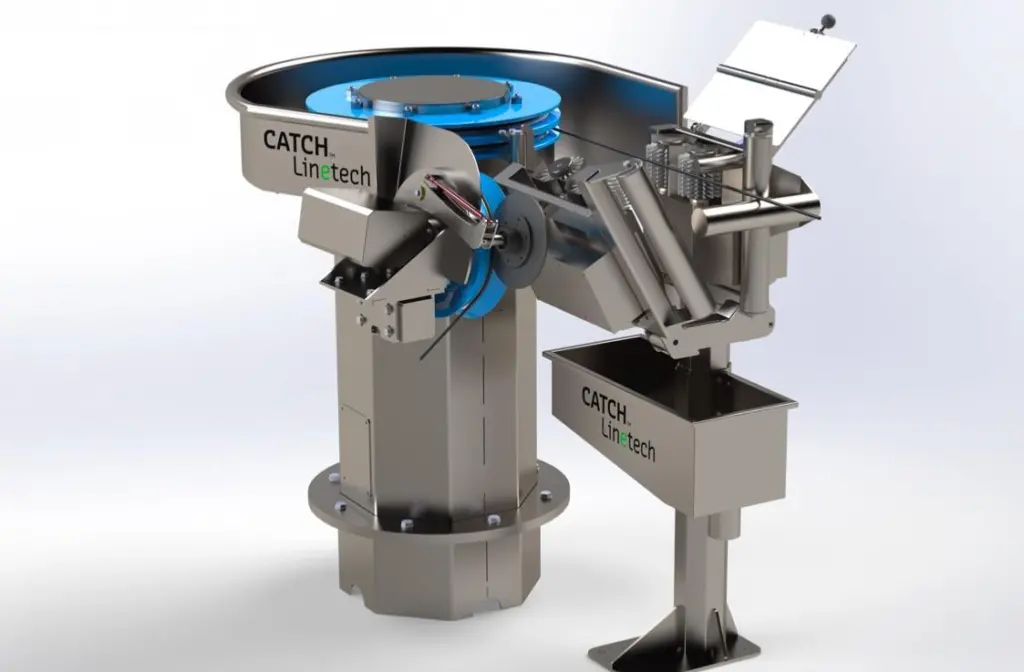
Previewed at this year’s DanFish exhibition, The Catch LineTech system is a full package of hauler, hook splitter and baiting machine with versions for both coastal and offshore vessels, all designed from first principles as electric systems, rather than having been adapted from existing hydraulic equipment.
The engineering team at Mørenot Ísland have developed the system, with the E-Hauler, at the heart of it, designed to be flexible and to make hauling as smooth as possible to minimise loss of fish from the line, as well as being easily adjustable for speed and torque. This can be supplied with an electro rotobrush unit. The hook splitter has all the capabilities of other such systems on the market, but operates with a much lower noise level and has more options for operation to be fine-tuned than has previously been possible.
Mørenot’s Catch LineTech system has already been tested at sea in Iceland, and the first orders for installations have already been placed.
“The initial testing at sea was carried out on a Westman Islands longliner, and now we’re preparing for a longer trial for a month or more so we can run a few hundred thousand hooks through it,” said Mørenot Ísland’s managing director Magnús Smith, who has no illusions about what they are aiming to compete against.
“We are up against some very good longline systems from established producers. But these engineers we have working on this have been able to approach this from some new directions to develop a setup that’s fully electric, not something based on 1970s technology. It operates with a low power requirement, and we have had plenty of skippers and engineers stopping by here to take a look, including some from the Norwegian longliners – and they all like what they see.”
He added that the development has been driven by a group of four young engineers who have come to this from various tech companies in different sectors.
“They have brought to this practical experience as well as computer design skills – and they have some fresh ideas,” he said, and commented that the hauler has been pushed to 65 hooks per minute.
“It has a pull of up to 2200kg. The baiting machine is fully electric, driven by top-of-the-line servo motors, and it easily baits up to six hooks per second. If you’re shooting the line in heavy weather, then everything slows down when you hit a wave, but as soon as you’re past the crest and runs down the other side, then the line whizzes out and you need to have that baiting speed so it can keep up with that demand.”
He added that ensuring every hook hits that water properly baited is vital, and a Hook Analyser is also in development as an optional extra. This checks each hook as the line is hauled, flagging up an alert every time it identifies a hook that is damaged and needs to be replaced.
Related Articles
 FISHING TECHNOLOGY
 NEW VESSELS
 FISHING TECHNOLOGY