



Lost trawl gear returned from Svalbard
A lost section of a trawl has been returned and put back to use – more than a year after it came fast in the Barents Sea.
Owned by UK Fisheries, factory trawler Kirkella had been towing its gear at the end of February 2002 when the trawl came fast on a wreck around 200 nautical miles south-west of Bear Island. Attempts to free the gear were unsuccessful, and even trying to retrieve the trawl by towing a creep resulted in the hook also getting caught up in the wreck.
Back in the same waters in the next trip, attempts were made again to get the trawl back, and this time they were partially successful, managing to retrieve part of the trawl. They were disappointed to lose part of the gear, and had no choice but to write the trawl section off as irretrievably lost. So it was a surprise when the governor of Svalbard – 500 nautical miles to the north – got in touch to report that the missing trawl section had drifted ashore there.
“We never leave anything in the water and do everything we can to retrieve items lost at sea. But when we tried to retrieve this part of the trawl net that was stuck in the wreck, we realised that the codend and the sorting grid had sheared off. We retrieved everything else,” said Sigurbjörn Sigurðsson, one of Kirkella’s two skippers, who was onboard when the trawl came fast on the wreck southwest of Bear Island.
“Interestingly, the missing section seem to have drifted off hundreds of miles north. We are grateful to the governor’s office for finding and returning the cod end and sorting grid. The catch sensors are valuable, and we are relieved nothing was left in the sea.”
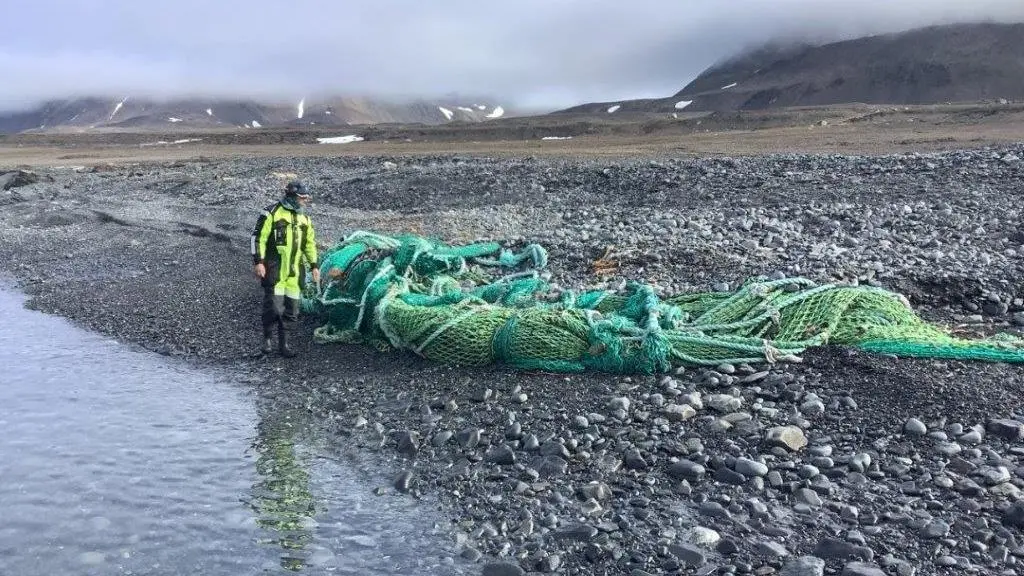
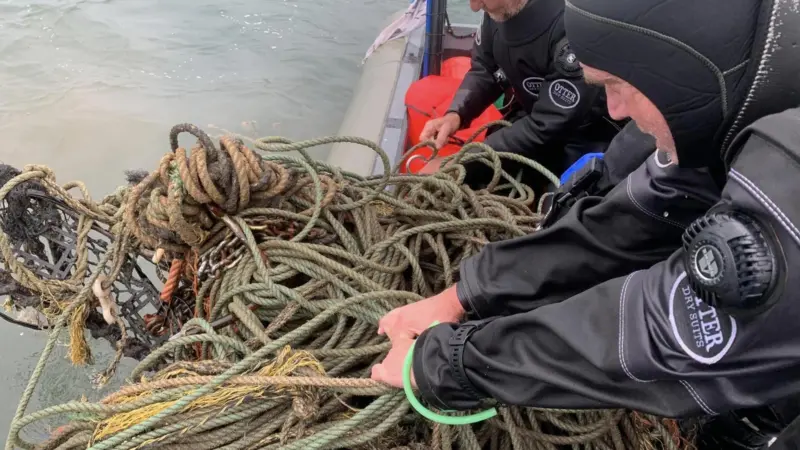
Inspectors from the office of the governor of Svalbard came across the trawl section at Hyttesletta south of Gråhuken in Svalbard in July this year. Efforts were made to move the netting in August, both with manpower and with the assistance of a helicopter, but the weight of the netting and the stones in it made this impossible. Later on Polarsyssel, a vessel operated by the Governor’s office, was able to move the trawl section.
Examination of the trawl section showed the catch sensors still attached to the gear, and the serial numbers on these made it possible to trace the owner – and otherwise the netting would have been sent for recycling.
During the summer Polarsyssel was active near Hopen, where Kirkella was also fishing, and the codend and sorting grid were returned. After its 500-mile odyssey, the codend was in good enough condition to be fixed up and put back to use.
Related Articles
 FISHING TECHNOLOGY
 NEW VESSELS
 FISHING TECHNOLOGY