



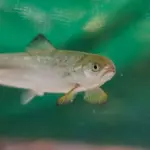


Underwater cameras monitor juvenile fish
A network of underwater cameras is being deployed in England’s south-west to monitor habitats of key species such as sea bass and grey mullet.

The new project, funded by the UK government will use a recently developed juvenile habitat monitoring camera (JHaM-Cam) to measure the abundance and size of even the youngest and smallest fish in the wild.
The two-year project has been awarded £530,000 in funding from the Fisheries Industry Science Partnership scheme, part of the Government’s UK Seafood Fund. It is one of 12 initiatives – three of which are being led by the University of Plymouth – designed to support sustainable fisheries management.
“By developing new technology, we are striving to take a big step forward in delivering the evidence needed to support policy decisions and management actions that make fisheries more sustainable through broader consideration of the ecosystems on which exploited populations depend,” said Dr Benjamin Ciotti, lecturer in Marine Biology and project lead.
“The project is a vehicle for the fishing industry, scientists and managers to work together to devise effective management, giving the industry a louder voice and greater stake in management and policy.”
The smart camera will be put to use in the Plymouth Sound Marine National Park and surrounding areas scientific diving facilities at the University of Plymouth.
The project will also involve partners directly involved in recreational angling and fisheries management, including the Angling Trust, Bass Anglers Sportfishing Society, National Mullet Club, Association of Inshore Fisheries and Conservation Authorities, Southern Inshore Fisheries and Conservation Authority, and Institute of Fisheries Management. Anglers will be able to use an interactive web portal to contribute critical information and participate in research in the future.
Related Articles
 FISHERIES
 FISHERIES
 FISHERIES